
Ecuador is Spanish for “Equator”; it’s an apt name for this nation, located in the northwest region of the continent. Because of it is location on the equator, did you know there’s little variation year-round in the hours of daylight there? Did you also know that the Panama hat is actually from Ecuador and not Panama, as the name would suggest?
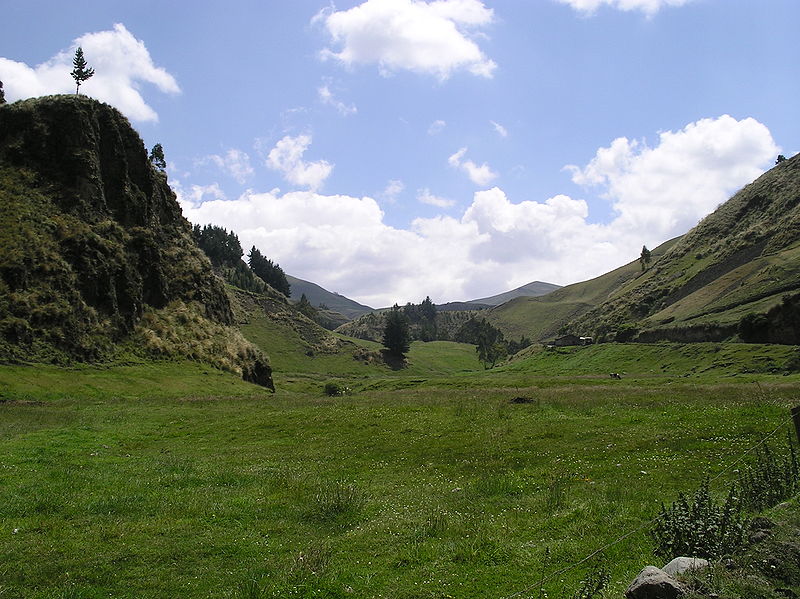 Ecuador boasts some great geographic diversity. There’s the lowlands by the Pacific coast (La Costa); the highlands through which some of the Andes Mountains run north-south (La Sierra); rainforest/jungle towards the east (La Amazonía) and last but certainly not least, the Galapagos Islands are over six hundred miles west of the coast. There’s also so much biodiversity in Ecuador that 1) it’s considered one of seventeen of the most “megadiverse” places in the world and 2) ecosystem rights were recently incorporated into the national constitution.
There’s a fair amount of ethnodiversity in Ecuador, too. About sixty-five percent of the population has Mestizo (Indigenous/Amerindian + Spanish) roots; about twenty-five percent are of indigenous/Amerindian descent; less than ten percent are Criollo (unblended Spanish); the remaining group are a melding of African + indigenous/Amerindian ancestry or African + Spanish ancestry. While more people emigrate from Ecuador than to Ecuador, immigration contributes to the diversity; a number of Middle Eastern, Asian, European (mostly Eastern) and North American expatriates call Ecuador home.
By the end of the 1990s, Ecuador defaulted on most of its foreign loans. In 2000, the U.S. dollar became legal tender in Ecuador. Oil is the country’s main export; agricultural products (bananas, coffee, e.g.) also comprise a portion of their exports. Remittances from Ecuadorian expatriates in Europe and North America make up some of the country’s income. The global recession, as well as falling oil prices and decrease in remittances, have not helped the economy. The poverty level according to the CIA World Factbook is at thirty-eight percent.
Like most of the Americas, Ecuador was a Spanish colony for roughly three centuries until 1822; Quito, however, was the place where the first demand for independence was made on the continent years earlier in 1809. Ecuador had been embroiled in a fifty (approximately) year land dispute with Peru that concluded as recently as the end of the 20th century. For nearly a decade in the 1970s, Ecuador also had its share of military dictatorship.
 Some of the issues that Ecuador faces include an influx of refugees from Colombia fleeing from violence, mostly guerilla based. As of last year, the United Nations High Commissioner for Refugees estimates that there are 250,000 Columbians in Ecuador; only 40,000 have applied for asylum, the remainder do not most likely out of fear that they’ll be deported. Domestically, indigenous political groups, putting pressure on the government, but still minimal progress has been made in land reform and reducing unemployment.
Like the eastern part of Ecuador, along the Curaray River, where Jim Elliot, Nate Saint, Ed McCully, Roger Youderian and Pete Fleming were martyred in 1956 while trying to befriend the Huaorani people group. The Huaorani back then were called the Auca and had the reputation of being violent and hostile.
After the deaths of these five men, who were in their late twenties or early thirties, Elisabeth Elliot and Rachel Saint (Nate’s sister) lived among the Huaorani, translated the Bible into their language and discipled them. Steve Saint, Nate’s son, returned to Ecuador and to the very people who had killed his father; Steve considers them family now.

The World Race is sending a new generation of pioneers to Ecuador to follow in the footsteps of folks like Jim Elliot, who paved the way for the Kingdom to advance further and more forcefully. Will you be a part of it?
Sources:
- CIA World Factbook: Ecuador
- Wikipedia: Ecuador, Demographics of Ecuador, Religion in Ecuador, Culture of Ecuador, Jim Elliot
- Johnstone, Patrick et al. Operation
World: When We Pray God Works, 21st Century Edition. Carlisle: Paternoster,
2001, pp. 230-232 - “Helping Colombian Refugees in Ecuador” from Catholic Relief
Services - Elliot, Elisabeth. Passion and Purity. Grand Rapids: Fleming H. Revell, 1984.







