
Aug 5 2014,
I’m so sorry that this blog is late, but I had a horrible migraine this past weekend, bad enough to go to Urgent Care to get help. Will you please continue to pray for my health, that God will heal me or give me relief? Especially on the trip. And that this pain won’t discourage me from going. I want to do whatever God calls me to do, whether that means to go or to do something else, and not be dissuaded by anything else. Thank you!
The World Race provides a brief explanation of what racers can expect in Zimbabwe. “Formerly a British colony known as Rhodesia, Zimbabwe boasts intriguing ruins and shares the majestic Victoria Falls with Zambia. According to Amnesty International, the current regime is allowing human rights violations to escalate. Zimbabwe also has one of the lowest life expectancies in the world.”
I got this information from worldvision.org, christianaid.org, and Cultures of the World: Zimbabwe by Sean Sheehan.
-Zimbabwe was once the “food basket” of southern Africa. But in recent years, there have been widespread food shortages, with as many as 2.2 million facing hunger.
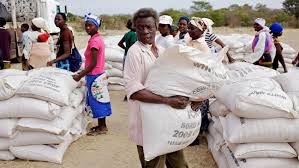
-80% of the people are struggling to survive on $2.00 a day.
– “Zimbabwe has a young, largely unemployed population (figures touched 80% in 2011) that is marginalized and susceptible to being drawn into violence driven by the politics, poverty and injustice, of a polarized society.” (Christianaid.org)
-Some rural districts in Zimbabwe are food insecure mainly because of intermittent rains in the last season. Droughts are common in Zimbabwe and are getting worse in the area. The rains came too late and went too early leaving crops moisture stressed. Because of the last season’s drought, the price of grain has gone up as much as 15%. The upward movement in the price of grain puts further pressure on many households, especially those not receiving food assistance.
-There is still residual racism and anger from the years of the white minority oppression and the uneven distribution of land, anger that still causes violence to this day.
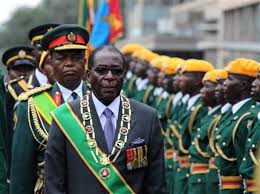
-“The government of Zimbabwe is committed to a one party sate, leaving no alternative for voters during elections. In the period of unrest following independence, there were serious allegations of mistreatment, and in some cases murder, of the Ndebele minority. The government does not allow organizations such as Amnesty International to investigate human rights violations in Zimbabwe. Television and radio are owned and controlled by the government.” (Cultures of the World: Zimbabwe by Sean Sheehan)
-There is considerable air, water, and solid waste pollution in Zimbabwe. Most of the automobiles in the country are old and emit large amounts of pollutants, including poisonous lead particles and harmful gases such as carbon monoxide. Sewage treatment facilities have not developed fast enough to deal with enormous amounts of domestic and industrial sewage generated by a growing population.
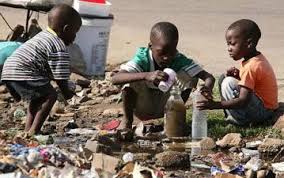
-Many in Zimbabwe do not have access to schools, and those who do rarely move on to high school in favor of helping to support their family at home. Education is often looked down on because it is thought to break down traditional ways of life and strains family relationships in several ways. As the young acquire an education, they grow up with a contrasting worldview from their elders.
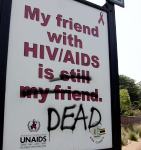
-“As many as 600,000 people in Zimbabwe, or 25% of the population, are HIV-positive. AIDS is now the leading cause of death among children under age 5, many of whom are born to HIV-positive mothers. Prominent Zimbabweans in government, entertainment, and sports have died from AIDS…people are not educated about the disease and do not think that they can get it. In Zimbabwe AIDS is usually spread through unsafe sex. Hospitals do not have enough beds to treat AIDS patients, and most of them receive inadequate care.” (Cultures of the World: Zimbabwe by Sean Sheehan)
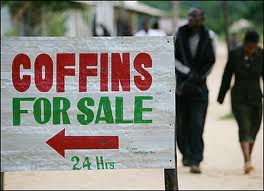
-The idea of a “nuclear family” does not exist in Zimbabwean culture because of the lack of men in the village. Women account for as much as 80% of food production while 7/10 leave their families to find work. Even though women do an enormous amount of work and they fought alongside the men in the war of independence, women do not have equal status. They face discrimination and lack land inheritance rights.
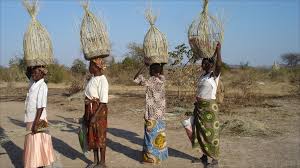
-Around 25% of Zimbabweans are Christians. However, mainstream Christianity has decline, and the number of independent African churches that combine Christian and traditional indigenous beliefs and practices have increased.
-There is a lot of spirit worship in Zimbabwe. They pray to their ancestors, and to other spirits, such as Mwari, whom they believe is the “Supreme Being”. They also guard themselves against evil spirits, that they believe causes illness and death. According to traditional African religion, when an ancestor wishes to communicate with its descendants, a woman or man is possessed by the spirit, who speaks through the mouth of the chosen person. The possessed person then becomes a spirit medium. Sprit mediums play an important role in society. They have been legally registered, and an act of parliament governs their behavior.
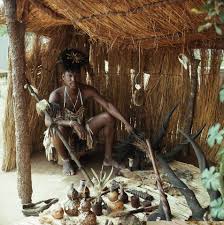
-Animists in Zimbabwe believe in witches who ride on the backs of hyenas. Witches are believed to be responsible for unpleasant deeds such as robbing graves and killing people and turning them into animals. There is even a witchcraft Suppression Act, which restricts the prohibition of witchcraft to only those acts aimed at causing disease or injury to another person or animal.
Please pray with me for Zimbabwe. That they will turn away from witchcraft and spirit worship and find their one true love in Jesus Christ. Please pray against the racism, poverty, corrupt leaders, and pollution that are so rampant there.
God bless you all.
~Tori







