
July 19, 2014,
Cambodia!
Alright, I got this information from Welcome to Cambodia by Dora Yip/Dayaneetha De Silva, and Cambodia by Dayeentha De Silva.
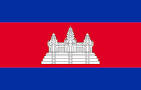
-The Flag of Cambodia has two blue bands and one red band. Blue stands for royalty, red represents the nation, and the white represents Buddhism, Cambodia’s main religion. The white symbol on the red band is the temple Angkor Wat.
-Cambodia was alternately controlled by Siam and Vietnam until it became part of the French colony of Indochina in 1884. France protected Cambodia from any more invasions and gave Cambodia its freedom in 1953. However, a bloody civil war started immediately after when Pol Pot’s Communist (dictatorship) party took over. Vietnam then invaded in 1978, and withdrew in 1989. 1998 is the start of peace in Cambodia after long years of war and violence.
-Pol Pot ruled as a dictator from 1975-1979, overseeing the four darkest years of Cambodian history. He wanted to restore Cambodia to its ancient glory, but almost succeeded in wiping out its own culture. He turned Cambodia into a labor camp and killed 1.5 million people. The cause of Pol Pot’s death in 1998 remains a mystery.
-Traditional Cambodian weddings last three days, but some modern wedding ceremonies are shorter. Ceremonial rituals include cutting hair, tying cotton threads soaked in holy water around the bridal couple’s wrists (while holding a sword!), and passing a candle around a circle of married couples to bless the newlyweds.
-Cambodia’s main source of income is farming, especially rice.
-Cambodians are Khmer. The modern Khmer is a mix of different cultural and ethnic groups, including Chinese, Vietnamese, and Cham.
-Children are given a lot of affection until about the age of three, and then they are expected to bathe and feed themselves. At the age of five, they start to look after their younger siblings. At age ten, girls are expected to do household tasks, while boys have to look after the family’s livestock.
-Some common motifs of classical Khemer art include apsaras, or heavenly dancers; nagas, or mythical snakes; garudas, or animals that are half bird and half human; and singhas, or guardian lions.
-Cambodians love spicy food and strong flavors, so hot peppers, ginger, lemongrass, and mint are added to many Khmer dishes.
-Most Cambodians believe that the sport of kickboxing originated in their country.
-“Apart from Angkor Wat, the most famous symbols of Cambodia are apsaras, or heavenly dancers. Hundreds of these dancers are carved on the temple walls at Angkor. Their real-life counterparts in Angkor were so famous that the conquering Siamese took the dancers back to Siam as part of their war booty. It was thought that their dancing was so perfect that gods and humans were in harmony during a performance.” (Cambodia, De Silva)
-Khmer music is not written down. It is passed on from one musician to the next.
-Khmeer stories are told as folk tales because many Cambodians cannot read or write.
–Charabap is the most luxurious silk, and is actually a tapestry woven with silver and gold thread for important ceremonies, such as those held at the royal court.
-Animals in Cambodian forests include tigers, clouded leopards, elephants, monkeys, civets, bears, and many varieties of reptiles and birds.
-Whenever a new house is built, a very small house is carved along with it. The small house is filled with food and flowers as an offering to the spirits.
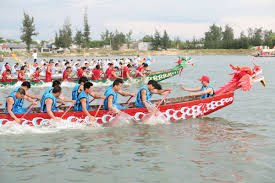
-The most colorful sporting event is the annual dragon boat race during the water festival. Teams of rowers compete in long dragon boats, and both male and female teams can compete.
That’s it for fun facts on Cambodia. Next time I’ll write about the more serious aspects of Cambodia and what I’m praying about this week! If any of you want to add anything else, feel free!!!
God Bless!
~Tori







