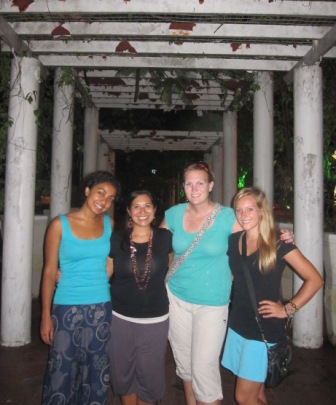
I feel like I’m in a movie, walking down the streets with
nothing but Indian music blasting, and women walking around with headdresses
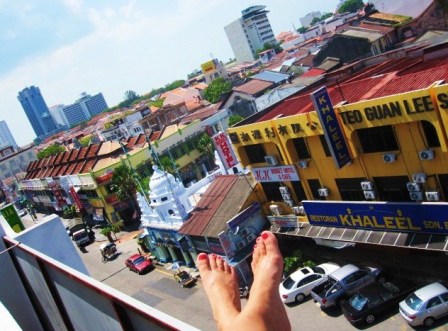
and traditional Indian attire, when seconds later after turning the corner my
senses are caught off guard by the smell of Chinese fried rice, and the view of
red, oriental lanterns displayed on shop porches. Every crooked road somehow
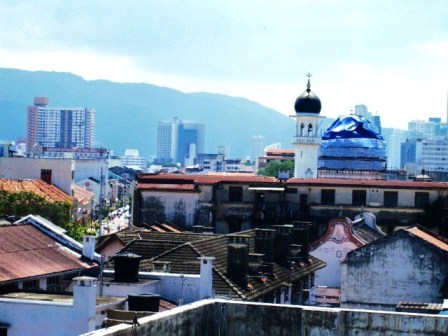
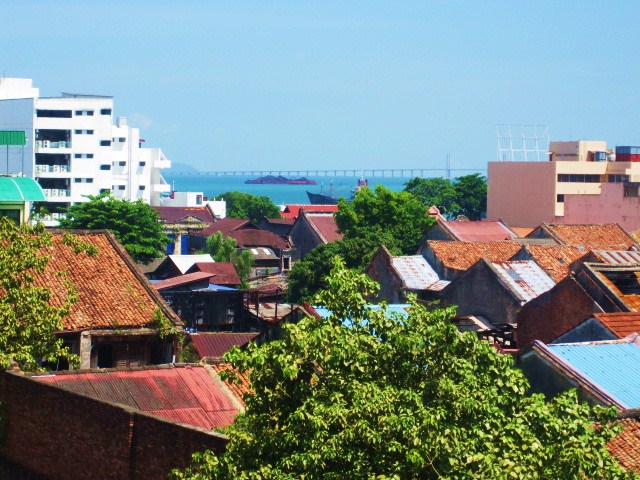
manages to dead end into the ocean and the mountain vista is absolutely breath
taking. Malaysia is like the melting pot
of Asia; extremely diverse. This was a shock for me, I wasn’t expecting to be
living in a town populated with mostly brothers and sisters from India!
James, Blake and I were headed to what is called “Pen Hop”
one day, which stands for Penang house of prayer. We had to take a bus to the
police station, where someone from the church planned to meet us and escort us
to Pen Hop. It didn’t exactly work as planned, however, seeing as we waited for
30 minutes at the wrong police station. We tried to explore and figure out
where this place was on our own, but we failed. So, instead of heading back to
the apartment, we decided to roam the streets and talk to any random passerby
in sight. First, we ran into a homeless man limping around with a serious
infection on his leg. He was nothing but skin and bones. To my surprise, he
spoke perfect English! We spoke to him for a bit, and continued walking.
From there we went to a street vendor who was making some
disgusting-looking, rice-noodle, coconut concoction. In line, waiting for this fascinating treat with
us was a man from Chennai, India named Vijay. Blake, jumped right in and began
conversing with him, and asking him about this strange noodle dish. It actually
ended up being delicious! We said goodbye to the vendor and the Indian man, and
continued to walk.
Next, we came up to a homeless lady who couldn’t speak any
English at all. She pulled up her Malaysian ID card, and I showed her mine. We
exchanged names, and I figured out that she was Islamic. Although we couldn’t
communicate well, she pointed to her leg, and groaned making it apparent that
she was having problems with it. I put my hands together in a prayer form and
pointed up to God (charades, always fun)
and asked if I could pray for her. I placed my hand on her knee and began to pray
that God would heal it, according to His will. We then gave her the food we
just purchased from the vendor. She smiled, and we walked on.
After that encounter, we decided to make our way to the
ocean and get some real food. To our surprise, we ran into Vijay who we met
earlier at the street vendor. We invited him to walk to the beach with us, and
began asking him questions about his culture. This is where it alllll began…Arranged
marriages.
He began to explain the difference between a “love marriage”
and an “arranged marriage.” Love marriages are what we are familiar with in the
US. We find people, and we date them; if it doesn’t work out, we move on, and
the process goes on until we find someone that we truly find love in. In his
culture, this is a HUGE sin. If you kiss someone before you are married, you
are basically shunned from society. Vijay said that you look at everyone as a
brother or sister until your marriage has been arranged. He said that he is
around the age of marriage, and his mother is currently searching.
“What if you don’t like the girl that your mother picks?” I
asked. Vijay told me that in their culture, family is everything. He said that
his mother knows every little thing about him. She birthed him, she fed him,
and she clothed him. She knows what he likes to eat, and doesn’t like to eat.
She knows what makes him happy, and what upsets him. “My mother knows me, and
loves me.” He said. “I have no doubt in my mind that she will pick just the
right girl.”
When the girls of Vijay’s caste (his circle of
friends/community/society) in Chennai finish high school, they are not allowed
to leave their parents home for anything. They live an extreme case of a
sheltered lifestyle for a long while, sometimes years even, until the marriage
has been arranged. By this time, they are excited to wed any man to get out of
the house and begin their new married lifestyle.
Vijay went on saying that of course there will be things
that you will like and dislike about each other, but that is how marriage works.
You learn to like things that you wouldn’t normally like, and you learn to get
rid of habits that are not pleasing to your spouse, and through it all, you
learn to love each other – it’s all about compromising. He said that there are
very few divorces, but again, divorce is HIGHLY frowned upon in his culture.
Before hearing all of this, I saw arranged marriages as
something so horrible. How could anyone be happy in a situation like that? But
after talking with him, there are many things that I admire about arranged
marriages. People stay abstinent until married, and they learn to work together
to love each other. Physical appearance is not a factor, because it is not your
decision to make. It seems so pure and selfless; whereas in the US,
relationships start out in a selfish sense. “I need someone attractive,
athletic, funny, smart….” The list goes on and on. Factors that are self-pleasing,
and then eventually you either learn to love them, or move on and find someone
else that fits those categories. There are pros and cons to both marriages, but
regardless, it was interesting.
After talking about this for about an hour, we met up with
his cousin, and all had dinner; where the conversations continued. “I am so
happy with how fast our friendship is growing!” He said. “You will come to my
wedding someday in India!” I love how friendly people are around the world. You
could spend one day with someone, and they will consider you their best friend,
but in the US, you would be considered psychotic to invite someone to your
wedding after knowing them for a day.
The only thing that upset me about this night was how
discouraged I felt to share the gospel. The
three of us talked about Jesus for a while, and we learned that Vijay actually
grew up attending Christian schools in Chennai because it was the best
education available. But due to his tradition-rich culture which mandates
strict obedience to antiquated family values, from a young age Vijay’s mind was
already so set in his family’s beliefs that it was almost impossible for us to
keep the conversation going without producing frustration. Based on my
conversation with Vijay and a few other encounters with Malaysians of Indian
ancestry, I’ve learned that Hinduism is made up of strict rules and guidelines,
which if not followed, result in abandonment from family and society. Because
of this, it’s very difficult to share the gospel and inform them of the God that
works miracles, and comforts you in indescribable ways when you pursue Him with
all of your heart. With what I’ve come to know from the limited exposure to
Indian/Hindu culture, it makes me have so much more admiration and respect for
those Indians who have turned to Jesus Christ as their Lord and Savior and
especially those who have committed their lives to serving Him as missionaries
in India.
I have two more weeks here in Penang, Malaysia. We are
working mostly at a homeless shelter, and volunteering at a Hospital
to raise money for children’s heart surgery. More to come on our experiences
there.
Keep these people in your prayers.