
It’s actually “dankie,” and means thank you. Afrikaans is the worlds youngest language. Unlike some would imagine, Afrikaans doesn’t include a lot of clicking or sound like gibberish. It is actually derived from German, Dutch and English. At first it shocked me for the primary language in an African nation to be my home language. However, I got over it real quick the first day we arrived.
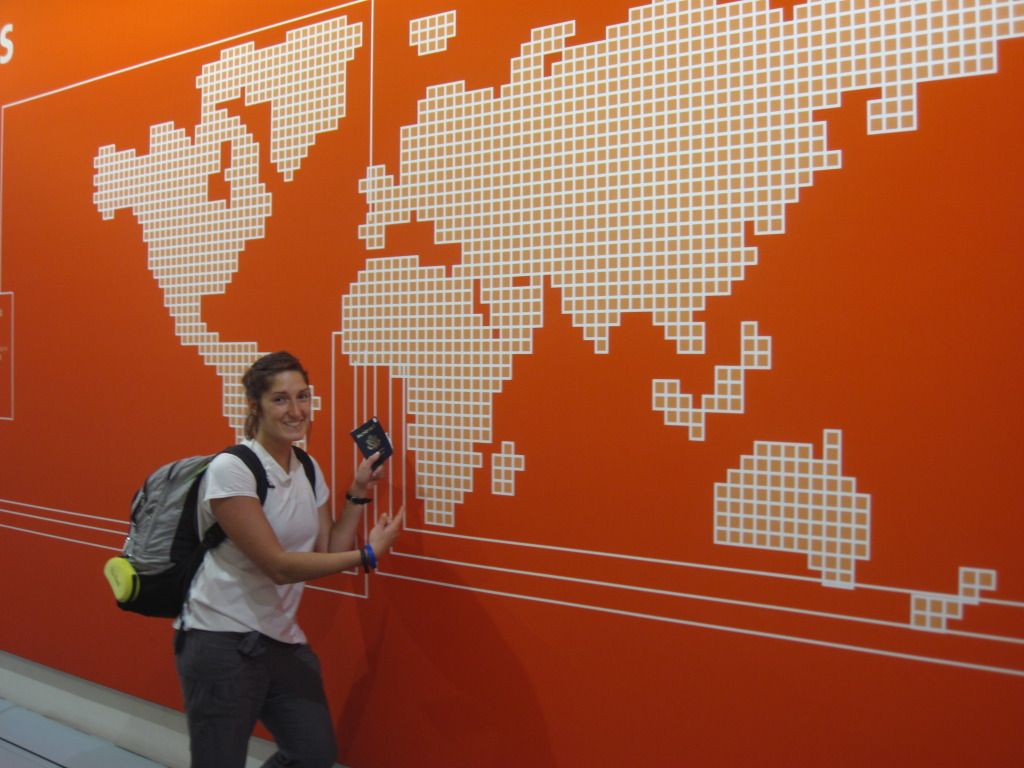


Afrikaans is a home language in South Africa; people speak in fluently along side English. The balance of the two is admirable and makes me all the more zealous to learn another language. Here school workbooks might be in Afrikaans and the class taught in English or vice versa. Magazines, menus, and ingredients are printed in Afrikaans. Readers, waiters and chefs speak english. It is a completely bilingual country. So….my host family conversed freely in Afrikaans amongst themselves and included me with English.
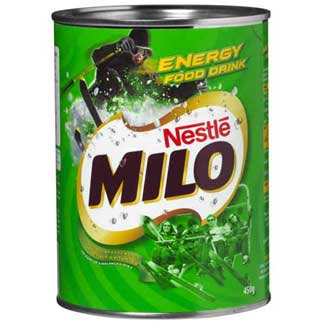
I set out to do more than marvel at the unique language. It he youngest sister asked me to do something for her, so I cut a deal trading favor for language lessons. It worked out perfect. I made her milo, a hot malt drink, and she helped me with vocabulary. As with most of the languages I’ve learned this year, Afrikaans is phonetic for the most part. The two difficult things are the guttural sound made be the “g” and the pronunciation of the “j” as “y.”
To give you an example, here are the few words and phrases Paula thought necessary for me to learn:
Goeie amore: good morning. Quie amore-a
Goeie nag: good night. Quie a knocgh
Goeie middig: good afternoon. Quie a middough
Goeie dag: hello. Quie a docgh
Ek: I. Jy: you.
1. Een (E-n) 2- Twee (Twee-r) 3-Drie (Drier) 4-Vier (Veer) 5-Vyf (Fyfe) 6-Ses (Sis) 7-Swewe (Se-ev-a) 8-Ag (A-ag) 9-Nege (Ne-gh 10-Tien (Tin)
Hou op: stop it How op
Dankie:thank you dankey
Asseblief: please. Aszableef
Pleaser: pleasure. Pless-er
Did is koud buite: it’s cold outside. Dit~es koat batter
Kan Ek n koppie koffie kry asseblief: caan Ek ahi kope coffee cray asseblief
Die here seen jou: god bless you. De-huere-a sien yo
Dit lyk smaaklik: Its delicious Didt lake smack-luck
Hoe laat is dit? : what time is it? Hoo laat ees didt
War kom Jy vandaan: where do you come from? Va com ya vandaan
Gemeng de sous: Hot sauce. Ha Ming d’sauwce
Dit is al/ Ek is Klaar: that’s is /I’m done. Ek es clat
** this definition was perfetly worded to sum up my feelings and thoughts: ” a feeling of surprise mingled with admiration caused by something beautiful, unexpected, unfamiliar, or inexplicable”







