
I’m sitting in the middle back seat of my friend’s car, the air conditioning blowing on me and the music up high. This still feels weird. And normal. It’s all fused together at this point.
Odd enough, the cold air coming from the vents reminds me of a night less than two months ago. It was very different than this one, seeing as I was in New Delhi, India.
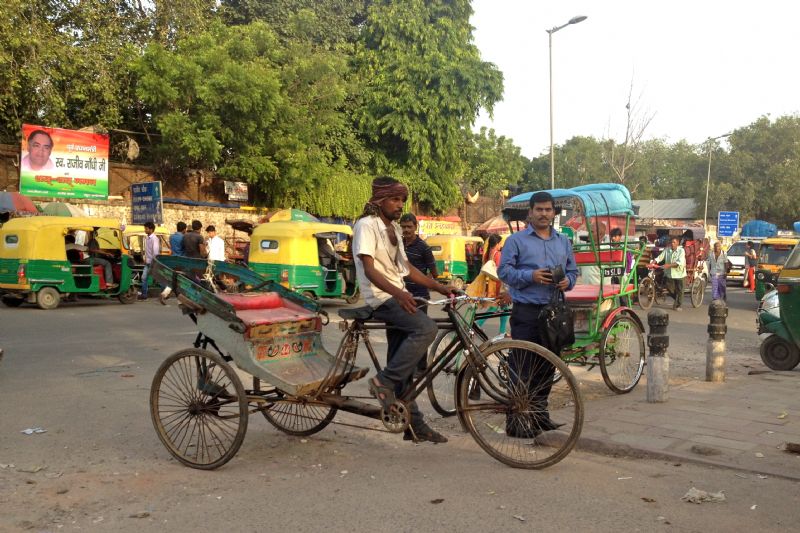
I was in a tuk-tuk with my friend, Danica. No seat belts, nothing to hold onto, and no door. We just flew down highways packed with vehicles and other green and yellow tuk-tuks. I affectionately referred to them as minions as they sped around each other in Mario Kart fashion.
Prior to this, we had walked out of a mall nicer than anything I’ve ever seen in America. Being in a foreign country, we gravitated toward local cuisine: the Hard Rock Cafe and Cinnabon. We even saw a movie for three bucks and the recliner seats were nicer than seating we have at home (sorry, Mom and Dad).
It was bliss. Three hours earlier, we had walked through those polished mall doors drenched in sweat from the incessant humidity and pollution, and shocked at the masses of people that were everywhere we turned. People–communities–built and lived in makeshift homes on medians in the roads and on the sidewalks. It was horrifying and heartbreaking: parents curled up on the ground covering their faces with their arms as if trying to block out the light and sounds of the road. Their children played nearby–and by “play” I mean sat in dirt with stick toys or stayed busy with other poor wanderers.
I tried to justify in my mind that they were content. I mean, they had nothing, but they had each other. They had a place, a community, to call theirs. And really, that’s what we all crave, isn’t it?
But when we walked through those fancy doors into the fancy mall, all of that was forgotten. India itself was almost forgotten despite being surrounded by Indians. But these people were different than who I’d grown accustomed to running into on the streets. These people were of higher caste. I don’t even begin to understand their system, but when I see women comfortably and confidently wearing skinny jeans and tight tshirts, I assume they’re not limited to wearing saris and sweeping sidewalks.
I couldn’t help but feel self conscious in my dirty and sweaty clothing. It was day three of the same outfit, and I definitely was reminded of that when I got the up and down glance from passersby.
There was no hair out of place, no beads of sweat on their upper lips (I embarrassingly wiped the endearing “sweatstache” from my own face), and no connection to the poor world literally right outside. It was like they had made this silent agreement to live in the blissful and clean environment of the mall, and we, walking in, had made the agreement as well.
We ate our food at the Hard Rock, and I watched as a middle school birthday party was going down. Obviously middle school because the boys stuck to themselves and the girls whispered in their circles, throwing glances at the boys every few seconds. They were dressed to modern perfection, one boy even in a modified silk suit (I could totally be making this up, but it sure looked silky and it sure looked like a suit).
I was shocked. Had what I’d seen outside been a terrible dream? Was this what “true” India was like, businessmen in suits drinking at the bar while their children played “grown up?”
We paid and sat in the plush, cool movie theater. I pushed my horror aside to get lost in the movie–a better reality than the juxtaposition of life around me.
But the false reality on the big screen ended, and so did my ignorance.
We left the mall, our silent agreement of ignoring life outside terminated. Reaching the street, we were immediately approached by at least ten men, each one fighting to give us a ride home for the “best price.” Of course, the actual price told to us by our hostel manager was laughed at when I told them, so I threw up my hands and acted confident and said, “Anyone for 250 (rupees)? Anyone?” They laughed again, so we settled on some terribly unreasonable number…
And got stuck in traffic for an hour.
Gone was the air conditioning and fancy middle school party. Gone were the luxurious stores and girls in the latest fashion. I was inhaling more fumes than air, and covered my face half the ride home; my fight or flight instincts need a drastic tune-up.
We, in the backseat of a “minion,” weaved through traffic, zoomed past bicycles on the sidewalk (yep, you read right) and could do nothing but accept the stares of too interested men in transportation passing by.
So you can imagine my guilt and confusion as I sit here in this leather middle seat, post Chick-fil-a and baseball.
What just happened?
I look out the window at the moon, its face giant and visible. As clear as I can see it do I see those people sleeping on highway medians and streets in New Delhi. It kills me.
Not to do the whole “there are kids starving in Africa so you better eat your broccoli!” guilt trip, but how on this earth do people go on living normally after hearing and seeing things like that? And by people, I mean me. How can I just blissfully enter America like I did that mall and drop money on clothes when the same amount I spent sends my Nepali friend’s son to school for a month?
Yeah, I just guilt tripped myself. Even though I said I wasn’t going to.
But it hurts. The pain of the world. It hurts me to know faces and names in earthquakes on the news. It’s scary and I worry, but mostly I just forget.
I told myself that I wouldn’t. But yet I have.
Don’t forget. Sarah, please don’t forget.
I believe that in order to not forget, you have to act. If you’re interested in helping a friend in Nepal send his five year old son to school, or in partnering with an organization in India that I worked with on the Race, please PLEASE email me.
Let’s not forget.







