
A couple blogs ago I wrote about Asha Nepal and the work we were doing there, their mission for giving freedom to enslaved women and children in Nepal. After working there for about a week, my team and I headed out into the countryside south of Katmandu to a village called Khokana. We took a bus to a station at the north part of the village and hiked down into the valley to the church at which we were staying.
Ministry in Nepal after Asha was difficult; I had gotten used to playing with kids and running Homework Time and singing during devotion time. In the villages, the best way for foreigners to reach non-believers in Nepal is through handing out tracts.
My team and I were not ecstatic about this prospect as individuals in America who hand out tracts are sometimes viewed with skepticism and often have a distinct stigma attached to their image. Compounding the problem was the fact that all the tracts were in Nepali and we had no clue what they said beyond their titles (curious descriptions like a Nepali man smiling toothily underneath the caption “The Way to Happiness!” or Jesus floating above a crowd of people, ascending toward Nepali alphabet characters spelling out “Strange but True!”).
I read a book by Skye Jethani called “The Divine Commodity” while in Nepal. I read the final chapter the night before beginning our first day of ministry in the villages. In it, Jethani relates Vincent van Gogh’s painting of the sower and Jesus’ parable of the same subject to the mystery of the gospel. When the sower casts his seed, he has no clue where it’s going to land. It’s not up to him whether or not it lands on good soil or rocky ground, nor is it his responsibility to facilitate the mystery of the sprouting and growth of that seed.
Instead, God controls the mystery. We are commanded to sow and reap; the Lord takes care of the rest. And it was hard to swallow that as I knew I would be heading into the jaws of the most uncomfortable ministry I had done yet. In my bustling Midwest suburban culture, you hardly make eye contact with the people you pass on the street or in the market, let alone walk up to them, hand them something, and then smile expectantly hoping they speak some English. Yet that was what we were doing. We knew enough Nepali to hand something to a person, refer to them respectfully as brother or father or grandmother, and retreat politely, hoping they read what we gave them.
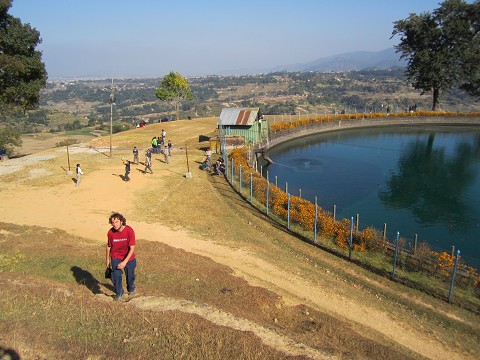
I can’t tell you how often we handed a tract to someone and they asked us, “Are you Christian?” We responded in the affirmative and they responded with a blunt, “I am Hindu.” Often that was the end of the conversation. What do you say to that? You just thank them for their time and hope they read the gospel you’ve placed in their hands.
But it was a daily exercise in trust. Do I trust that God will take the seed I sowed and make it grow in the way he wants? Do I trust that God can save even the most stubborn Hindu or Buddhist? Do I trust that God overcomes my inadequacy with his Spirit?
It was humbling to realize my relative unimportance in the process of the Spirit growing the seed inside someone. I sow. Hopefully, one day, someone will reap. The rest is up to God. I believe that a proverb illustrating this might be, “You can lead a horse to water, but you can’t make him drink.” This is true, but I prefer the agrarian model: you can stick a seed in the ground, but nothing you do will make it sprout.







