
Who knew my mission to find iced coffee would lead to an interview with a man who had survived the Killing Fields of Cambodia.
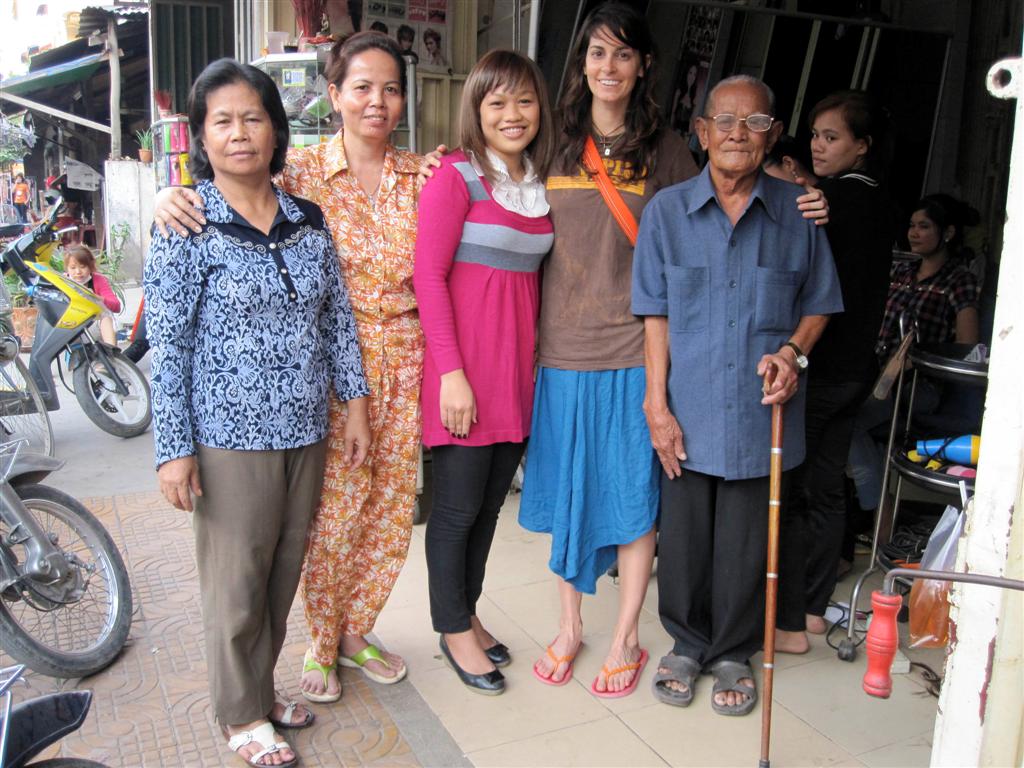 I discovered a restaurant with an iced coffee stand. I first noticed him sitting in front of the restaurant and immediately I knew there was a reason my eyes met his. I could feel the sense of wisdom and life experience he carried. I also could feel his joy while he sat in front of this restaurant people watching with a twinkle in his eye and talking to passer bys. My heart went out to him and I knew I needed to talk to him. The iced coffee stand was located right next to our housing base. When I first went there I met the lady who ran the stand. She called over a young man to translate what I was asking. He was her son, who was going to a university and studying English. We began a friendship. I returned almost daily and looked forward to seeing this family each day. I later met her niece who worked next door at her sister’s hair salon. Both businesses, a small restaurant and hair salon are family owned and operated. They all live behind the businesses.
I eventually found out the older man was my young friend’s grandfather, Hun Juan, who was 90. After I found out how old he was, I knew I was supposed to talk to him about his life and what he had gone through in Cambodia, especially during the Killing Fields period. He sat in front of the restaurant everyday and just watched and talked to people. We would make eye contact and smile and wave and he would offer me a chair and would try to talk to me. I didn’t know what he was saying! But, I loved his sense of joy. I would sort of smile and nod. One day, when I was sitting down and he was talking to me, my friend happened to be nearby and translated what he was saying. He pointed to his other grandson, my friend’s younger brother, and said, “When I was his age I was a lot skinnier because I had to work all day outside. And I didn’t have the opportunity to go to school at his age like he does.” Times have changed tremendously in Cambodia, especially considering the Killing Fields happened just 30 years ago.
One day, I asked my friend if I could talk to his grandfather at some point about his life and what it was like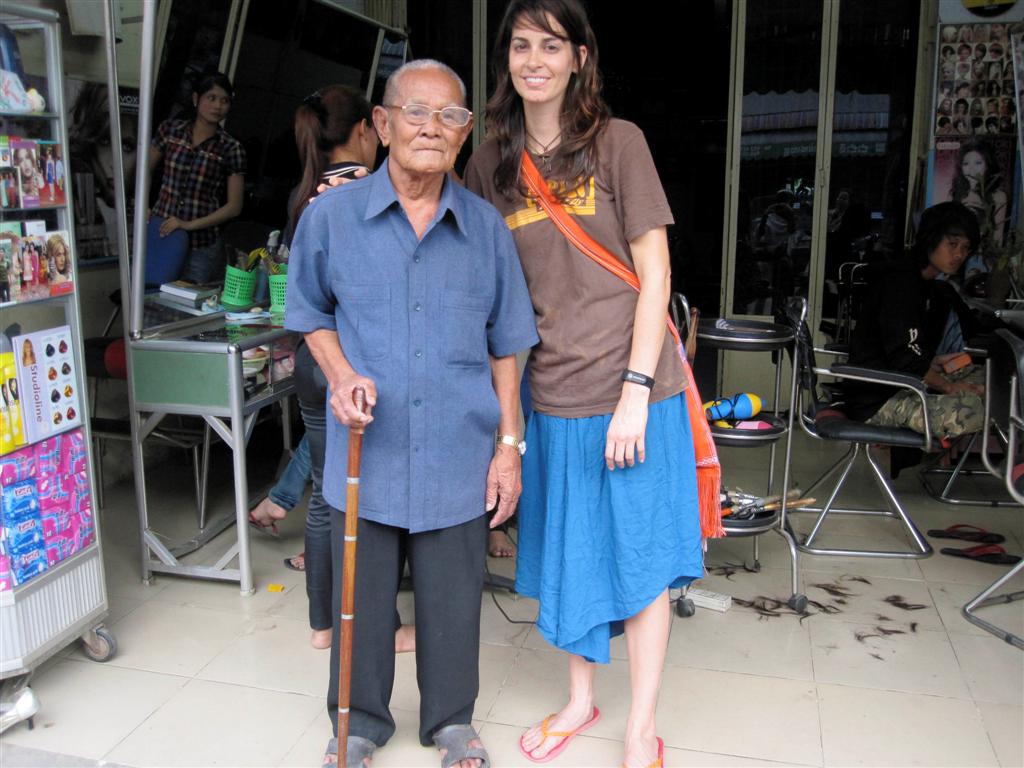 during the time of Pol Pot’s regime, which is when the Killing Fields occurred. Hun Juan said excitedly yes. The day before we left Cambodia I got a chance to sit down and talk to him. We went into their house to have some peace and quiet from the busyness of street life. My friend kindly translated.
Hun was the youngest of eleven siblings, seven brothers and three sisters. Everyone except for Hun has since passed away. He said they had a good relationship and loved each other. He studied in a pagoda (Buddhist church). Currently people go to monks to gain knowledge. Hun became a monk at age 16 and then left monkhood at 20 to get married. It was an arranged marriage. He says he did not have feelings for her at first, but soon enough, he loved her. Hun and his wife had four children.
Society at the time was horticultural and pastoral. Hun says life was simple. His job was climbing palm trees to gather juice from the top of the tree to make liquid sugar. He would tie bamboo around the tree to facilitate climbing. He never got hurt climbing 20 trees each day. He climbed palm trees until a war occurred in 1960. Hun says even though a war was going on, his life was not hard. He lived in the countryside in his own house and still had enough food.
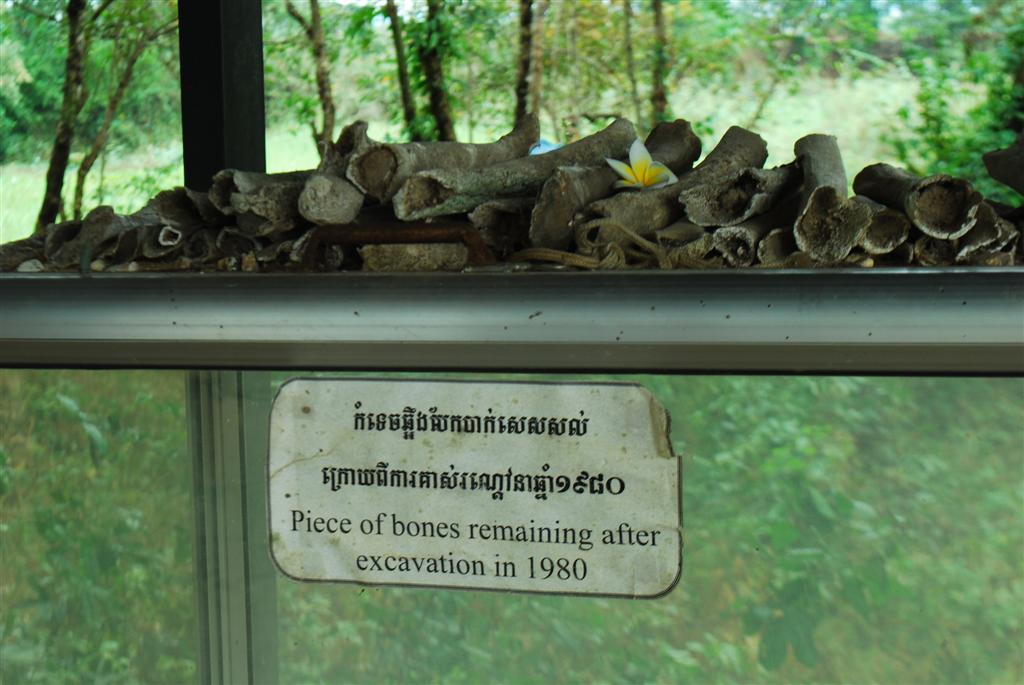 However, in 1975 when Pol Pot assumed control, life became very difficult. Pol Pot had his own theories about government and the human life. They evacuated all cities and led people on forced marches to the rural countryside. Pol Pot and the Khmer Rouge, the name of the group of rebels who took control of the country, targeted ethnic minority groups. They also targeted professionals, such as doctors, lawyers, teachers etc. He thought it was best to eliminate all intellectuals and anyone he thought opposed his way of thinking or represented class advancement. The Khmer Rouge wanted to enforce a form of agrarian communism where the whole population had to work
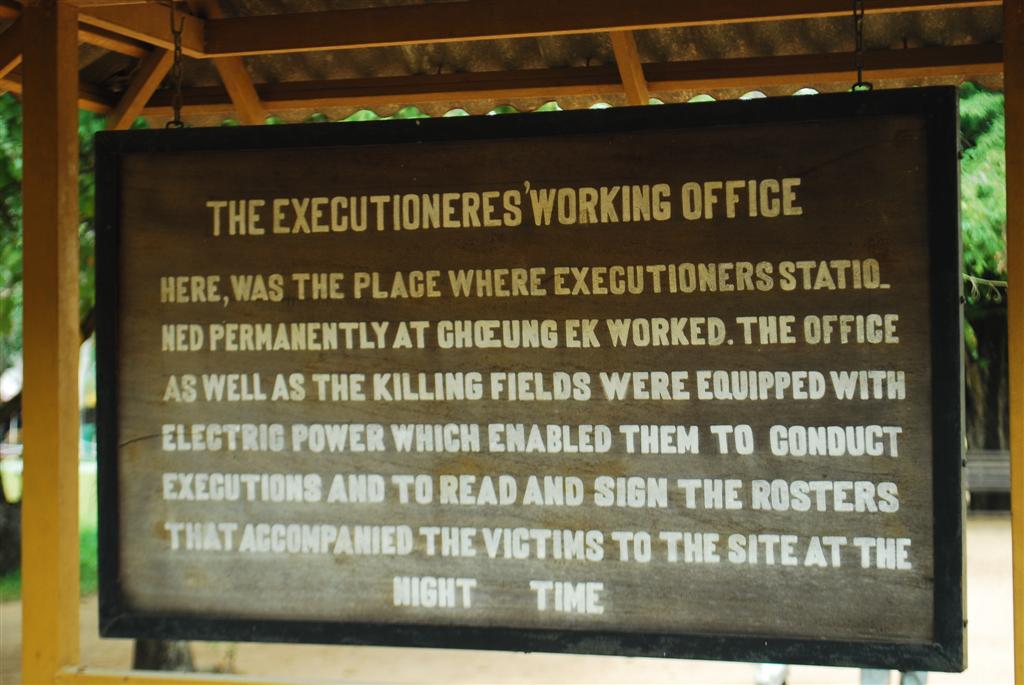 in collective farms or forced labor projects. They wanted to make Cambodia a classless society by depopulating cities and forcing the urban population into agricultural communes. The Khmer Rouge’s attempts at agricultural reform and self-sufficiency, even with the supply of medicine, led to thousands of deaths. Most people were lied to and told they were being evacuated for only a few days and would return to their homes. The total number of people who dies from executions, starvation and disease is around 1.4 to 2.2 million people out of a population of 7 million. Today Cambodia is a young society.
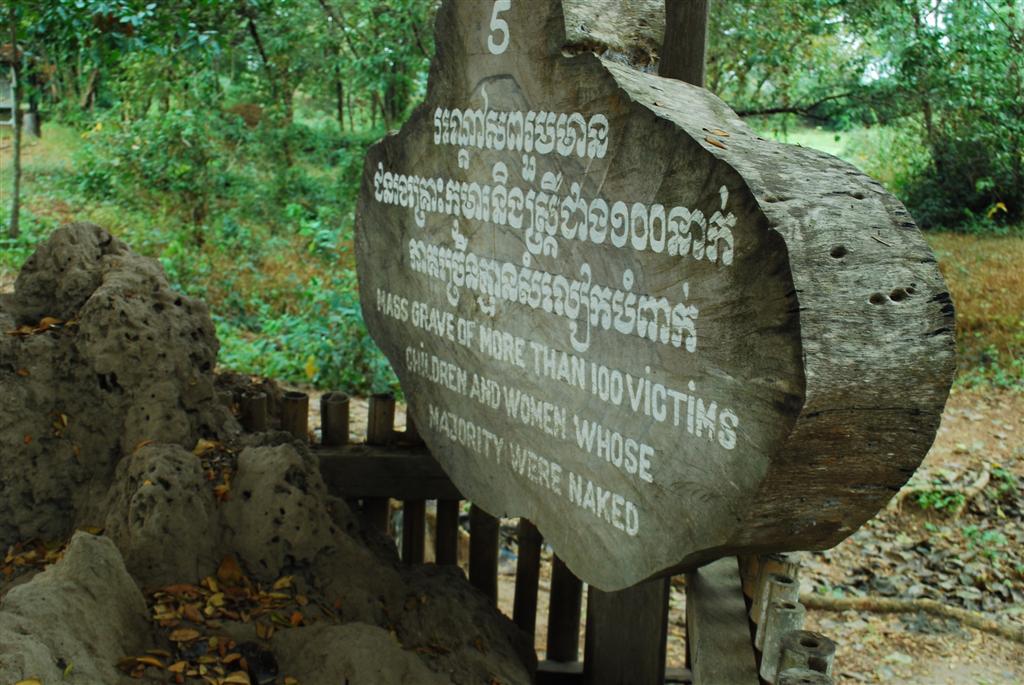 At that time, when Pol Pot and his regime gathered up the people, Hun was around 60 years old. Since Hun lived in the country side, he did not go anywhere when the Khmer Rouge began gathering the people, but those in the city were sent to live in the countryside. They divided the people into teams of 12. His team consisted of older people. Each team received one chicken, a banana tree, and potatoes. Those in control gave the teams’ seeds to plant and then they were responsible for feeding the chicken and growing the food for the Khmer Rouge. Hun fed the poultry. At first, the teams ate separately and had enough food. Twice a day the teams would all gather together and eat porridge.
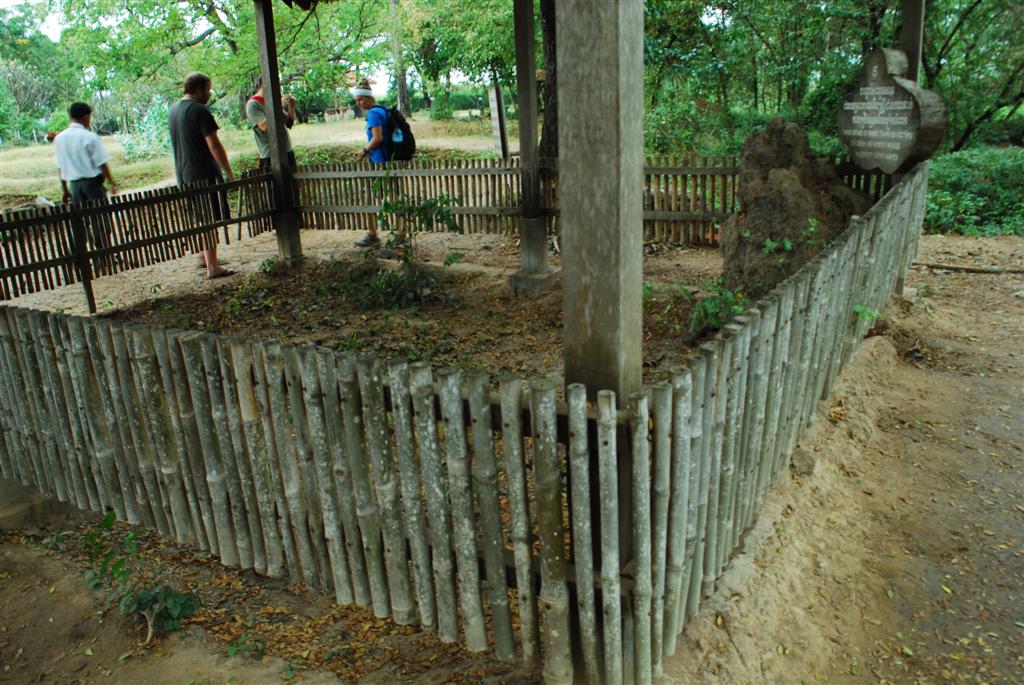 After 1976 there were no teams and everyone began eating together. Combining everyone together resulted in food shortages. The bell rang twice a day for food, morning and afternoon and 400 to 500 people ate together. Tasks were divided amongst everyone. Making dams and irrigation were common jobs. His wife’s job was to look after 80 children and his children had to collect manure. Hun saw his family at night and during the two meal times, 12 p.m. and 5 p.m. The children of those in the camp, even the youngest ones, were never with their mothers.
When asked if he was afraid for his life, Hun said he was very afraid of the people that were in charge. He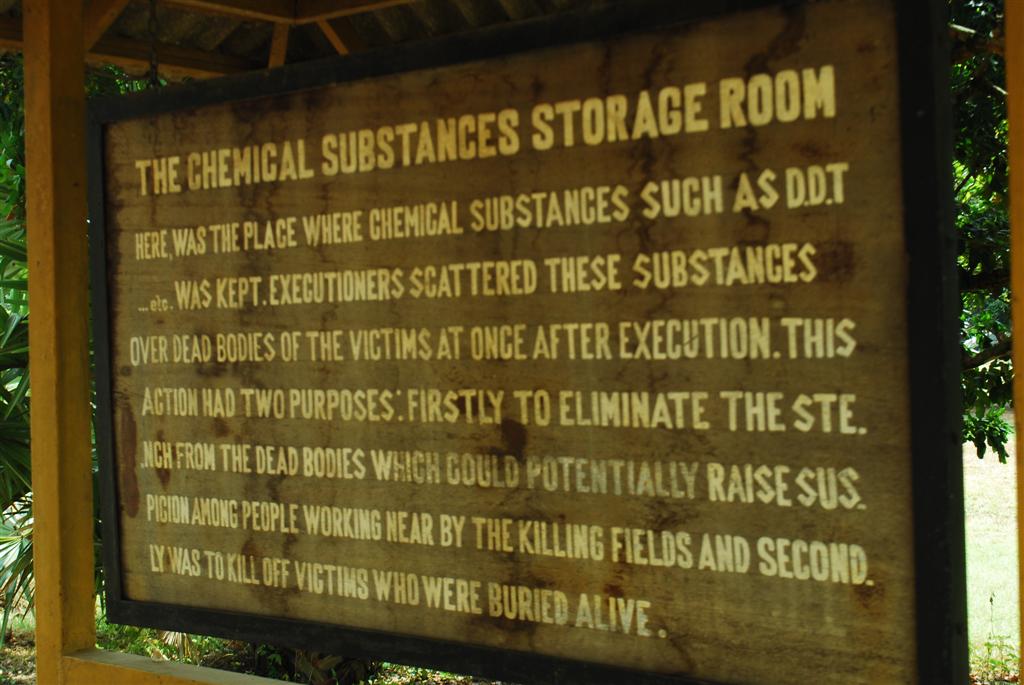 would witness people being killed for not working hard enough or stealing food because they were starving. But, since some of the people were from the city, they had never worked in a field or done physical labor, so for them it was especially difficult. They were not allowed to help each other when one couldn’t perform physically. Those in charge would announce that they were taking people to an education center for studying and then those people would never return. Hun said they were taken to a place in the mountains and killed. The Khmer Rouge would mainly take the intellectuals and have them killed. Hun remembers the victims had their hands tied together, were placed in a line and then loaded up on a bus.
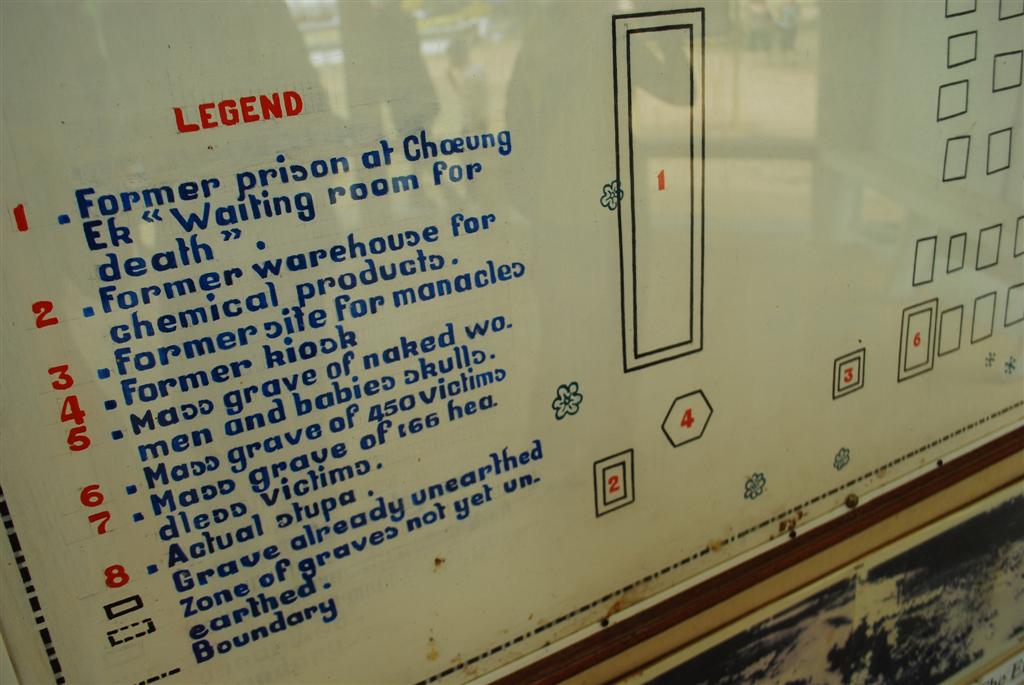 He worked hard while there and worked until the end of the Khmer Rouge’s rule. In 1979 Vietnam troops came to stop the war. The people were evacuated to the mountains in wagons in the midst of gunfire. Along the way many people died due to famine. They were in the mountains for half a month. Hun survived and was able to return home to his house, which was still standing. He had enough food because of all they had planted, which was now there for them to eat and not just to give to the authorities. Hun says he was very happy because the war was over, he had enough food and his family was safe. Pol Pot was surrounded and then surrendered.
 Hun says he is happy to be alive. He’s survived three wars: 1960, 1970 and 1975. He says now is the best time of his life. He has led a hard life and now that everyone is married and taken care of, he can stop worrying. He has enough money, enough food, better shelter and can travel. Hun has 30 grandchildren and 10 great grandchildren.
After the interview, Hun told me he was so glad I talked to him because no one talks to him about his life anymore or his past, and our talking helped him to remember his life and keep it alive. He said “it was destiny that we met.” I’ll always remember him. It was an honor to sit and talk with him and hear his story of survival.
I strongly believe we need to value our older generation more in America. They are treasures and have so much wisdom to share. Take time to talk to them and listen, they have a lot to say.
(During the interview, Hun often used having or not having food to determine if his life was hard or not. For me, when simply thinking about what would cause me to have a hard life, I had an interesting revelation. I’m so used to always having food and never having to go without it that my mind has somehow made it a subconscious automatic “I will always have that.” Therefore, I found myself bypassing the subject of food without even realizing it to think of other things that would cause a hard life. It is amazing the difference in perspectives. It is also amazing and humbling to hear his gratefulness and sense of joy for his life when he just has food to eat, nothing else. When I can have the fullest of bellies and be surrounded by comforts and material items and still be wanting).







