
I signed up for the World Race because I wanted to have my heart broken. I know that I come from a background of privilege and wealth that most people could only imagine in their wildest dreams.
I’m grateful for everything I have. So grateful. But at the same time I get the feeling that I don’t quite know the depth of how grateful I should be in my day to day life. This is one of the reasons I wanted to take on the race – so God would show me just how deep my gratitude should run.
I didn’t see it month 1. I didn’t see it month 2. I was hoping to see it month 3.
On our way to Sofia, the capital of Bulgaria, our pastor with Mission Possible wanted to take us to the Gypsy villages to show us the work they are trying
to do in the communities there.
I had a woman in Serbia tell me to watch out for them. I saw them waiting and asking for money outside the fast food joint in Romania. I watched as pictures showed up on blogs of other squad mates loving on them. One of the women at the conference told us that these villages are one of the saddest things she’s ever seen, that some people barely live above how the pigs live with so few resources.
They’re building churches in these villages. They ran a camp, and realized that the 13 year olds from the camp were going back and holding Sunday school for the younger children. They came in to help them, and built a portion of a church. At some points they’ve had over 50 kids in Sunday school. They told us
that since starting churches in these villages they’ve seen changes in the people, the town, the infrastructure, the hope the people have -but it’s a very slow process.
We piled into a van and a car, and stopped at the first village.
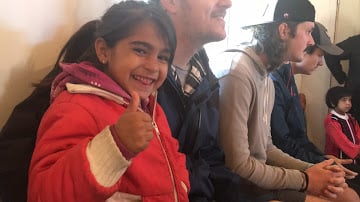
Trash. Everywhere. It’s the first thing you notice. Gorgeous landscapes of the Balkan mountains with foothills that serve as landfills. There’s a church building here, and a building next to it designated for Sunday School waiting to be finished. We sing to and sit with some of the kids in the church. We go to a woman’s house and pray.
.
Here is where poverty lies.
6 people-a husband, wife, 3 kids, and a baby, live in a one room house barely the size of my small kitchen. Boiling water heats the room, two beds on either side, and potatoes are piled everywhere. Above the parent’s bed are two strings with a blanket hanging from them to form a sort of bassinette for the baby. One of the boys is sick. He is asleep and wheezing. He doesn’t wake up to the sound of 5 people coming into his home and praying with his mother. Flies swarm around him, crawling into his nose and mouth as he sleeps without a flinch. We pray for her, for them, for their sick children and her husband who doesn’t know Christ.
Then we move on to “a village that is the saddest I’ve yet seen” says our pastor. The church here isn’t finished. Just bricks left from a partially torn
down house stripped to it’s bare bones.
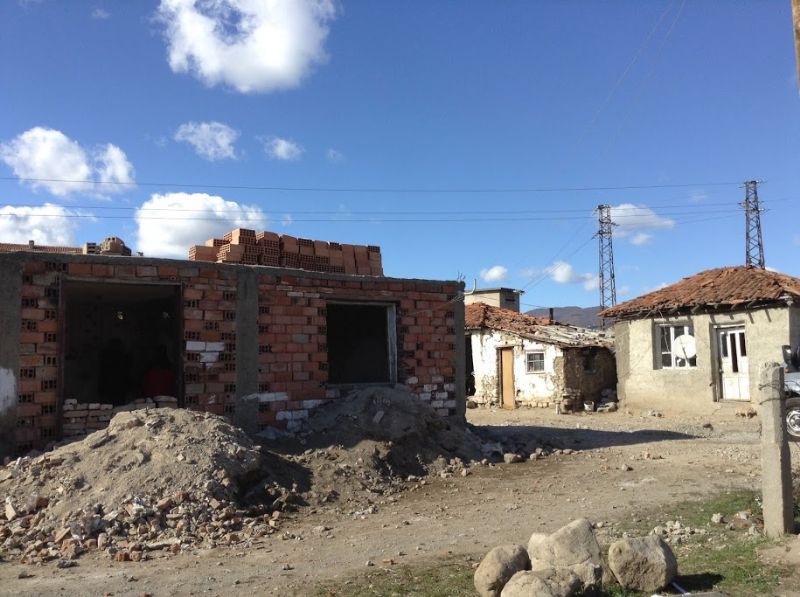
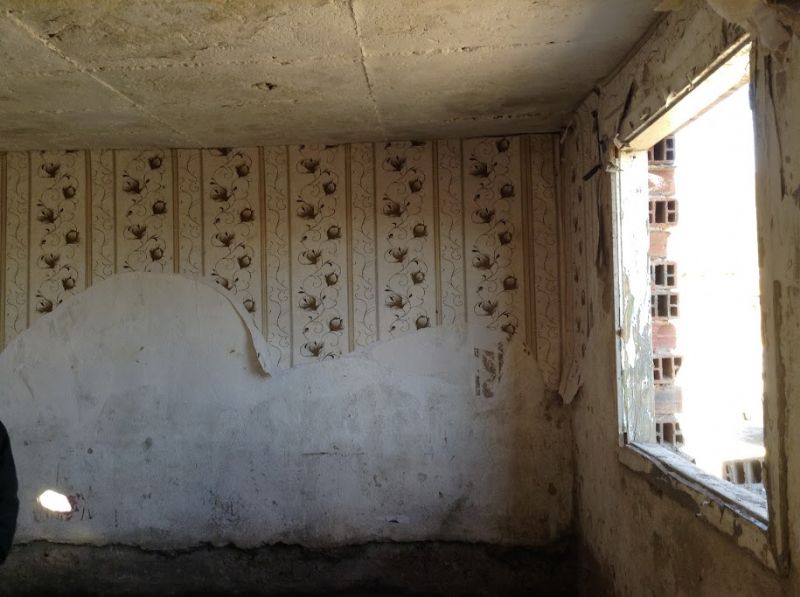

The minute we show up kids begin flocking to the building chased by their parents. The room fills and we have to continue motioning for people to come inside.We sing. We pray. We hand out blankets. Our pastor, Roman, speaks. The small children are covered in dirt, shirts and shoes with holes, boys wearing girl’s clothes.
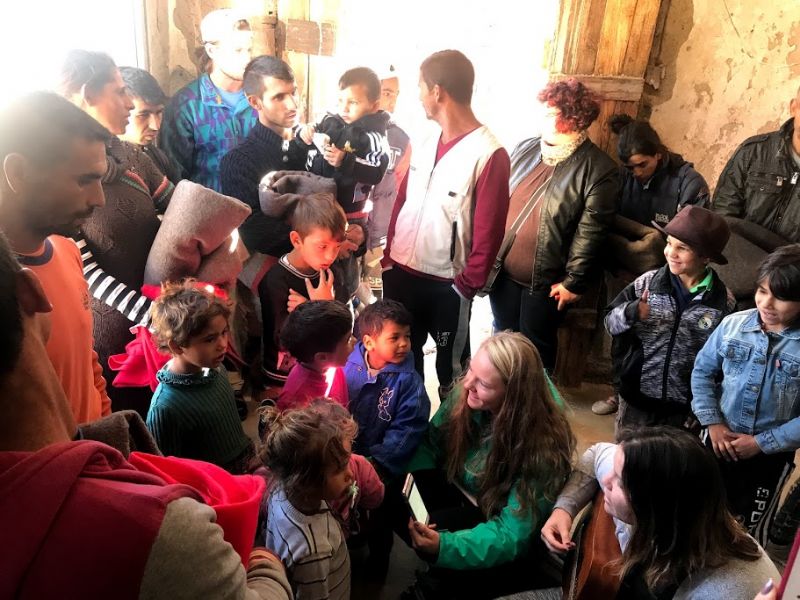
We walk back outside and a woman approaches Isaiah and I. She speaks gibberish but makes a prayer symbol with her hands. We pray for her- as hard as we can. Another girl asks me to pray for her sister in law who has been trying to have kids for 10 years. I pray over her- as hard as I can. It’s time for us to start getting back in the van. The first woman brings a young man up to me, hunched over, shaking, unable to speak. She motions for me not to look into his eyes. I pray for him as hard as I can.
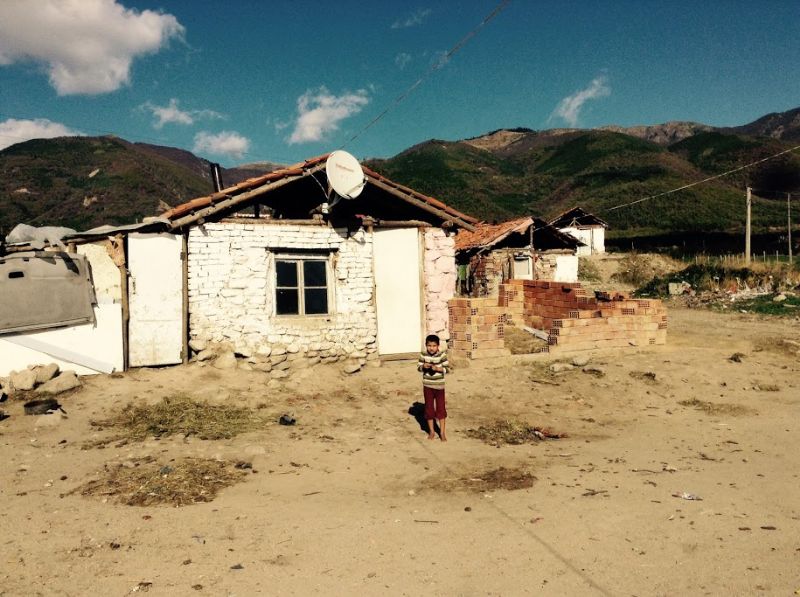
I turn to join my teammates in the van, but another boy around 6 years old catches my eye. This is the kid that breaks my heart. He’s too scared to come close and too curious to stay away.
He’s barefoot.
Did I mention it’s less than 40 degrees and windy?
He has no coat, pants don’t even come to his ankles. I’m wearing chacos and my toes are frozen-but I’ve only been in it for half an hour. If I had socks I’d
rip them off and give them to him. I motion for him to come closer. He makes his way over the rocky stony ground, covered in broken glass. I wonder how
his feet can stand that. I give him a high five, because it’s all I can do at this point. His face lights up.
I jump back into the van – the door will hardly close because of all the kids standing and waving at us, leaning in for high fives. One of the older ones helps us shut the door. We drive away, leaving them behind.
I’m still in shock about the barefoot boy. I mention it to our pastor. “We’re not in Africa here, it’s cold and winter is coming. It will only get colder.”
I’ve watched this battle the past three months. Europeans passionate about the Lord’s work, desperate for missionaries, and support- both financial and prayer. They don’t just fight to reach people and help people, they also have to fight the stereotype that Europe is okay, that there is no need here.
As we drive away I know that I have started to realize the depth of my gratitude for what I have back home.







