
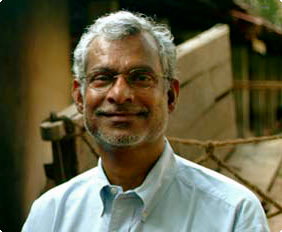
This is an excerpt of the book Revolution in World Missions by K.P. Yohannan. I will probably be quoting him more later on, as he has great things to say. As a poor man from India, he talks about his first time to America and his immediate impressions.
 “As I changed planes for Dallas at JFK International in New York, I was overcome at the sights and sounds around me. Those of us who grow up in Europe and Asia hear stories about the affluence and prosperity of the United States, but until you see it with your own eyes, the stories seem like fairy tales.
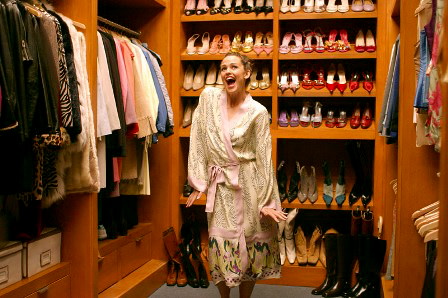
Americans are more than just unaware of their affluence, they almost seem to despise it at times. Finding a lounge chair, I stared in amazement at how they treated their beautiful clothes and shoes. The richness of the fabrics and colors was beyond anything I had ever seen. As I would discover again and again, this nation routinely takes its astonishing wealth for granted.
As I would do many times – almost daily – in the weeks ahead, I compared their clothing to that of the native missionary evangelists whom I had left only a few weeks before. Many of them walk barefoot between villages or work in flimsy sandals. Their threadbare cotton garments would not be acceptable as cleaning rags in the United States. Then I discovered most Americans have closets full of clothing they wear only occasionally – and I remembered the years I traveled and worked with only the clothes on my back. And I had lived the normal lifestyle of most village evangelists.
Economist Robert Heilbroner describes the luxuries a typical American family would have to surrender if they lived among the 1 billion hungry people in the Two-Thirds World:
‘We begin by invading the house of our imaginary American family to strip it of its furniture. Everything goes: beds, chairs, tables, television sets, lamps. We will leave the family with a few old blankets, a kitchen table, a wooden chair. Along with the bureaus go the clothes. Each member of the family may keep in his wardrobe his oldest suit or dress, a shirt or blouse. We will permit a pair of shoes for the head of the family, but none for the wife or children.
We move to the kitchen. The appliances have already been taken out, so we turn to the cupboards… The box of matches may stay, a small bag of flour, some sugar and salt. A few moldy potatoes, already in the garbage can, must be rescued, for they will provide much of tonight’s meal. We will leave a handful of onions and a dish of dried beans. All the rest we take away: the meat, the fresh vegetables, the canned goods, the crackers, the candy.
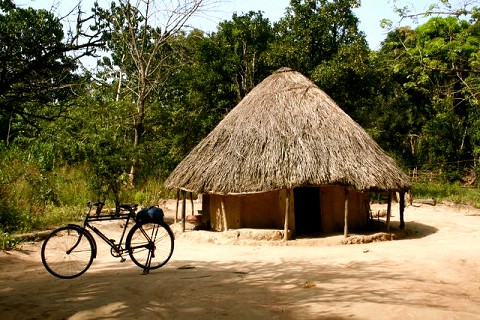
Now we have stripped the house: the bathroom has been dismantled, the running water shut off, the electric wires taken out. Next we take away the house. The family can move to the tool shed… Communications must go next. No more newspapers, magazines, books – not that they are missed, since we must take away our family’s literacy as well. Instead, in our shantytown we will allow one radio…
Now government services must go next. No more postmen, no more firemen. There is a school, but it is three miles away and consists of two classrooms… There are, of course, no hospitals or doctors nearby. The nearest clinic is ten miles away and is tended by a midwife. It can be reached by bicycle, provided the family has a bicycle, which is unlikely…
Finally, money. We will allow our family a cash hoard of five dollars. This will prevent our breadwinner from experiencing the tragedy of an Iranian peasant who went blind because he could not raise the $3.94 which he mistakenly thought he needed to receive admission to a hospital where he could have been cured.’
This is an accurate description of the lifestyle and world from which I came. From the moment I touched foot on American soil, I walked in an unbelieving daze. How can two so different economies coexist simultaneously on the earth? Everything was so overpowering and confusing to me at first… As the days passed into weeks, I began with alarm to understand how misplaced are the spiritual values of most Western believers.”
The reality of this message makes me realize how blessed I am, but it also makes me realize what a slave to materialism I am and how important things are to me. I do not post this to condemn you, because I stand condemned alongside you. I have been thinking about these things lately, and I’ll post some of my reactions later.







