And this business exists in the heart of Calcutta’s sex district.
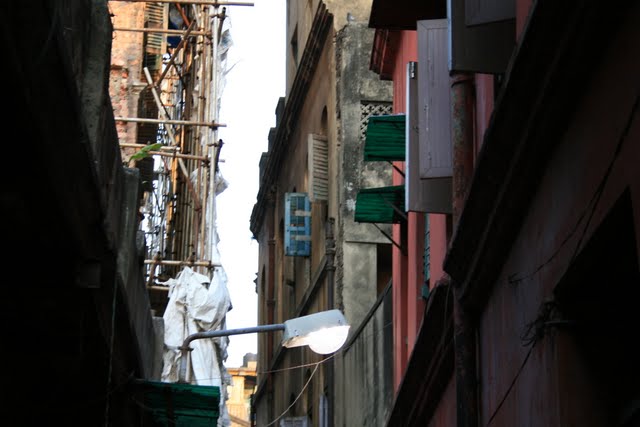
Last night we stayed late at work and our contact took us through “The Lanes” of Sonagachi. Over 10,000 people are being prostituted in Sonagachi, an area a little over one square mile. Sonagachi is especially well known throughout Calcutta and the entire world because of its young girls. And when I say young girls, I don’t even mean teenagers; I mean young girls.
Girls here are trafficked into Sonagachi from peasant towns of northeast India and Nepal. Although they sometimes kidnap girls from these areas, traffickers often buy them from their families for an average price of $4. Traffickers tell families that they have respectable jobs lined up for them in big cities, and parents who cannot afford the dowry for a daughters’ marriage jump at the opportunity to get paid to send off their child. 11 years old is the average age of these girls who are trafficked.
As we walked down the streets and alleys of Sonagachi, women and girls in their late teens were lined up down the street. Women on the streets in India don’t sit or stand anywhere for an extended period of time because it draws to much attention to them from men. But these women were ‘standing in line’. Standing shoulder to shoulder in some places as you walk down the street, women were trying to sell themselves to men for as little as $0.50 a customer.
But you rarely see a girl under the age of sixteen in the lanes. This is because when she is trafficked into Sonagachi, she is locked in a back room where she is beaten and raped non-stop for weeks on end, and then often doesn’t see the light of day for years. One girl at the business we work at was trafficked into Sonagachi when she was eleven years old, brutally raped and beaten almost 24 hours a day for three weeks, and then was locked in the same back room for seven years. This is an all too common story, and as I was walking down these alleys I was horrified to think that this nightmare was happening to girls as we walked past brothel after brothel.
I’m reading a book right now called Half the Sky by Nicholas D. Kristof, and in one part the author discusses a conversation he has with a border patrol guard at the Nepal-India border. Kristof sees truck after truck full of girls passing through the station without being stopped and inquires about it. The guard responds, “These girls are sacrificed so we can have harmony in society. So that good girls can be safe…these are peasant girls. They can’t even read. They’re from the countryside. This way the good Indian-middle class girls are safe.”
This blows my mind every time I hear or read something like this, but I have seen this mindset played out so much throughout this trip. Sacrifice the poor, sacrifice the girl, sacrifice the one with no voice. Trafficking is such a complicated situation fueled by greed, lust, and poverty. But it’s so easy to get angry at the pimps, at the traffickers, and at the men who use and abuse these women and children. And believe me, I’ve felt angry many times on this trip. And it’s so easy to feel hopeless. As I walk past a sixteen year old girl with hot pink lipstick painted on her lips and a dead look in her eyes, I want to grab her and run. But I can’t run with her. And I can’t punch the 50 year old man that walks away with her. But what CAN I do?