
What do you do when you hit the language barrier? Sometimes it’s the hesitant/awkward smile. Sometimes it’s the “sorry” grimace plus shrug. But other times, you don’t even worry about it because a touch is all it takes to communicate the most important thing: “I care.”
One day recently rather than doing our typical manual labor, we visited a home for the elderly. Now, I’m always a bit uncomfortable at homes like this unless there are very planned activities for us to do. Imagine how I felt knowing we’d be visiting a home for people where I couldn’t even do what old people love to do the most: talk.
Going into it, I knew I wanted to be able to hear these people’s stories, relate to them, learn snippets of who they are. But alas, I had no way to do any of that. While I am attempting to learn some Spanish, pretty much all I can say right now is “Can I help?” “Dinner is ready!” “Please” “Thank you” and “I’m sorry, I don’t understand. I don’t speak Spanish, only English.” That won’t help much when wanting to hear someone’s life story, or simply ask him or her if they know Jesus. So instead I brought my ukulele, hoping the love of music would transcend language barriers.
I sat rather awkwardly by, playing my ukulele, while others attempted conversation with some of the elderly folks around. There weren’t many of them and one in particular was sick in bed. The group was asked to go into his room to prayer over him. I opted to stay back and keep playing for the 3 others who remained at the porch area we were sitting in. One of the gentlemen continued trying to have a conversation with me. He looked at me intently as he spoke, making me feel his words were rather urgent. I called over one of my squadmates to see if she could make out what he was saying. She couldn’t really. But after a time of awkward nods and smiles, we got a Bible out in English and he had one in Spanish. We spent some time exchanging verses, and more awkward nods and smiles.
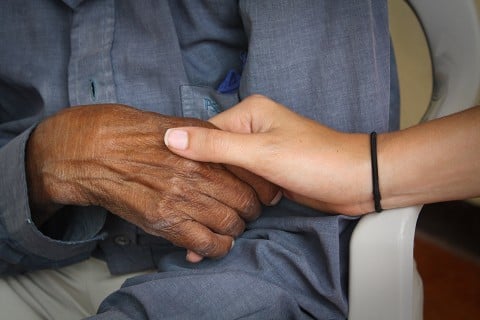
All this time I was keenly aware of a visually impaired man to my right. He kept asking questions, but I couldn’t understand him enough to answer. I felt helpless. I wanted to reach out to him, yet the only way I had prepared myself to do so was through music. So I kept playing. Eventually, the rest of the group found their way back to us and filled the seats around the elderly we had been visiting with. The visually impaired gentleman was seated next to one of the girls on my team. She reached out to him and attempted to have a conversation. His words were difficult to understand, not only because of the language difference, but his speech showed the wear of his years as well. Despite that he had reached out and taken her hand. And he did not want to let go. All he wanted was to know someone was nearby, someone to extend a hand to him. After he had taken her hand, the expression on his face turned to one of enjoyment and comfort.
In that moment I realized the importance of simply being willing to reach out. Whether verbal interaction is present or not, the expression communicated in the simple act of reaching out and touching someone speaks volumes.
Jesus reached out his hand and touched the man. “I am willing,” he said. “Be clean!” Immediately he was cleansed of his leprosy.
Matthew 8:3 (NIV)







