What happens to a child when their parent goes to jail for any type of crime? They go and live with family members or go into foster care right? Well in Bolivia, that is when things get tricky. Here they are supposed to go into the system or stay with family members. But the reality is many family members can’t or won’t take in additional children when their parents are incarcerated, be it because of long standing family issues or the financial burden that additional children add into the picture.
That is just part of the reason why so many children end up living right next to their parents in prison. Young boys and girls live in both the men and women’s prisons, from birth to age 18 and every age in-between. I honestly can’t tell you the number of children living in the prisons but the numbers are high. In reality I can’t even tell you the number of men or women living in the prisons of Bolivia, because they are said to be at almost double their capacity for inmates.
You may be wondering how that happens, and why that is even legal?
I asked the same thing last week when I learned about this epidemic, when I looked into the BEAUTIUFUL faces of the children born into this vary situation.
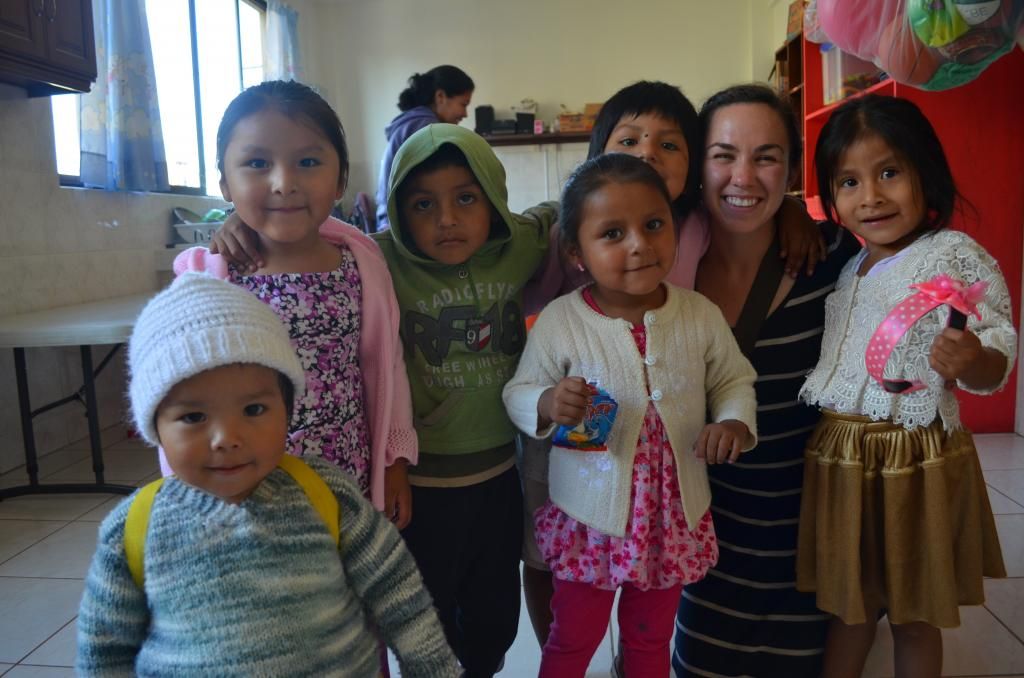
And here is the funny thing, it ISN’T LEGAL for these children to live with their parents in jail here in Bolivia…. But they still do! It boggles my mind that it still happens, even when it is illegal, I really can’t wrap my mind around it and really don’t want too. A prison isn’t the place for any child to live. It is a place for convicted criminals, murders, rapists, thieves etc, but not children.
The children here are exposed to so much of life that they shouldn’t EVER experience or even know about. Inmates are there for a variety of reasons, be they violent crimes or drug related crimes, in the San Sebastian Prison for Women one of the more common crimes women are imprisoned for is being a “Burro” for drugs, they either are selling or transporting drug related items. It is one way the women can earn money for their families, assuming they don’t get caught. I was surprised to hear that many of the women are in jail for smuggling baking powder, which apparently is used in the production of cocaine.
This last week while my team and I were in Cochabamba, Bolivia doing ministry I was blessed to visit two organizations that work with the children living in the prisons and I want to share a little bit about the first one that Justin, Alyssa and I were privileged to see.
La Casa de la Amistad, is located just across the plaza from both the San Sebastian Women’s Prison and the San Sebastian Men’s Prison, and just blocks from the bus terminal. It in reality is in one of the most dangerous places in the city. The ministry serves 120 children daily, from ages 3-18, and are currently at full capacity. And is staffed by eight people, a director, three teachers, two kitchen staff, one psychologist, and one person who is similar to a pastor. Their goal is to give children from the prison a chance to have a life outside of the prison walls.
They focus on three areas:
Education: Casa de la Amistad provides two types of educational programs.
An all day preschool/kindergarten for kids between the ages of 3-5. Where the kids get to spend the day at the center, learning and enjoying life.
(These were some of the cutest kids I have seen yet, when we were sitting in the office talking to Rodrigo, the director, one the these little boys was basically swinging on the gate to the building, watching us talk. This same little boy when we received the tour of the building wouldn’t let me or the director leave the classroom, they shut the door behind Alyssa and Justin.)
They also provide before and after school programs for the older kids, where they provide two meals a day, be it breakfast and lunch, or lunch and dinner, depending on when the child is in school. They help with school work, and provide their health education/intervention.
Health: Casa de la Amistad has a psychologist on staff, to work with the children in regards to dealing with the emotional tolls that come from living in the prisons. They also provide health care, teach nutrition, and other ways to stay healthy, because health is not a high priority in the prison system, it was just a few years ago when the prisons had raw sewage running through them.
Peace and Reconciliation: Casa de la Amistad, teaches from a biblical standpoint in order to help children and their families come to know God. They however don’t aim at converting parents or children in the prison, they aim at showing them love and teaching them how to live in a healthy manor with respect and kindness in the family makeup.
Overall Casa de la Amistad is working to break the cycle of incarceration in the families of Cochabamba. When a child grows up in a prison, that is the only life they know, when they either reach an age where they are kicked out of the prison or their family members sentence is up, many times they struggle to enter society, because it is both different than what they are used to or the people in the community reject them because of how they live.
While it was really hard to see what these children encounter in their everyday life, and to picture what their lives are really like, I loved being able to see what God is doing in their lives through the people at Casa de la Amistad and through other organizations and minisitries that are working in a similar fashion to help the children in the prisons. I know God is going to do big things through this organization.
“…Cuando estuve en la carcel Usted vinieron a verme…” Mateo 25:36 L.A.
“ …I was in prison and you came to visit me.” Matthew 25:36 b








