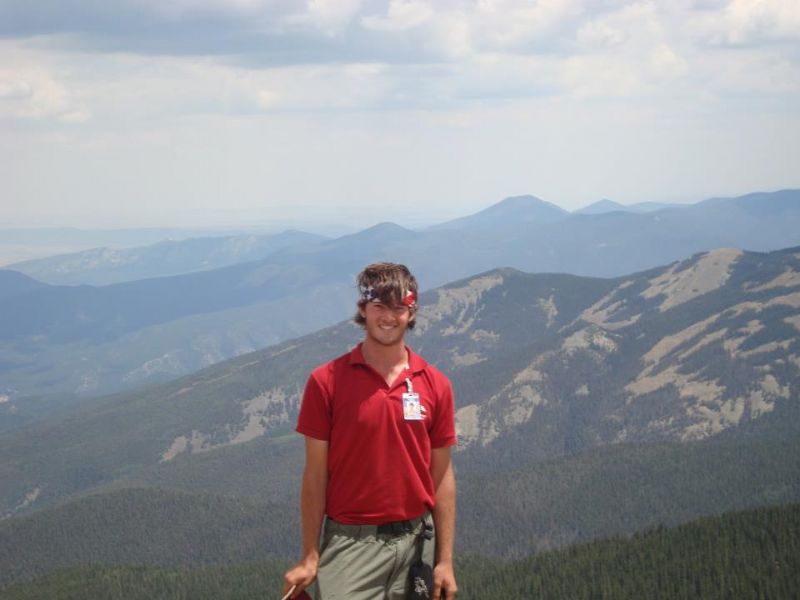
It was hot that day. Barely a cloud hung in the sky, and by 2 in the afternoon my friends and I were far beyond the comfort of the shade of trees. With every burning step the air thinned more and our lungs worked overtime, fighting madly to suck in as much oxygen as they could, exhaling energy along with the usual carbon dioxide. Breathing at 11,400 feet is a chore, to put it mildly. We still had 1,041 feet to go.
The scree field of Mt. Baldy is treacherous and unforgiving, even for a trio of Rangers hardened by two months of hiking and living in the backcountry of New Mexico’s Sangre de Cristo mountains.
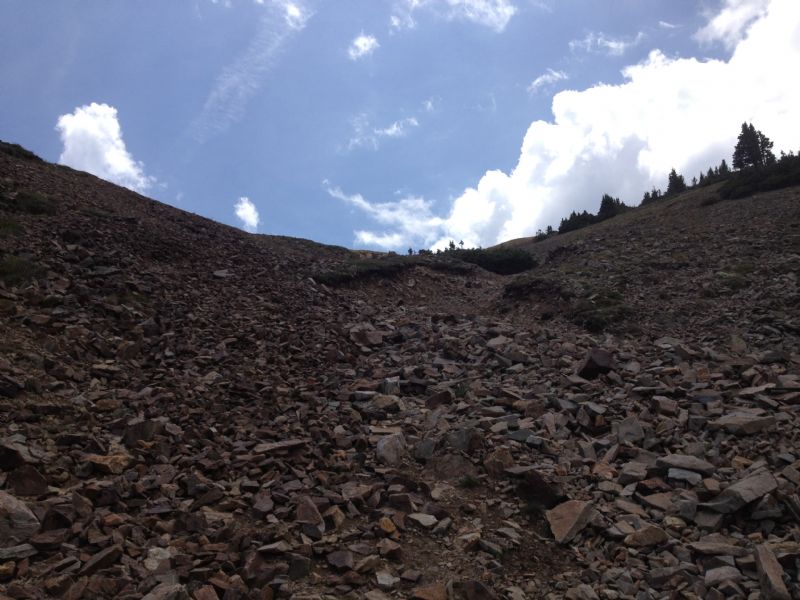
Heavy sweating in the arid heat of New Mexico was a rarity. Most of the time it crystallized into salt on the body before you could feel it. But in this heat and under this strain, it poured and soaked us so we could feel its salty sting in our eyes before the howling winds whipped it away.
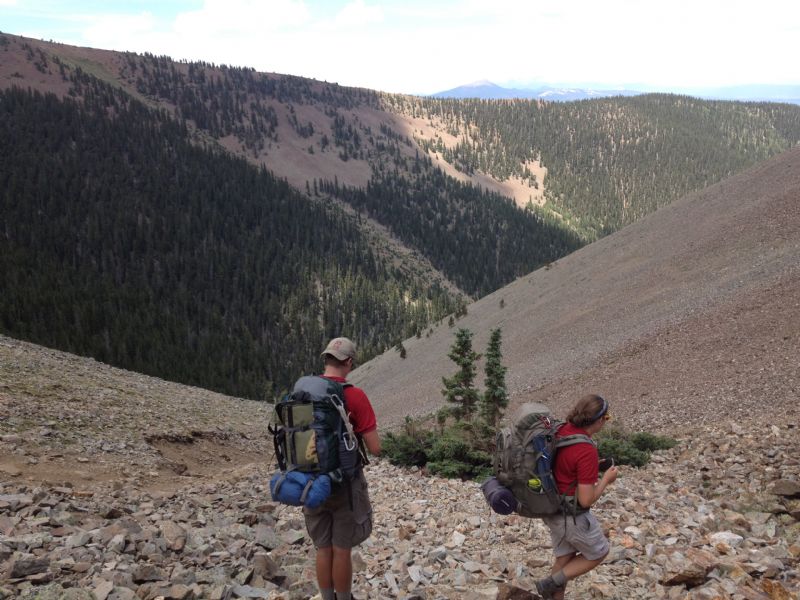
8 miles we’d hiked that day – straight up – and many miles more lay before us. But our legs pumped like iron pistons and we tightened the straps on our packs and climbed on, determined to summit this peak together, if for nothing else other than the view.
I was the pace setter – the guy who leads the crew and determines the pace of the pack, ideally so that everyone, even the weakest or slowest hiker, can stay within view and earshot of everyone else. I paused in my ascent and looked behind me. Dawson and Dianna weren’t too far behind, but the pace would have to slow somewhat. Actually, their exact words back when we’d had enough breath to talk had been “Well don’t kill us, mountain man.” Point taken. The next thousand feet would be almost vertical and we’d have to take a lot of breaks in between short spurts of dogged, breathless ascent. Good thing all of our gear was in good shape for this hike.
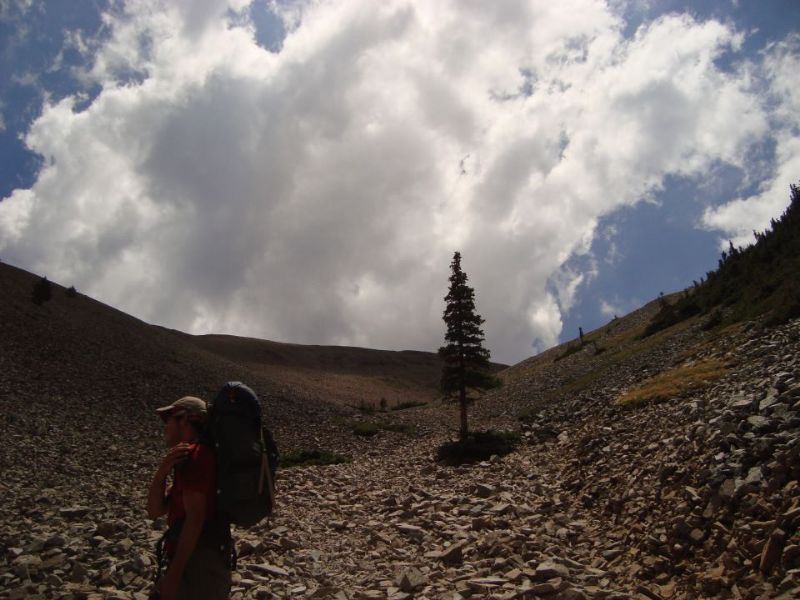
I felt it before I heard it – a sudden looseness in my right foot, as though it snapped free of my boot. A pop and a faint tearing sound. I looked down. The sole of my boot was torn from the body and now hung by rubbery tendons from the bottom. My boot was nearly useless now and we still had more to climb and all of it scree field – heavy but loose rock that could at any moment tumble downward with enough force and speed to kill a man, or suddenly give way beneath you if you didn’t find good footing and give you a nasty ankle roll or worse. So what could I do? My friends needed to press onward. Clouds had rolled in, but on Baldy clouds meant storms, and storms meant lightning. Was I going to try and head back down? An arguably riskier feat on a scree field. Or was I going to sit there and wait for someone to bring repair supplies – riskier still with the prospect of lighting. Or would I press onward?
We’re often faced with this kind of choice in a spiritual sense. Failure, like the failure of my hiking boot, is one of the inevitabilities of human nature. No matter how close we are to Christ, we’ll slip up at some point and face the decision of what to do next. No matter what form that failure takes, a lot of us tend to feel weighted down by the sense of guilt that comes with failure. That can feel even heavier if, like me, you’re preparing for or are in the midst of ministry, or really any position where you are supposed to set an example for others. The full realization of gear failure certainly feels heavy when you’re literally climbing a mountain, especially when you’re so close to the peak.
So what do you do? Does your personal failure disqualify you from going forward? Does it automatically prevent you from reaching the peak? That’s what the devil would like you to think. That’s what he tries so hard to get each and every person to believe as soon as they realize they’ve failed in some way – that they’re disqualified from their calling or, worse, disqualified from drawing close to God. But there’s a reason the enemy is called the father of lies. Lie is all he ever does.
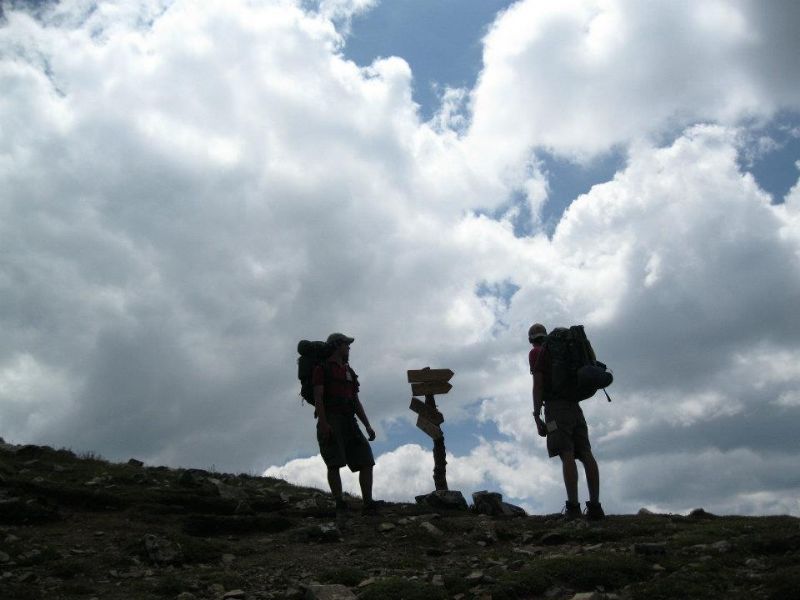
As I stood in that scree field, body angled toward the side of the mountain to keep from falling backward, sole dangling from my boot, I made the decision to press forward. With the prize so near, it made no sense to turn back. My boot was done for after this trip, but my legs still worked. The steps were harder now. Keeping my foot at least somewhat in my broken boot took considerable effort. And it brought pain. 15 minutes later we made it to the saddle – a sort of shoulder marked by a wooden sign right below the peak, set there as if to remind weary, worn and battered would-be conquerors of Baldy that they had one more chance to turn back.
Then the hard part began.
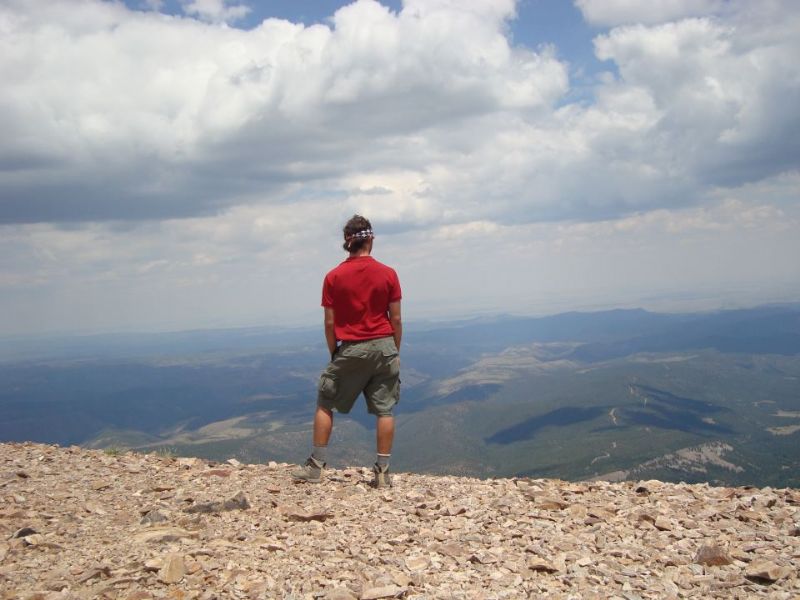
Together, Dawson, and Dianna and I climbed the last several hundred feet, lungs burning, foreheads dripping sweat, legs aching as never they had before. Our whole bodies ached by this point. But suddenly we could see the edge of the peak, almost straight above us and with one final, stubborn surge of determination, we hefted one step in front of the other, will and might straining against the ancient height and grandeur of the mountain and just before we thought we might collapse…we were there.
Facing failure in your spiritual life is a lot like the experience I had that day. Instead of a literal boot blow-out, we might snap at a co-worker or family member or entertain thoughts of envy. Or it might be more dramatic – a relapse into an old addiction or a lust that became sinful action. Every day we have a mountain to climb – a task or ministry to which God has called us that, without His strength and guidance, would be impassable. And when we find ourselves on the side of that mountain in that scree field of potential failures and the prize is near and a chink appears in our armor or we lose our way and stumble, the sense of loss and guilt can be crushing. It can feel impossible to press onward.
What a blessing it is to have a Savior who died and rose again so that while we might feel a conviction that would turn us back to Him when we fell, we would never again have to suffer in the throes of the guilt that seeks to weigh men down away from God! When God calls us into our daily ministry, He knows full well what our flaws are. He even knows how and when we’re going to mess up in life. But He calls us and He loves us anyway. His Grace is sufficient for us, and His strength shines gloriously in our weakness.
But we do have a choice – if we fail and willfully continue in that failure, we’re electing to take ourselves out of that ministry and to follow our own paths. The only one who disqualifies you from continuing toward the prize is you. The same thing can happen for a time if we give into despair. But if we run to God – if we run to our heavenly Father – He will lift us back up with arms full of grace and love, and in His strength we can continue on the path to which He has called us.
Failure does have consequences – the natural outcome of messing up, rather than God’s wrath since Christ satisfied that on humanity’s behalf. But God has an answer to that, too.
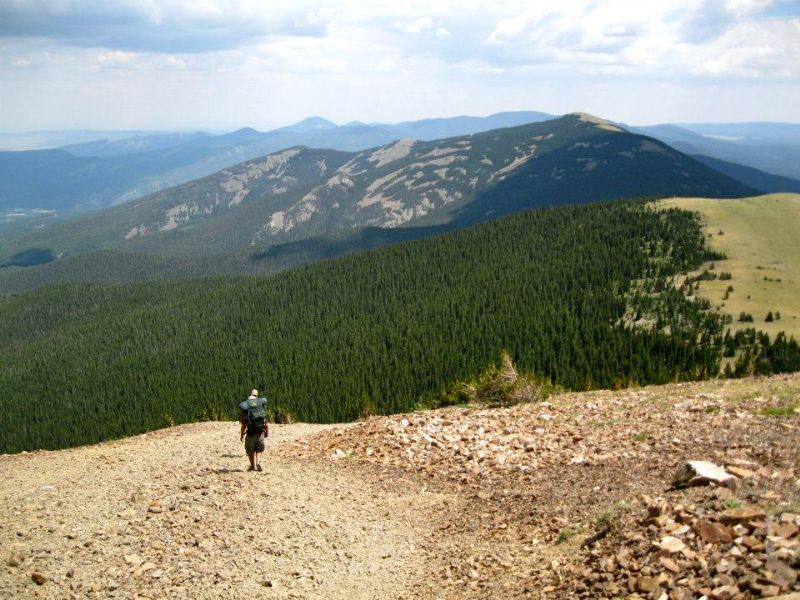
After we were done with our hike, 8 miles later down the other side of the mountain, my foot felt like hamburger meat – the natural consequences of hiking down a scree field with a broken boot. But it didn’t keep me from pressing onward and succeeding. And I got new boots and tended to them better than I did my first pair. But the beauty of the view from that peak and the companionship of my friends and the delicious, hot dinner we shared in the cabin on the other side of the mountain far outweighed the pain in my foot. Just as I received the blessing of new boots and my foot healed, so does God tend to our spiritual wounds and cover them with His armor and protection when we run to Him.
It’s something all of us have to learn how to do. Even for the earliest humans –Adam and Eve – the instinct after failure was to cover any visible vulnerability and hide from God instead of running to Him for forgiveness. As the launch of this epic journey draws closer and I continue my spiritual and physical preparation, I realize that the true measure of a man’s spiritual readiness is not whether or not he stumbles, but what he is prepared to do when he does. When in the face of failure he humbles himself and runs to the Father, then he is ready. And the peaks to which God will lead him will offer views beyond description.
Whoever you are, wherever you are, no matter what your circumstances or history, God knows you, He loves you, and He can work through you. He wants you on His team. All you have to do is say, “Here I am, Lord. Send me.” May God bless you and show you just how much He loves you and how much freedom you can have in Him. Until next time, friends.