
‘”This is about our past and our future, our nightmares and our dreams, our fear and our hope, which is why we begin where we end, with the country we love.”
–Unknown, Kigali Genocide Memorial
A couple of days ago, we visited the Kigali Genocide Memorial. If you are like I was before this month, then the only thing you really know about Rwanda is that they went through genocide, and much of your knowledge probably comes from having watched Hotel Rwanda. So I was very eager to finally get to this museum and hopefully learn a little more about what had happened. I knew it would be informative, but I guess I hadn’t anticipated how reflective I would become and how somber it would all feel.
The beginning of the exhibit journeyed back to the way Rwanda was before the genocide. There were pictures of people dressed up in their tribal clothing, dancing, smiling, living in joy and peace. Then it started detailing how the area had been colonized by Belgians, and it was these foreigners who created the distinctions between Hutus, Tutsis, and Twas. I’m not very good at history, and I know I would probably incorrectly list any other facts about what led up to the genocide, but to put it simply, the influence of outsiders created division among the Rwandans, mainly between the Hutus and Tutsis.
This month, I have been blessed to live with the most amazing family. Although at first we weren’t really sure who we were living with and who was part of the family and who was just hanging out, we finally straightened out everyone’s story after about a week and a half. We live with a family of seven – Momma, her four boys and two girls. But there is so much more to this family than meets the eye. The two oldest sons were actually adopted after the genocide because both of their parents had been murdered. Momma took them in. The third oldest is Momma’s biological son, but his biological father died in the genocide. I’m not completely sure, but I think that he might not have been born yet whenever his father died. Sometime after the genocide, Momma remarried and had the last three kids, another boy and two girls. Their biological father lives and works in Burundi.
I continued through the genocide museum. I came to a room that actually had glass cases filled with skulls and bones from victims of the genocide. I was incredibly uncomfortable. It was unsettling to look and know that these bones were once people with lives and stories and loved ones, people who died for no reason. And then I glanced over my shoulder and noticed that one of my brothers was standing behind me. And I cringed at the thought that he might be looking on, wondering if any of these remains belonged to his own father.
We walked into the next room, and it was filled with pictures. Families had been allowed to bring in pictures of loved ones that had been murdered in the genocide and hang the photos in this room. Honestly, I didn’t spend too much time looking at them because there were just SO many and I had no idea who any of them were. I pained for them, but because I had no real connection to them, I just walked to the next room like we so often just turn the channel after watching a sad news story.
Tonight after dinner, Momma left the room and came back with an envelope. She sat down and pulled out a stack of pictures. Do you ever have fun sitting down with a photo album and smile remembering the times that have past? I expected to maybe see pictures of my brothers and sisters, and maybe some pictures of Momma’s wedding. Instead, Momma laid out the pictures one by one, while my brother pointed out who everyone was in the pictures – sisters, brothers, dads, cousins, neighbors, and friends. And after indicating who they were, almost every picture was followed with “They died in the genocide.” I sat in silence, not knowing how to respond or comfort. My heart was aching. How can all these people that Momma loved have died? The children in these pictures are really gone? Someone really murdered all these innocent people? But they look so happy in these pictures. What happened? How do you move on and recover from that? Momma didn’t shed any tears while we looked through the pictures. Out of her family of ten, only she and her sister survived.
In the section about the aftermath, it spoke about a nation trying to heal. Everyone was affected by the genocide. A whole nation has a past that brings nightmares and fears. The struggle has been trying to understand the best way to reach everyone and help them move forward. Although some organizations have come in and tried to provide counseling, there are still so many people carrying around the weight of the genocide. One part of the healing process for many was watching those responsible for the genocide face trials and sentences. Many people who participated in the killings were arrested and put into prison. One testimony talked about how in order to give forgiveness, one needed to know who they were forgiving. That is why the public trials of these people were deemed so important.
My Rwandan Momma is an amazing woman. She doesn’t speak any English, just French and Kinyarwanda. But our brothers tell us stories about her. She lost so many family members and friends in the genocide, even her husband, yet she stands today as a woman of strength and love. My brother told me that everything we see at their house is a product of Momma’s hard work. She has back problems that sometimes slow her down since she can’t afford treatment, but that doesn’t stop her from providing for her children, and not just her children, but people in the community. She will often hire people to help at the house when she knows that they need the money. I love her smile and her hugs. But the biggest testimony of Momma’s life is her willingness to forgive. You see, Momma personally went to prison to seek out the people that killed her family, and she told them that they were forgiven. Our brother asked if that was something we could do. To be honest, we kind of sat there in silence at first, then just responded with “I don’t know.” Momma intentionally and with much effort personally sought out the people who had caused her more pain that we could imagine, and she forgave them. Could you do that? That is a testimony to how God is alive and at work in Momma’s life, and it is why I find her so beautiful.
The last section of the memorial was dedicated to the children who were lost in the genocide. Blown up pictures of children lined the walls, along with plaques that listed each child’s name and age, favorite things and personality characteristics, and lastly how they were killed. I felt sick. This last room led to outside, where there were quotes from children who had survived the genocide. The one that I will never forget was from a ten year old boy whose younger brother had lost his legs, and at first he tried to carry him and run, but ended up having to leave him behind in order to save himself. He watched over his shoulder as his brother’s life was ended. How does one ever get rid of that image? We read textbooks and we watch movies and documentaries, but we can never imagine what these people have been through. It reminds me of my time at the refugee camp in Malawi, when we were told “To you, these are just stories. But to us, these are our scars, our ghosts, our nightmares. This is our real life.” And so how do you heal when real life rips your heart apart?
Rwanda.
Just weeks ago, I got my first glimpse of it. I don’t know what exactly I expected it to be like, because I only knew of its dark past, but I was surprised to immediately sense its beauty. We drove along a dirt road lined with fields of crops. There were hills on either side, green and luscious. Kids waved from afar. There was a peace in the air.
The past few weeks have been filled with a lot of ups and downs. Almost every day I walk past someone who is missing a limb or who has scars on their body, and I always wonder if it was a result of the genocide – a not-so-private reminder of their past. I hurt for them. One of my teammates the other day made a comment about how she wondered how many of the people we walk past each day personally witnessed their loved ones dying, and even if some of the people we walk by are ones who participated themselves in the killings. If we spent each day focusing on that, it could have been an eerie and sorrowful month.
But when I remember my time in Rwanda, this is what I will remember: I will remember the student who wrote me a note telling me that the most important thing I can give to my future students isn’t knowledge, but rather love. I will remember the first time that a random kid from the streets ran at full speed to meet me and embrace my legs in a huge hug, only to turn and return to his day as if that was all he needed to be satisfied. I will remember my students literally running to meet us before class, hugging us and holding our hands to walk us the rest of the way to church.

I will remember the home that is on our walk to ministry each day, where the kids always wave and on most days run to give us hugs, too, even though we don’t even know their names.

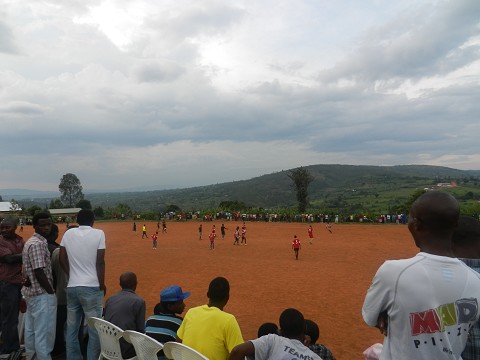
I will remember the youth gathered around to watch a football game with hills in the background.
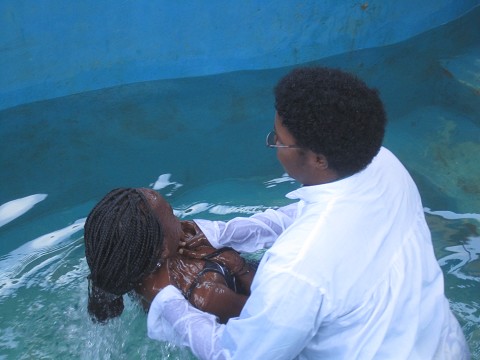
I will remember my sisters getting baptized on Christmas Eve.
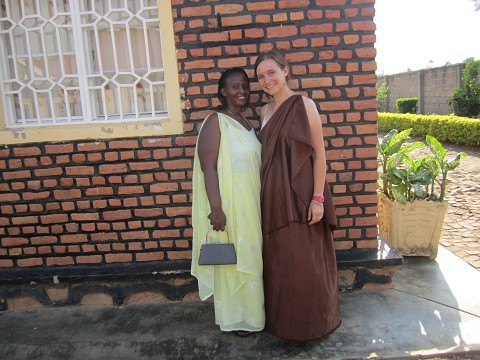
I will remember my brother Breezy and how funny and intelligent and kind he is.

I will remember Momma’s love and strength.
I will remember the beauty of Rwanda.

Yes, she has a past, and she has nightmares, and she has fears. But she also has a future. She has dreams. She has hopes. And that is what I will choose to remember.
Rwanda has been a place of joy and innocence for me. And isn’t that fitting? Because no matter how dark this world can become, God has already given us His light. The powers of darkness cannot overtake us, because we have His love and His joy and His peace. Just like Rwanda, no matter what we have been through, we still can have a future and dreams and hopes through Jesus.
That is why I love Rwanda.
That is why I love our God.
"We also pray that you will be strengthened with all his glorious power so you will have all the endurance and patience you need. May you be filled with joy, always thanking the Father. He has enabled you to share in the inheritance that belongs to his people, who live in the light. For he has rescued us from the kingdom of darkness and transferred us into the Kingdom of his dear Son, who purchased our freedom and forgave our sins."
-Colossians 1:11-14







