Where Are The Men In Missions?
A few months ago I reached out to a good friend to see if we could hang out over breakfast. At the time, we were both walking through some pretty busy seasons of life and had not caught up in a while. I was personally in the process of leaving work, moving, renting my house, selling my car, as well as packing for my up coming missions trip. Meanwhile, my buddy had recently moved, gotten married, and had just gotten back from his honeymoon on a tropical island. As we talked and swapped stories, his far more entertaining than mine, our conversation shifted towards something that had been bothering me about my upcoming missions experience: the overwhelming disparity of more women than men within the missions field.
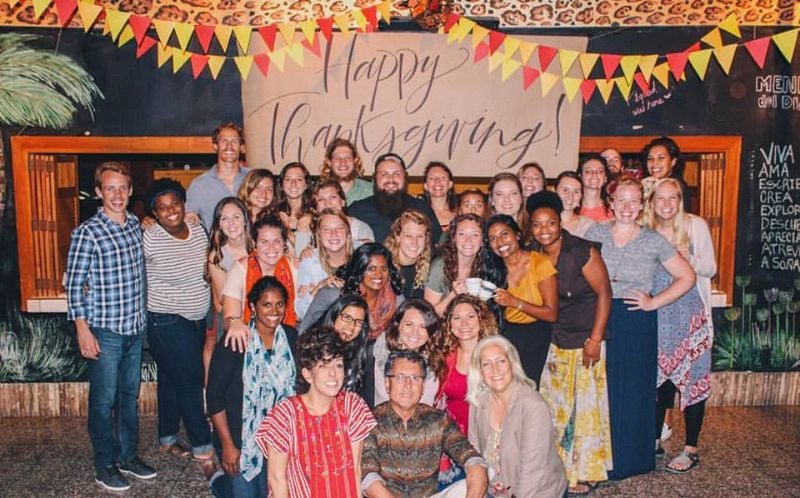
The day before we met I had just returned from an intensive 2 week training camp where I met the other missionaries I would be serving with over the next year. Out of the 30 total people on my squad 4 were men, including myself, leaving 26 women. I remember finding this stark contrast to be both surprising as well as frustrating. In defense of all dudes out there, my first thought was, “this surely must be an outlier, there’s no way the World Race has experienced similar numbers in it’s over 10+ years.” Unfortunately, I was wrong, and the more I peeled the gender disparity onion, the stinkier it got. I went on to learn that Adventures in Missions, the non-profit that sponsors the World Race, has launched over 100,000 missionaries to date, of which over 70,000 are women. In addition, other notable organizations such as YWAM and IMB have estimated women to account for 70% – 80% of the single missionaries actively engaged in international ministries.
As we talked and devoured our delicious THB sandwiches, I began to piece together some of the cultural and gender specific realities that could help to explain this egregious imbalance. Right, wrong, or indifferent, my experience within western culture, the North American church, and the international missions community has led me to the following 5 potential reasons for this difference in representation.
-
Women, in general, are more compassionate than men
As a preface, this is not to say that all men are self interested cut-throats, nor are all women disciples of Mary Poppins or Mother Theresa. It is to say, however, that through my personal experiences and an honest assessment of each genders natural giftings, women appear hardwired to be more nurturing and empathetic towards others’ plights, as well as more willing to act on those compulsions.
-
Missions work more closely aligns with female dominated fields
One thing I’ve learned over the preceding six weeks is that a lot of mission work involves playing with, and teaching kids, as well as providing basic health services. The fact that child care, elementary education, and nursing are all female dominated professions in the States could help explain some of the male-female imbalance in the field.
-
Men derive a greater amount of their purpose and identify from professional success
I feel particularly qualified to speak to this point as I was one of it’s biggest offenders. While I do not have any empirical support for this assertion, it has been my experience that men gain a greater amount of affirmation and purpose through professional accomplishments. In defense of my fellow bros, I think this is due in part to the cultural expectation that men be the primary bread-winner once in a committed relationship. However, this cultural expectation appears to be shrinking, and is certainly not as prevalent as it was during past Baby Boomer and Gen X generations.
WIth this in mind, I think it reasonable to say that women, while they too enjoy competition as well a rewarding career, are more apt to sideline their professional aspirations for a season dedicated to Christ’s kingdom, aided by the fact that they determine less of their self-worth through a base salary or corporate title.
-
Women experience several institutional and cultural glass-ceilings in the North American church, which, in effect, boosts their rate of participation in the international church
This is the one that really gets my goat. The unfortunate reality is the church today possesses various hardline as well as ethos-based restrictions which adversely impact the upward mobility of women. For example, the Catholic Church, the largest church in the world, does not allow women to be deacons, let alone for them to preach from the pulpit. Most recently the new Pope (who admittedly seems to be a pretty awesome dude) has created a commission to “investigate” as to whether women possess the spiritual faculties necessary to fulfill such a position (spoiler alert, they do).
In addition to the Catholic Church’s regressive rigidity regarding women in leadership, I think there also exists a tinge of cultural misogyny amongst other Christian denominations. I personally have various relationships with non-catholic Christians, of whom I love and respect, that have voiced considerable concerns with the idea of women in positions of leadership.
So, with all of this said, I think it’s possible that the limited hierarchical mobility of ambitious, God-loving women, prompts their pursuit of overseas missionary opportunities. At the same time, I think men of similar inclinations have an easier time pursuing their religious passions within their own back yard, and consequently, may overlook similar international experiences.
-
In the Christian church as a whole – women outnumber men
This underlying and unfortunate reality is one of the bigger elephants in the room. According to various Pew research publications, women outpace men in general church participation by an average of 10% – 20%. While this more reasonable than the imbalance of the missions field, it evidences that part of the gender disparity within missions is simply symptomatic of a larger, more overarching issue.
—–
All of this is great to know, but because women appear to be better equipped for missions, is the gender disparity issue really an issue at all? To help in answering this question I canvassed some of my female counterparts to get their perspective on the matter. The following represents a few of the most commonly mentioned issues resulting from the lack of men in the missions field:
-
Men relate to men, whereby, their absence makes it harder for women to evangelize and disciple to men of all ages
-
A lot of women, domestically and abroad, have limited experience in what it’s like to have a mutually respectful, loving relationship with a man who loves the Lord
-
Men help with general logistics and protection, as women (especially western women) are commonly not allowed to walk out in public without men
-
Men are better suited to reach more remote / untouched people groups. The 10-40 window, which hosts the majority of the World’s most unloved and in-need individuals, is exceptionally dangerous for women to navigate. In addition, men are better equipped to withstand the physical rigors of reaching many of the world’s more remote villages and tribal people
-
Many non-western countries possess cultures that diminish the insights and perspectives of women, as well as do not support their participation in public discourse around such important matters as theology and societal functions. Conversely, male opinions are often times welcomed as a valued contribution
While these sentiments aren’t specifically “fresh” or super insightful, it was helpful for me to articulate them and accept them as reality. Something I’d like to mention is that I do not intend to use this as a sweeping commentary about any guy who hasn’t gone on a missions trip. The missions field is ubiquitous, and living a Life-on-Mission is just as necessary domestically as it is abroad. Once more, missions engagement can come in various forms, including financial / emotional / spiritual support of missionaries and/or other altruistic organizations.
With this said I believe the lack of men in missions is still a conversation worth advancing, and while my 1.5 months of missions work in no way qualifies me to challenge others, something I can speak to are the challenges I encountered in committing to missions work. Personally, I struggled significantly with the idea of missions work for well over a year before committing, and even when I mentally bought-in, it was extremely difficult for me to accept the fact that I was going to sideline my relationships, my financial obligations, and my professional endeavors for over a year.
Through a lot of prayer and reflection, I ultimately took stock of 3 immutable facts that helped me clear this mental hurdle: 1) I sincerely desired an extended season of life where I could pursue God first and foremost on a daily basis 2) I had the ability to go, unlike other Christians who settled down early and knocked out some kids 3) Any company that I would want to work for would see a tremendous amount of value in someone who was intentional about living in accordance with their beliefs.
So in summary, the missions field is ripe with opportunities for women and men alike. Both sexes possess characteristics and abilities that are critical in evangelizing, discipling, and advancing the socio-economic status of targeted communities. My experiences thus far have taught me a tremendous amount about God, human nature, and the brokenness that exists in our world. More than anything, I have learned that God’s love is bigger than any earthly struggle, and to help combat this world’s tribulations, he does not call those who are currently equipped for missions work. Rather, he equips those that answer his call.