
Yesterday, as I sat in the cold for a few hours, alternating from reading through Romans, warming my hands, and talking about life and cars with a friend of a friend’s mechanic, Nagy, I learned a variety of interesting details about my car’s struts and shock absorbers, but more than that–I learned about this man’s life, choices, dreams, and experiences. I also learned, after a dozen or so questions from me–that he enjoys sharing stories from his life.
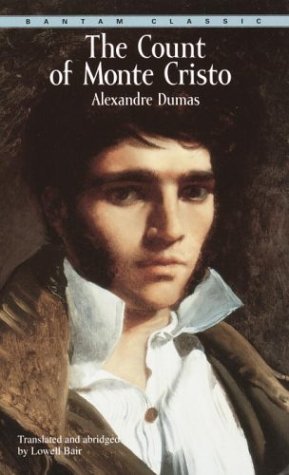
I asked him the usual questions about his origins, passions, dreams, family, frustrations, and et al. But then, I asked him, “What is the “best” or most impactful lesson you’ve learned?“ I would have worded it more simply, but it took three times for me to slow down long enough to ask him and for him to understand me. It took him but a moment to think about his answer and to be honest, if I were the one answering the questions, it would have taken a lot longer for me to answer. He was not direct in answering my question, but instead asked me if I had read “The Count of Monte Cristo” by Alexandre Christo in 1844. I was embarrassed to say that I started and enjoyed this book, but I have yet to read it cover-to-cover. With this being said, he asked me if I had watched the film. I told him I had and enjoyed it very much. We pieced together the plot about the protagonist, Edmond Dantes (later self-renamed, The Count of Monte Cristo), a sailor who was engaged to Mercedes, who was more-or-less betrayed and wrongfully sent to a lifetime imprisonment without a trial. He was sent to Chateau e’lf, to live out the rest of his life with a disgraced social status and even worse-among rats and in a small cell. Within this once glorious manor-turned-prison, there seemed to be no hope for Edmond, but to live out the rest of his days in obscurity. Within a matter of time, he soon discovered that while he once thought he was in solitude (other than the guards who barely fed him), there was another prison not too far away. This prisoner was an Italian priest by the name of Abbe’ Faria, an intellect and a teacher. This old man had lived countless years in solitude and yet, while his hope of escape was evident in the covert tunnels he constructed throughout the chateau, he maintained his vehemence throughout the years by not forsaking his love of the academics. This priest and teacher was in need of a student and Edmond’s unfortunate and unfair placement within the chateau served both men well. Abbe’ Faria now had a pupil and Edmond Dantes now had an unexpected education that ranged from mathematics to manners, as well as languages, history, chemistry, theology, and philosophy. Both men worked hard and Edmond was a different man by the end of it.
It was fun retelling and remembering the plot and characters of this classic; remembering Edmond’s agonizing tale felt fresh and exciting-no matter that it was written 165 years ago. By the end of Nagy’s and my reflection on Edmond’s unexpected education and transformation as an individual, I still had yet to receive my answer from my long-ago asked question. It was not until we recapped the ending scenes where…no, no, don’t worry-I wouldn’t do that to you.
After we talked a bit more about Edmond, Nagy answered my question. He said that the most impactful lesson he has learned in his life thus far is what Edmond learned through Abbe’ Faria. With the priest’s help, Edmond used the resources at hand to their maximum capacity. The priest knew an immense amount of information and knowledge that eclipsed Edmond’s previous education level by a hundredfold. But that did not stop either man, be it in a language session or when it came to which spoon to be used first at dinner. These two men used their resource of an ardent educator and a devoted student to change Edmond’s life.







