We just left Ntarama Genocide Memorial. It is a Catholic church where 5,000 Tutsis were slaughtered. I don’t have my journal with me, but I desperately need to express what’s in my heart, so my iPhone will have to suffice for now…
A note: if you are unfamiliar with the details of the Rwandan genocide, you can read more here: http://www.history.com/topics/rwandan-genocide. This post serves only to provide an outsider’s limited response.
The drive to the church is tranquil and beautiful…through green rolling hills, past hundreds of lovely new homes on a paved road nicer than many in the States. We exchange the main road for a red dirt road that winds through primary schools and churches. We pull up to a red brick church. At first, nothing is amiss. There are young children playing and laughing in the schoolyard across the way. The colorful Rwandan flag is fluttering in the wind. As we walk through the gates and up to the church, something in the pit of my stomach begins to stir. Something awful has happened here.
There are marks on the concrete from grenade explosions, and the entry gate still shows scars where it was once blown open.
Light streams through the metal awnings where thousands of bullets pierced them just decades ago.
And we aren’t even inside.
The clothes worn by the thousands who were killed here are piled high in the church. Row after row of dirt covered, bloodstained clothes. It smells stale.
There are pockmarks across the red brick interior, a bullet mark on the shoulder of the Virgin Mary, who the Hutus assumed was also Tutsi because of her small nose, and evidence of destruction and death everywhere the eyes roam.
My stomach hurts. I feel burning anger toward the perpetrators and anguish for the lives lost. How could humans be this evil? This misled? How could humanity stoop this low?
We walk downstairs, where we view skulls and weapons. Our guide tells us what to look for to identify the method of death. There are skulls split by machetes and others marked by bullets. There are sticks 8 feet tall, which we are told were used to rape and then kill women and children by stabbing them after the assault through all the way to their heads.
I feel like I can barely breathe.
My thoughts have shifted to questions about the rest of the world. HOW DID WE ALLOW THIS TO HAPPEN? I briefly recall how obsessed the American press and people were with OJ Simpson in 1994 and it makes me want to throw up.
We walk outside and are led down a narrow staircase into mass graves. We are told 45,000 bodies and remains are laying in rest below. The aisle is just wide enough to accommodate my body. On either side of me are bones and skulls stacked from floor to ceiling. I’m in hell, I think to myself.
Again, I feel like I might get sick. My body doesn’t know how to process this scene. Life has never seemed so temporary, so fragile. Death has never seemed so real.
All I know to do is to pray. To lament. To grieve. To plead with God for peace, against genocide. I spend the rest of my time in this place dialoguing with the Creator, who I know welcomes my grief and anger and questioning.
He moved my heart to today, to the future. To Ethiopia, Syria, Burundi, and a handful of other nations around the world where people are already or on the verge of being systematically killed because of their ethnicities or beliefs. May we never again be so consumed in trivial pop culture nonsense that we ignore the violent slaughtering of millions, regardless of where on our planet they live. God forbid we elevate the comings and goings of a reality TV star or the personal lives of celebrities over the mass execution of men, women, and children who bear the mark of our Creator. God forbid.
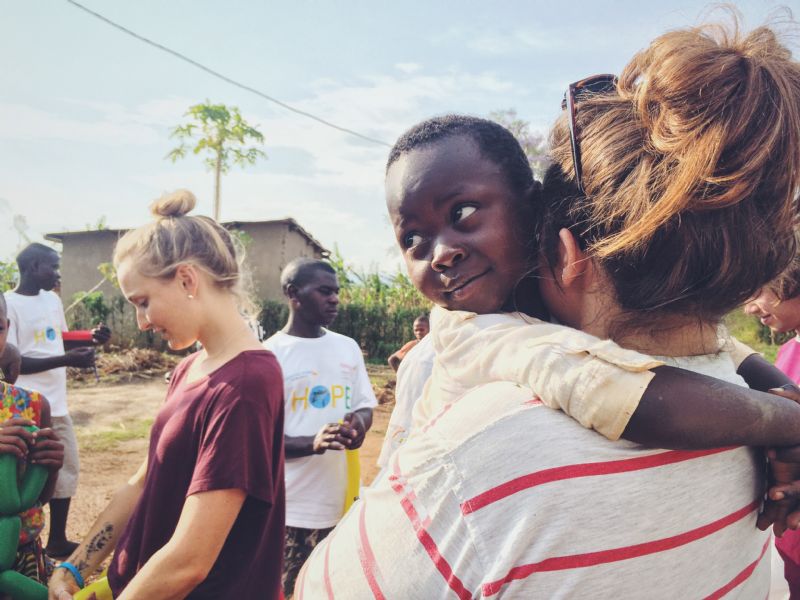
I leave feeling numb. Feeling exhausted. But as we walk back to our van, again I hear the children. I hear them laughing, playing, not a care in the world. And I can’t help but somehow slowly smile.
This is Rwanda. Her past is devastating and painful. The scars can be seen and felt everywhere, on the faces of the people to the facades of the buildings. But the present is peaceful. There is laughter. There is hope. If this can happen here, it can happen anywhere.
Beauty from ashes. Isaiah 61. This is Rwanda.