
The Lord is risen! (He is risen, indeed!). Happy Easter!
Or, in Ukraine, Happy ALMOST Easter. Because of the Orthodox calendar, Easter is actually not until next weekend, but we have already been celebrating and remembering Christ’s death and resurrection.
This weekend, we had the privilege of participating in a Passover celebration at the church where we have been attending in L’viv, Ukraine. Unlike traditional Jewish Passover celebrations, however, this one had a special twist: Jesus, the fulfillment of the Passover Feast.
It was absolutely fascinating to learn about each of the elements that are a part of the Passover, and how Jesus, the Lamb of God, is represented so beautifully in the Passover Feast. I always thought that “The Last Supper” referred to Jesus’ final meal with His disciples. However, what I discovered was that it was more than that: The Last Supper was the final Passover meal under the Old Covenant between the Israelites and God and the beginning of the New Covenant in the blood of Christ. In Luke 22:15, Jesus said, “I have eagerly desired to eat this Passover with you before I suffer. For I tell you, I will not eat it again until it finds fulfillment in the kingdom of God.”
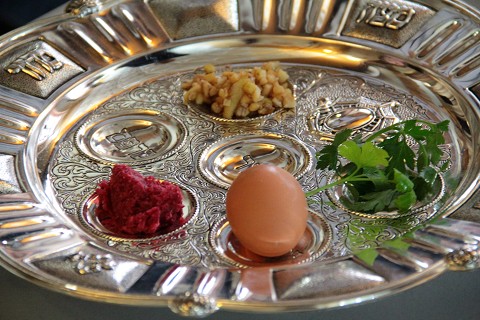
Throughout the Passover celebration, four questions are asked and four cups of wine are consumed. The first four questions are asked to teach the children about their history:
1. Why can we not eat yeast?
Leaven (yeast) was removed from the home prior to the Passover. This was not only symbolic of the removal of sin, but it was also a reminder to the Israelites of their enslaved sin condition in Egypt prior to God’s deliverance.
2. Why must we eat the bitter herbs?
The bitter herbs were eaten to reflect the bitterness of slavery.
(Side note: When we tried the bitter herbs – parsley – I nearly gagged. God was right when He told them that bitter herbs would remind them of slavery, though I hope that parsley is the closest I’ll ever have to taste of slavery).
3. Why do we dip the herbs twice into the salt water?
The first dip was a reminder of how hard the Israelites worked in Egypt and the tears they shed. The second dip was a reminder of hope; that there could be new growth and restoration in the future.
4. Why do we recline at the table on this night?
Prior to the Israelites’ exodus, they ate as slaves, which probably meant they ate standing up. The Passover meal was eaten while reclining at the table to reflect the freedom of the Israelites, as only the free could eat comfortably.
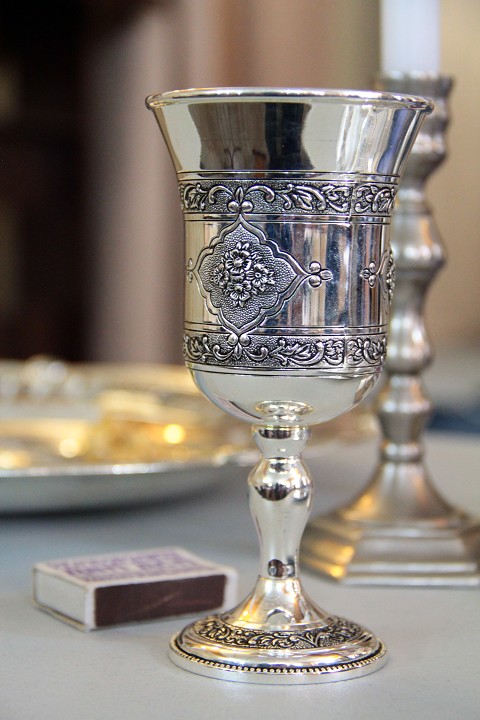
Each of the four cups of wine is symbolic of God’s promise to the Israelites in Exodus 6:6-7:
1. Cup of Sanctification: “I am the LORD, and I will bring you out from under the yoke of the Egyptians.”
2. Cup of Deliverance: “I will free you from being slaves to them…”
3. Cup of Redemption; “I will redeem you with an outstretched arm, and with mighty acts of justice.”
4. Cup of Restoration (Praise & Thanksgiving): “I will take you as my own people, and I will be your God. Then you will know that I am the LORD your God, who brought you out from under the yoke of the Egyptians.”
When Jesus took the cup at the Last Supper, it was the third cup, the Cup of Redemption. In Luke 22:20, Jesus said, “This cup is the new covenant in my blood, which is poured out for you.” No longer was a Passover lamb needed for sanctification, deliverance, redemption, or restoration. Jesus Christ and the blood He shed became the fulfillment of all of these things.
Through the Blood of Jesus, the Lamb of God, we are sanctified, made holy, washed pure and sin-free. (Psalm 51:7)
Through the Blood of Jesus, the Lamb of God, we have been delivered completely from sin. We are new creations (II Corinthians 5:17)
Through the Blood of Jesus, the Lamb of God, who stretched His arms out on the cross, we are redeemed and justified freely by His grace. (Romans 3:24)
Through the Blood of Jesus, the Lamb of God, we are restored into an eternal inheritance as sons and daughters of God. We are restored into righteousness and are free from slavery to sin.
There were many other symbolic portions of the Passover feast, but one of my favorites is that of the Afikomen, the broken matza (unleavened bread) that is hidden during the Passover celebration. The Afikomen reminds me of Jesus’ body, which was broken for us. The Afikomen is hidden, just like Jesus’ body was buried. When the Afrikomen is found, there is great celebration, just as there was rejoicing when Jesus was resurrected from the dead.
Tonight, we will participate in a full Jewish Sader. I am excited to once again see the different elements of the Passover celebration in our time together, knowing that Passover is much more than just an age-old celebration among our Jewish brethren. Rather, just like communion, the symbolism is rich with reminders of God’s incredible grace for us, shown in the shed blood, death, and resurrection of His beloved Son, our Lamb of God, Jesus Christ.







