
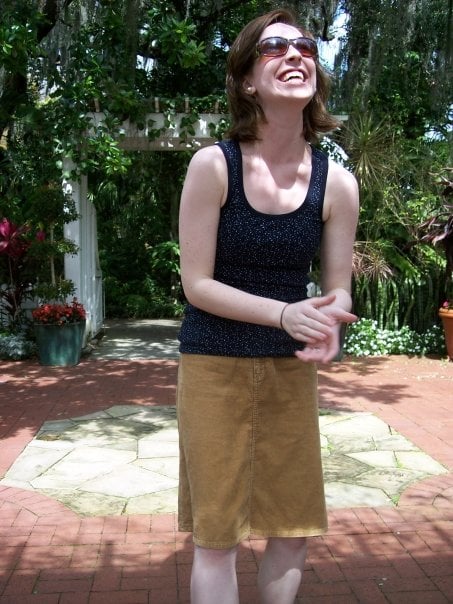
This is Jenny. She is a sorority sister of mine, and one of my dearest friends from college. She has been in Rwanda since late December of 2008, teaching biology and chemistry for a year with a US government program in Kigali. She also is one of the most joyful people I’ve ever met. Jenny has a heart for people and a way of talking to you as though you are the most important person in the world. I’ve been so blessed to have her as a friend and sister, and I can’t wait to reunite with her once she and I are both back in the States.
While she’s been in Rwanda, Jenny has kept her own blog. She doesn’t update as frequently as I do, but she’s an astute writer, and her observations that she makes in writing are beautiful. After reading the end of her most recent post, I sat back and said to myself, “THAT’S what I’m doing. That’s why I’m here.” I’ve posted the text of the entry here. I hope her words inspire you as they have me.
A quick warning – this post could be disturbing,
so please skip on down if you are at all uncomfortable. And, I really
do have a point in this excessively long post, so if you can hang in
there, do.
so please skip on down if you are at all uncomfortable. And, I really
do have a point in this excessively long post, so if you can hang in
there, do.
Goma,
for those who don’t know its dark recent history, is a pretty grim
place. You wouldn’t know for the loud music and bustling markets that
thousands of people have died and are dying within a few mile radius of
the border-town. Between becoming an encampment for refugees and
fugitives of the 1994 Rwandan genocide and a starting point for the
DRC’s current civil conflict, Goma became a truly forgotten (and
totally misunderstood) hell. I admit it now that I had a morbid curiosity with the place. How could it be so close and yet so different?
for those who don’t know its dark recent history, is a pretty grim
place. You wouldn’t know for the loud music and bustling markets that
thousands of people have died and are dying within a few mile radius of
the border-town. Between becoming an encampment for refugees and
fugitives of the 1994 Rwandan genocide and a starting point for the
DRC’s current civil conflict, Goma became a truly forgotten (and
totally misunderstood) hell. I admit it now that I had a morbid curiosity with the place. How could it be so close and yet so different?
My
friend Nick, the British med student with whom I went to Akagera, had
some contacts with an aid hospital just over the border from the
Rwandan town of Gisenyi, and had been to Goma twice before. He let me
know he was going, and I joined in for the day. At least I could
satisfy my curiosity in a productive way.
friend Nick, the British med student with whom I went to Akagera, had
some contacts with an aid hospital just over the border from the
Rwandan town of Gisenyi, and had been to Goma twice before. He let me
know he was going, and I joined in for the day. At least I could
satisfy my curiosity in a productive way.
Goma
is about 45 miles from my town of Ruhengeri and sits on the north
shores of Lake Kivu. Gisenyi, Goma’s Rwandan sister, is a resort town
for the rich and famous one of the most expensive hotels in the country
is situated with lakefront property. Admittedly, the cloudy day Nick
and I road into Gisenyi was the first time I had set foot in the place,
but it was easy to see why Rwandese vacation there… the rolling green
hills spill over into Lake Kivu and the view is spectacular. Walking
towards the border, the red roofs of Goma looked more like the Grand
Floridian at Disney World than it did a city with a civil conflict on
its doorstep.
is about 45 miles from my town of Ruhengeri and sits on the north
shores of Lake Kivu. Gisenyi, Goma’s Rwandan sister, is a resort town
for the rich and famous one of the most expensive hotels in the country
is situated with lakefront property. Admittedly, the cloudy day Nick
and I road into Gisenyi was the first time I had set foot in the place,
but it was easy to see why Rwandese vacation there… the rolling green
hills spill over into Lake Kivu and the view is spectacular. Walking
towards the border, the red roofs of Goma looked more like the Grand
Floridian at Disney World than it did a city with a civil conflict on
its doorstep.
Getting through the
border with Nick’s know-how was easy, and I got a quick tour of
downtown. My first impression of Goma was how busy and exciting it was
– in Rwanda, I have become accustomed to quiet order. No one shouts,
people bump into you without saying anything, and cleanliness is almost
a nervous tick. Goma was what I expected of Africa; small shops
blasting beats, vendors shouting over each other, and color everywhere.
I almost got run over twice and someone tried to pickpocket Nick. It
was oddly comforting to have such disorder.
border with Nick’s know-how was easy, and I got a quick tour of
downtown. My first impression of Goma was how busy and exciting it was
– in Rwanda, I have become accustomed to quiet order. No one shouts,
people bump into you without saying anything, and cleanliness is almost
a nervous tick. Goma was what I expected of Africa; small shops
blasting beats, vendors shouting over each other, and color everywhere.
I almost got run over twice and someone tried to pickpocket Nick. It
was oddly comforting to have such disorder.
With
a benign case of the Goma-lung between the volcanic dust and exhaust
fumes, we ducked inside the hospital gates of HEAL Africa. Although I
missed how long HEAL Africa had been in existence, the need for its
services was immediately apparent. The entirely separate ward just for
women suffering from genital mutilation and awaiting genital
reconstruction stood out most as we walked around. The hospital also
runs a half-way house for survivors of sexual assault, in addition to
handling basic broken bones and cases of malaria.
a benign case of the Goma-lung between the volcanic dust and exhaust
fumes, we ducked inside the hospital gates of HEAL Africa. Although I
missed how long HEAL Africa had been in existence, the need for its
services was immediately apparent. The entirely separate ward just for
women suffering from genital mutilation and awaiting genital
reconstruction stood out most as we walked around. The hospital also
runs a half-way house for survivors of sexual assault, in addition to
handling basic broken bones and cases of malaria.
Our morning
was spent with Pastor Samuel, the counselor of the hospital. Pastor
Samuel allowed us to sit on a few consultations, including a young
woman who explained she had come from more than 200 miles away and now
hadn’t the money to bring food to her family members in the hospital.
(Of the three hospitals I’ve visited in Rwanda, this case was the same
– although medical services are provided, food and often even bedding
for the patient are not.) After praying with the woman, Pastor Samuel
explained he would check with the cooks for the half-way house to see
if they couldn’t provide her a few meals each week. He then went to
speak with a woman healing from a motorbike accident, and with a family
who needed medication that couldn’t be found within Goma. With each
patient, Pastor Samuel calmly and intently listened, laid a gentle hand
on an arm, and said a prayer. Walking between consultations, I asked
Pastor Samuel if he wasn’t the problem-solver of the hospital. “As a
pastor, I don’t solve their problems,” he gently corrected, “I help
them to find their own solutions.”
was spent with Pastor Samuel, the counselor of the hospital. Pastor
Samuel allowed us to sit on a few consultations, including a young
woman who explained she had come from more than 200 miles away and now
hadn’t the money to bring food to her family members in the hospital.
(Of the three hospitals I’ve visited in Rwanda, this case was the same
– although medical services are provided, food and often even bedding
for the patient are not.) After praying with the woman, Pastor Samuel
explained he would check with the cooks for the half-way house to see
if they couldn’t provide her a few meals each week. He then went to
speak with a woman healing from a motorbike accident, and with a family
who needed medication that couldn’t be found within Goma. With each
patient, Pastor Samuel calmly and intently listened, laid a gentle hand
on an arm, and said a prayer. Walking between consultations, I asked
Pastor Samuel if he wasn’t the problem-solver of the hospital. “As a
pastor, I don’t solve their problems,” he gently corrected, “I help
them to find their own solutions.”
After a lunch of a can of
Coke (as you do when you don’t want to change money!), Nick was going
in to see an Australian surgeon. I had a plan to roam about and
discover which other aid organizations were at work in Goma while Nick
went in for surgery. If I didn’t belong in the Chemistry lab with my
students, I certainly had no business being in a real operating room.
Not certain he’d scrub in, Nick invited me to wait outside the recovery
room while he checked in with Dr. Paul. Within a few minutes, I was
standing face-to-face with a very tall, very kind Australian plastic
surgeon. “Well Jennifer! If you can teach Chemistry, you can come in
the operating room! Felix, get some scrubs for these two. We’ll get you
in a minute.”
Coke (as you do when you don’t want to change money!), Nick was going
in to see an Australian surgeon. I had a plan to roam about and
discover which other aid organizations were at work in Goma while Nick
went in for surgery. If I didn’t belong in the Chemistry lab with my
students, I certainly had no business being in a real operating room.
Not certain he’d scrub in, Nick invited me to wait outside the recovery
room while he checked in with Dr. Paul. Within a few minutes, I was
standing face-to-face with a very tall, very kind Australian plastic
surgeon. “Well Jennifer! If you can teach Chemistry, you can come in
the operating room! Felix, get some scrubs for these two. We’ll get you
in a minute.”
Needless to say,
not being a med student myself, I only made it near the end of my first
surgery before I locked my knees and felt woozy. Back in the break room
with Dr. Paul, I felt more at home, though, and was able to ask about
his work in Congo. Dr. Paul explained that he comes to HEAL Africa for
a few weeks every six months or so, taking a break from what I can only
assume is a very successful practice in Melbourne to live and work in
Goma. Dr. Paul made the safety and quiet of my hometown here sound like
heaven. “I don’t leave the hospital compound when I’m here, but I can
tell on my drive from Kigali each time that you live in a wonderful
place.” When I asked why Goma, somewhere in the answer was a “someone’s
got to. These people deserve good care.”
not being a med student myself, I only made it near the end of my first
surgery before I locked my knees and felt woozy. Back in the break room
with Dr. Paul, I felt more at home, though, and was able to ask about
his work in Congo. Dr. Paul explained that he comes to HEAL Africa for
a few weeks every six months or so, taking a break from what I can only
assume is a very successful practice in Melbourne to live and work in
Goma. Dr. Paul made the safety and quiet of my hometown here sound like
heaven. “I don’t leave the hospital compound when I’m here, but I can
tell on my drive from Kigali each time that you live in a wonderful
place.” When I asked why Goma, somewhere in the answer was a “someone’s
got to. These people deserve good care.”
My
one day in Goma was over a month ago now, and only now am I beginning
to understand what my lesson from that day really was. It’s something
that I picked up from Pastor Samuel, and it’s something I thought I
understood with Dr. Paul. It’s something that I thought about when Nick
first told me he was going to Congo. And looking back, it’s something I
felt in a particular moment on that day.
one day in Goma was over a month ago now, and only now am I beginning
to understand what my lesson from that day really was. It’s something
that I picked up from Pastor Samuel, and it’s something I thought I
understood with Dr. Paul. It’s something that I thought about when Nick
first told me he was going to Congo. And looking back, it’s something I
felt in a particular moment on that day.
Between
our visits with Pastor Samuel and Dr. Paul, I had stopped to shake
hands with two little girls outside a children’s ward. The little girls
were identical twins, and they both had both legs in plaster casts
after battling polio. While it’s not unusual for me to stop for little
ones, something about these two struck me, and still gives me good
goosebumps to think of them. I don’t know how to explain it, but the
first little girl had the kindest, sweetest smile I have ever seen. She
didn’t bother to try to say anything to me, but instead, craning her
neck to look in my eyes, she took my outstretched hand and cradled it
to her cheek. Then she just chuckled, my hand next to her sweet little
face. I went home thinking about her, and when I got up to teach the
next day, things just seemed lighter.
our visits with Pastor Samuel and Dr. Paul, I had stopped to shake
hands with two little girls outside a children’s ward. The little girls
were identical twins, and they both had both legs in plaster casts
after battling polio. While it’s not unusual for me to stop for little
ones, something about these two struck me, and still gives me good
goosebumps to think of them. I don’t know how to explain it, but the
first little girl had the kindest, sweetest smile I have ever seen. She
didn’t bother to try to say anything to me, but instead, craning her
neck to look in my eyes, she took my outstretched hand and cradled it
to her cheek. Then she just chuckled, my hand next to her sweet little
face. I went home thinking about her, and when I got up to teach the
next day, things just seemed lighter.
What
I see now, is that whatever we have and whatever we are, we were built
for this. We were built for these moments when we can give who we are
for someone else. We don’t have to have grand plans or great answers.
Instead, we were built with our own special talents and we were built
to use them in ways that help and encourage others. It’s the way Pastor
Samuel uses his faith to help people to help themselves. It’s how Dr.
Paul uses his learned hands to heal half a world away from home. It’s
how Nick’s curiosity and enthusiasm brought me over to Goma and it’s
how this one little girl’s beautiful smile gave me strength to continue
working.
I see now, is that whatever we have and whatever we are, we were built
for this. We were built for these moments when we can give who we are
for someone else. We don’t have to have grand plans or great answers.
Instead, we were built with our own special talents and we were built
to use them in ways that help and encourage others. It’s the way Pastor
Samuel uses his faith to help people to help themselves. It’s how Dr.
Paul uses his learned hands to heal half a world away from home. It’s
how Nick’s curiosity and enthusiasm brought me over to Goma and it’s
how this one little girl’s beautiful smile gave me strength to continue
working.
I
don’t know yet what my real talent is, but I know I’m going to keep
looking until I find it. My frustration in teaching science I blame on
my own inadequacy in the subject matter, spending so much of my time
away from my students in my room studying. That, of course, doesn’t
mean that the work I’ve done thus far is worthless. On the contrary,
it’s incredibly important if only to have helped me to understand that
whatever our talents, using them in the best way we know how is a step
towards helping others. Think about it. You don’t have to be a pastor
or a doctor or a teacher or a ‘humanitarian’ to do something amazing.
You only have use who you are, just the way you were built, to touch
those around you. And that’s pretty powerful, if you ask me.
don’t know yet what my real talent is, but I know I’m going to keep
looking until I find it. My frustration in teaching science I blame on
my own inadequacy in the subject matter, spending so much of my time
away from my students in my room studying. That, of course, doesn’t
mean that the work I’ve done thus far is worthless. On the contrary,
it’s incredibly important if only to have helped me to understand that
whatever our talents, using them in the best way we know how is a step
towards helping others. Think about it. You don’t have to be a pastor
or a doctor or a teacher or a ‘humanitarian’ to do something amazing.
You only have use who you are, just the way you were built, to touch
those around you. And that’s pretty powerful, if you ask me.
Much love and courage,
jen







