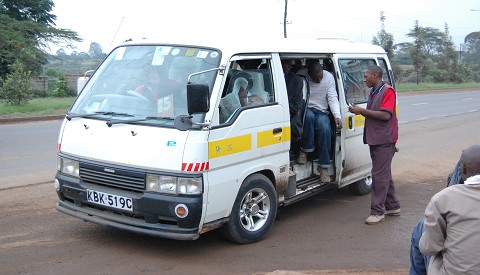
 The most intriguing form of local transportation that I have
encountered during my first six months of The World Race is easily the Kenyan matatu.
Matatus are rickety vans resembling Scooby Doo’s Mystery
Machine that can transport at least 14 people all around Nairobi for about 20 to
50 shillings (during the daytime), equivalent to 27 to 67 cents (1 dollar = 75
Kenyan shillings).
The average matatu is not aesthetically pleasing and
features a bland, white paintjob. Fortunately, many matatu drivers do not
settle for bland. A large number of matatus show off eye-catching themes, promoting
pop culture or religion and sometimes football (and by football, I mean
soccer).
Every colorful matatu features its own unique name with a
decal plastered across the windshield. They are named after anything
imaginable, from music (“Da Queen of Hip Hop”) to preachers (“T.D. Jakes”) to
adamant lifestyle declarations (“Crunk Is Not Dead”) to cheese production
(“Makin’ Cheddar”) to unbearable Rob Schneider movies (“The Animal”).
On the inside, matatus can have pictures of rappers adorning
the walls, and some even boast flat-screen televisions in the front seat. Music
(usually rap, occasionally gospel if you find the right driver) blares from the
speakers.
But the best part of any matatu ride is its unpredictable nature. Sometimes you have the van to yourself, and sometimes the 14-person shuttle is pushing 30. Sometimes your driver values your time so much that he drives on sidewalks and endangers the lives of pedestrians to avoid making you late. Sometimes opportunistic entrepreneurs search for loose change in your pockets. And sometimes the matatu soundtrack will shift from Lil Wayne to Richard Marx in mere seconds.
One night, after a day of touring Nairobi,
Matt Patch and I went on a little matatu adventure, not by choice of course, but we now are better men because of it. (For the remainder of this blog, I will refer to Matt and myself by our Kenyan names. Matt was given the name Jogu (it translates to “elephant strength”) of the Kikuyu tribe, and I was dubbed Ochieng (means “born after 12 noon”) of the Luo tribe. And yes, I am well aware that Matt’s name is substantially cooler than mine.
It began as all great stories do: with sabotage. There we were, waiting at the bus stop beneath the bridge and looking for the No. 15 matatu as we were instructed. After 10 minutes and no matatu, we got a bit antsy and decided to ask an innocent-looking business woman in a pink, buttoned-down shirt (and standing behind us in line) if the No. 15 van would be rolling in soon. Sensing an opportunity to move up two spots in the matatu line during the busiest time of day, the woman informed us that the No. 15 did not pass this location and directed us to another bus stop.
So we walked another mile and waited at that location only to realize that the No. 15 matatu apparently does not pass by that location either. We wandered around for another hour and decided to return to our original bus stop. After another 10 minutes of waiting and no No. 15, Jogu and I began asking random matatus if they were headed to Langata (where we were staying).
One head nod later, we were cruising out of the city in the No. 56 matatu.
30 minutes later, we were cruising into the slums in the No. 56 matatu, and passengers began asking us where we were headed because we were obviously far from home.
Now nighttime in Nairobi is reminiscent of the movie “I am Legend,” where Will Smith’s character makes sure he is safe and secure in his home before sundown because that’s when the zombies come out and bad things happen. While there are no zombies in Nairobi, we were told multiple times that it’s unsafe to be out after dark, so it can be a race against the sun to get inside the church grounds before it sets for the evening.
As our matatu reached the end of the line in the slums, the sun had disappeared. Thankfully, our matatu driver and money collector didn’t kick us out, and instead, huddled with other passengers to discuss the best thing to do with us. So we drove for another 20 minutes, and then the money collector jumped out at a stop and motioned for us to follow him. He sat us on another matatu, gave our fare to another money collector, and told us this new matatu would get us home.
Well this new matatu was pretty sweet. “Casino” was tattooed across the windshield, vinyl seat cushions adorned the ceiling, and the entire inside glowed purple from a black light. 10 minutes later, the money collector told us to get out and follow him, and he took us (and thankfully our fare) to another matatu. 10 minutes later, we were motioned to get out again and informed we would find the No. 15 matatu nearby.
Finally we found it. I hadn’t been that excited to see No. 15 since Joffrey Lupul scored the game-winning goal for the Flyers in Game 7 of the first round of the NHL Stanley Cup playoffs in 2008 against the Washington Capitals. (Sorry, I probably lost 90 percent of the readers on that one, but I hope the hockey fans appreciated it).
So there we were, safe and sound on the No. 15 headed toward Langata. Jogu and I became a tad peeved when the money collector shortchanged us and refused to give us the rest back, but nonetheless, we were coming down the homestretch.
And then things got a little crazy. Our matatu was pulled over at a police checkpoint. I’m thinking it’s a common occurrence, but then our money collector opens the door and is thrown up against the matatu by cops with large guns. One even backhands him across the face. They throw handcuffs on him and take him away. Jogu and I are clueless, but we’re guessing he wasn’t arrested for shortchanging us.
Then the passengers begin to file out of the matatu, so we think its a good idea to follow suit. As we step out, one policeman says “Mzungu!” and snickers break out. Mzungu is a term of endearment Africans use for white people, and apparently it’s such a joyful moniker that it always induces laughter.
So the cops with large guns pat us down and search the matatu, and we get the OK to return to our seats. Then we see a familiar face handcuffed alongside our money collector.
“Isn’t that our driver?” I ask Jogu.
“Yup,” he replies.
Just as hopelessness begins to set in, some random dude jumps in the driver seat, and we resume our drive home. I don’t know where the guy came from, but we’re moving again so I’m not asking questions. And we’re home in minutes.
So what’s the moral of this story? Well, as this World Race year goes on, my faith in God is getting stronger. During our first month in Ireland, I was on my knees in the middle of the night praying my tent would survive monsoon winds and torrential downpours. In Israel, I got a little nervous when me and Colby accidentally drove into Palestinian territory. But that fear is diminishing.
So now I’m not even fazed when a matatu ride goes awry. I’m not nervous when I’m riding a boda boda (motorcycle taxi) with no headlights and my driver is weaving through dirt paths in the middle of nowhere.
I know God is taking care of me. That doesn’t give me an excuse to be stupid, but I know my life is in His hands. What I should be afraid of is living my life outside of His will. I did that for years and never found satisfaction, but now I know I’m where He wants me.
My greatest fear before the Race was coming home and not knowing what my next step would be. When I arrive home in June, I have no clue what my future will hold. But I’m content because I know my future is in God’s hands, and there is no better place.








