The long awaited conclusion to this series has finally arrived! Make sure to check out Part 1 and Part 2 first though!
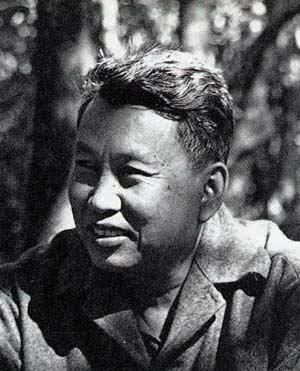 It’s September 1977. You turn on the radio to hear a meek, yet strong voice broadcasting from Cambodia. He spoke of the Khmer Rouge, dating its origins to September 30, 1960. Was it true that such an organization went unnoticed for 17 years? You quietly turn up the radio, trying to make sense of what’s going on. The man was identified as Pol Pot. He said going public with the Khmer Rouge’s real identity was encouraged by “foreign friends” who wanted them to take credit for the revolutionary victory. He stayed on the air for 5 hours that night.
The Khmer Rouge first began to worry when in July 1977 Vietnam signed a cooperation treaty with neighboring Laos. Pol Pot saw this treaty as a step towards strangling Cambodia, opposite of what his goal to eventually strangle Vietnam was. The south of Vietnam was full of ethnic Cambodians. If he played his cards right, he felt he could wrestle this land from their ethnic rivals.
The day after taking the airwaves, Pol Pot flew to Beijing. The Chinese pledged to support the Khmer Rouge in their rivalry with Vietnam. They did, however, discourage a full out war, as they knew Vietnam was in a much better position to win the war. While this meeting probably discouraged an impending Cambodian assault on Vietnam, Vietnam saw it through a different lens. They saw it as Chinese backing of an already dangerous regime and nation.
By the end of 1977, Vietnam concluded that an attack from Cambodia was inevitable. In late December, they sent troops up to 20 miles across the border into Cambodia, capturing numerous villages and troops. Before the end of January, however, Vietnam pulled back their troops, feeling they had “taught a lesson.” Pol Pot, on the other hand, publicly proclaimed it as a “victory.” In celebrating it as a humiliating Vietnamese retreat, Pol Pot and the Khmer Rouge were blinded from what was actually going on. As they retreated, the Vietnamese troops took with them many Cambodian soldiers as well as numerous Khmer Rouge defectors who feared death. They were then groomed for Vietnamese allegiance.
As Spring drew near, many more Cambodian soldiers were captured by the Vietnamese. Spring also marked the signing of a friendship treaty between Vietnam and the Soviet Union, a direct response to Cambodia’s relationship with China. This put Vietnam and Cambodia in the middle of a China-Soviet rivalry.
On Christmas Day, 1978, 100,000 Vietnamese troops crossed the border into Cambodia, quickly capturing the northeast region and gaining a foothold. Though intending only to create a secure buffer zone, Vietnamese troops quickly realized they could easily capture Phnom Penh and take out the Khmer Rouge in a matter of a few weeks. By January 7, 1979, less than two weeks from their initial attack, Vietnamese troops managed to take hold of Phnom Penh and, consequently, forced the Khmer Rouge to flee. Pol Pot himself managed to escape.
Hundreds of thousands of Cambodian families marched back to their home villages in hopes of finding something. Instead, they usually returned to nothing-no homes, no possessions, no relatives.
Since 1990, Cambodia has gradually recovered demographically and economically, though many scars still remain psychologically. Cambodia presently has a very young population and by 2005, three-quarters of Cambodians were too young to remember to Khmer Rouge years. Many of this generation only know about this history through word of mouth, as it is not required to be taught in the schools. Plans have, however, been approved to begin teaching Khmer Rouge history in the high schools beginning 2009.