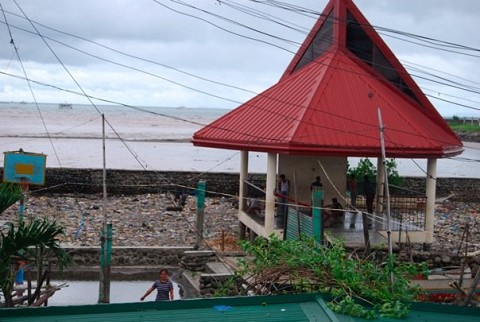
Over the past week or so, I’ve been thinking a lot about what it means to intentionally live in community-to choose to live into this lifestyle. It’s not something many people are comfortable with. It’s not something many people are even familiar with. For me, I’m going to be spending the next year of my life living in community…but it’s not going to end there. God’s been tugging at my heart lately about my plans for after the Race. Funny time, right? It’s actually perfect timing. It always is with Him. You can ask me about my plans sometime if you’re interested but in short, it has nothing to do with me and everything to do with loving God and loving others. It has to do with this intentional community that I was talking about.
So you’d think that’s what this blog is about, right? Wrong.
This blog is about the location of my life in the next few years. Whether this year on the Race or my time after, I intend to live among the poorest of the poor, the marginalized of society, the unfortunate, the forgotten. When people hear about this upcoming year, their answer almost always tends to include something along the lines of “Wow, that must really make you feel good about yourself” or “That must really give you purpose in life.” Whether it does or not is not the point. That is not why I am going. I am going because I’m supposed to. I’m simply doing what God has called us all to do-love our neighbors. You can do the same thing at your job, regardless of what it may be. It doesn’t require leaving the country.
But back to location…
When I was in Lithuania a few weeks ago, I had a very trying conversation with someone. As we talked about terrorism and “ghettos” and poverty, this person spoke a phrase that simply made me cringe. In reference to the individuals living in Little Village, Pilsen, and other struggling neighborhoods of inner city Chicago, this person said, “Unfortunately people choose to live that way, but with hard work, they can get out…Everybody can get out of it if they just work hard enough. My family came here with no money and did it.” These words, in addition to making me want to rip my hair out, broke my heart. The misconceptions we have of these people is truly heart breaking. I did a poor job defending them and informing this individual of the truth when I was in Lithuania and I promised myself that I would write a blog about it sometime before I left gathering my arguments. So, that is what this blog is about.
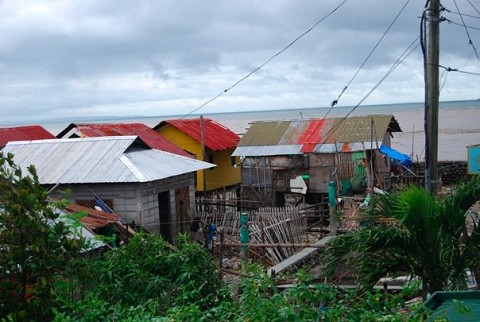 The people I’ve worked with on missions before, whether in the Philippines or in the United States, as well as those individuals I will encounter over the course of the next year are not simply lazy individuals who need to work harder to pick themselves out of poverty. I repeat that-they are not lazy individuals. Some of the men and women I met in the Philippines were the hardest working individuals on this planet. I don’t care where you’re from, what your living conditions are, had you met these individuals, you would agree with me whole-heartedly. Working hard is often times not the answer. It’s not that simple. Using Scott Bessenecker’s The New Friars, I’m going to take you through the truth behind the poverty these individuals live in day in and day out and break down the misconceptions you and I too often hold on to.
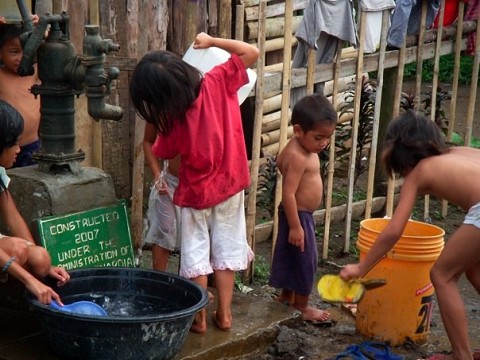 The first thing you must make yourself of aware of are the types of poverty. There are two types of poverty-tractable and intractable. Tractable poverty is “the kind of poverty where systems are in place that allow determined, poor families to climb out, even if it takes a generation.” The individual I was talking to in Lithuania experienced tractable poverty. Intractable poverty is “a poverty so entrenched that, generations later, the grandchildren of the impoverished are impoverished themselves with no sign of breaking free.”
“Tractable poverty is like falling into a hole with some handholds, and most anyone reading this has had a family member escape this kind of poverty. Some great-grandpappy was born and raised in a shack and managed to break out of a life of dispossession. They were entrepreneurial. They saved their pennies. They worked hard. They invested wisely. They seized an opportunity. They got an education. So if my dad and his family could find their way out of poverty, can’t every poor family? Survival of the fittest, right? The hard-working and determined climb out, and the lazy and unmotivated remain poor.”
WRONG!
“There are a lot of hard-working, entrepreneurial penny savers who never seem to make it out of poverty and some self-absorbed, lazy rich people who never seem to make it into poverty. The question of a person’s economic class isn’t about the laziness of the poor or the ingenuity of the rich.” Enter intractable poverty. These are outside powers that literally push people into poverty-factors such as employment, wages, inflation, etc. Bessenecker really brings this home when he points out that “combined sales for the top two hundred corporations are more than the combined economies of all but ten countries. While 27% of the world’s sales go into the coffers of these top two hundred corporations, <1% of the world’s work force is employed by them.”
“So long as there is poverty on the planet there will always be human beings willing to do just about anything for just about nothing. The latest global unemployment trends indicated that ‘of the over 2.8 billion workers in the world, nearly half still do not earn enough to lift themselves and their families above the US$2 a day poverty line.’ Let that reality sink in a bit. All day at a sewing machine or hauling bricks or rolling cigarettes or sorting garbage for a dollar or two. But what can you do if you live in a city where there is 30% unemployment? Workers making two dollars a day are better off than their neighbors who don’t work at all. And so long as there is someone desperate enough to work for a dollar or two a day, there is someone else willing to exploit that labor for those f us who just want a cheap pair of jeans. The lower the labor wage, the more that can be made by someone who knows how to convert cheap labor into a profit. If you keep the bottom rung of labors desperately poor there will always be dollar-per-day wage earners. It’s to the advantage of those who own a controlling interest in labor-intensive companies to keep wages at their lowest possible-a sort of twenty-first-century slavery with people working for less than they can live on with dignity yet enough on which to survive. Desperate people make for good gravel upon which those in power can build a highway to wealth. Poverty is the means by which some corporations are able to pull in extremely large profits and explains why so much work is outsourced to the developing world.”
“Of the one hundred largest economies on planet Earth, fifty are corporations.”
A very specific example of this intractable poverty occurring somewhere is the farmers of Mexico. Bessenecker givers a moving account of his visit there and explains the situation. “Farmers on tractors and on foot were waving signs and chanting slogans proclaiming their cause. Apparently, the American government had been helping failing U.S. farmers by buying up the surplus grain in the United States and then selling it for nearly nothing in Mexico, making it impossible for Mexican farmers to compete. Who would buy a bushel of corn from Tio Juan for twenty pesos when Uncle Sam is selling it for half that price? The practice, known as ‘dumping,’ may be saving American farmers from bankruptcy, but it is driving Mexican farmers into poverty. In the best light, those who use this policy are like a bull in a china shop: clumsy, short-sighted and so absorbed with self-interest that they ignore the potential impact their actions have on others. At worse the policy is cold-hearted exploitation. American farmers are not so much at fault; they too are facing economic forces intent on pushing them off family property in order to absorb their land into a corporate machine. But those behind the policy care more about exporting goods at any cost than about eh farmers on either side of the border.”
Another thing that adds to intractable poverty are systems set up by people who know nothing about poverty-“utilization of credit via the credit card system, knowledge of the Internet, access to cheap transportation, the availability of a security deposit-all thing the middle-class takes for granted. Even with a local library’s computer, they (homeless) often do not have the credit card number, home address, phone number and email address that give the middle class and rich the ability to find and secure reasonably priced housing. What’s more, the services created to help the poor tend to keep them concentrated in certain areas of town, which makes accessing the niceties of other areas of the city difficult. Such systems are not always created by wicked people who plot to make money off the poor or actively seek to lock them out of opportunity. Infrastructures like banking, housing and transportation are sometimes put in place by people who are simply out of touch with the reality of the poor and therefore create realities that make sense to them and the people they know-people who are almost always in the same social caste. The rich and middle class are heavily insulated; we end up building walls around our systems; making them easy to access for ourselves but harder to access for the poor.”
“Never have there been thousands of people dying because they are dangerously overfed sharing the planet with billions who are dying because they cannot get enough calories to sustain life.” This is not the way it’s supposed to be. So you see, it’s not as simple as just working hard to get out of it. These people want to change their lives. They aren’t choosing to live this way…but sometimes the choice is made for them by the way we treat them. I mean, don’t we tend to lock our cars when we drive through “those” neighborhoods (you know the ones I’m talking about…) despite the fact that media blows things out of proportion and over 99% of the people there aren’t involved in any wrong doing. Heck, it may sound radical but I’ll go out on a limb and say the drug usage in your neighborhood is probably just as high as the drug usage in whatever “ghetto” you’re scared of is. It just may be a different drug. On another note, do you even know what the word ghetto means? Ugh…I’m just not even going to get into that.