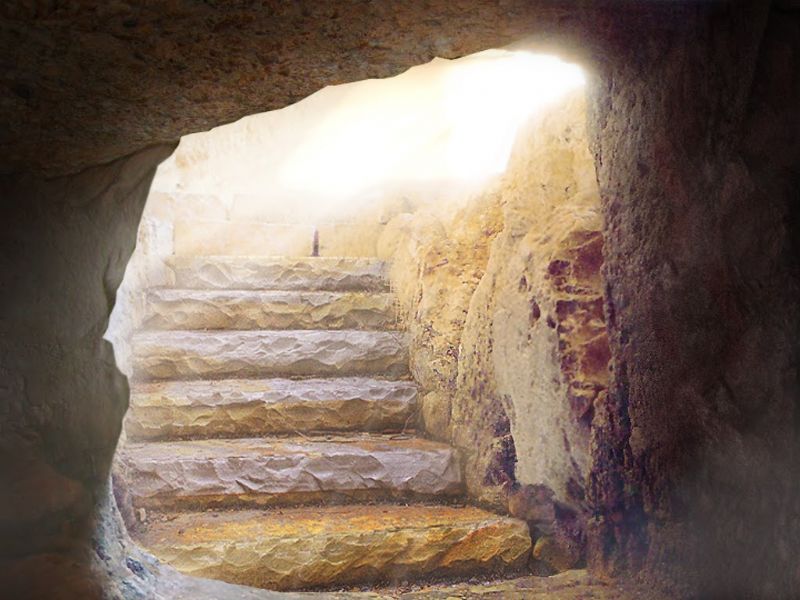
The Hope of the Empty Tomb!
Easter, the day people around the world will be celebrating the resurrection of Jesus. Churches will prepare Sunday morning breakfasts and arrange flowers around the alter. Churchgoers will read the account of the glorious day, sing hymns, and greet each other with “Happy Easter” as they gather to celebrate. Then the day will end, and everyone will go back to their own lives, until the next year, when they will go through the same motions.
I often wonder if Christians understand the significance of Easter, the day death was destroyed and hope shined. Easter allows people to live in the light of God. But can something that happened 2,000 years ago give us hope today? To answer this question, I will examine why Jesus had to rise from the dead.
God created mankind to live in perfect harmony with Him. After giving man and woman dominion over the earth, He gave them one rule to obey: “You must not eat from the tree of the knowledge of good and evil, for when you eat from it you will certainly die” (Genesis 2:16-17). After Satan, disguised as a serpent (Revelation 20:2), tempted the man and woman to eat from the tree, they discovered sin, death, and pain. They and their children could no longer live in perfect harmony with God; everything was broken, and everyone had to die. As Paul says in Romans 6:23a, “For the wages of sin is death.”
God restored His broken creation so that man and woman could enjoy a perfect relationship with their Creator again. God’s plan was to dwell among His own creation (John 1:14a) in the form of a man named Jesus, the perfect Son of God. Jesus was a light that no darkness could put out. The King of the Universe, He stepped down from His throne and became a humble servant. Throughout Jesus ministry, He raised the dead and healed the sick, the blind, and the lame. He spoke of peace, love, and forgiveness.
Jesus did not perform these miracles to be impressive; His creation was not meant to encounter sickness and death or to hate and kill each other. It was to live in peace, both with each other and with God.
Jesus death and resurrection ensured this. At the cross, the sin that divided mankind from God was eradicated. Jesus achieved the perfection God required by taking on our sins; His perfect and innocent blood purified mankind (1 John 1:7) and made us new before God. Jesus’ death was part of His plan to fulfill what the prophets before Him had said.
However, what Jesus did on the cross would have been pointless had He not been resurrected (1 Corinthians 15:17). By rising from the dead, Jesus defeated sin, death, and the power of the devil by accomplishing what the prophets had foretold. The resurrection of Jesus created a hope that is more than a wishful idea; it is a hope that is real, that brings life eternal. In a world where hope is otherwise futile, Jesus gives it to anyone who accepts it.
In Romans 6:23a, Paul’s statement, “For the wages of sin is death” is true, but so is the second part of the verse: “But the gift of God is eternal life in Christ Jesus our Lord!” God’s plan was for us to live with Him forever. Jesus came so that we may live. The love He shows us is greater than all else. That is the hope of the empty tomb, and it is as tangible now as it was 2,000 years ago. Because Jesus lives, we will, as well (John 14:19). Hebrews 13:8 says, “Jesus Christ is the same yesterday, today, and forever.” The same Jesus who was at the cross, rose from the grave, and now sits at the right hand of God is with us always (Matthew 28:20).
Easter Sunday is a day of celebration. It is the day Jesus changed the fate of mankind. We no longer have to live in darkness and death. We now can live in the freedom and the life Christ offers every day, and that is why we rejoice and say, “Christ is Risen, He is Risen Indeed! Alleluia, Christ is Risen!”
Jesus rose from the dead for us, so let this hope He has given us live on in our hearts.