
Count Istvan Szechenyi is considered one of the greatest statesmen in Hungarian history.
Amongst his many accomplishments was his championing (and, ultimately, funding) of the Szechenyi Chain Bridge in Budapest – the first bridge of any permanence to connect Buda and Pest.
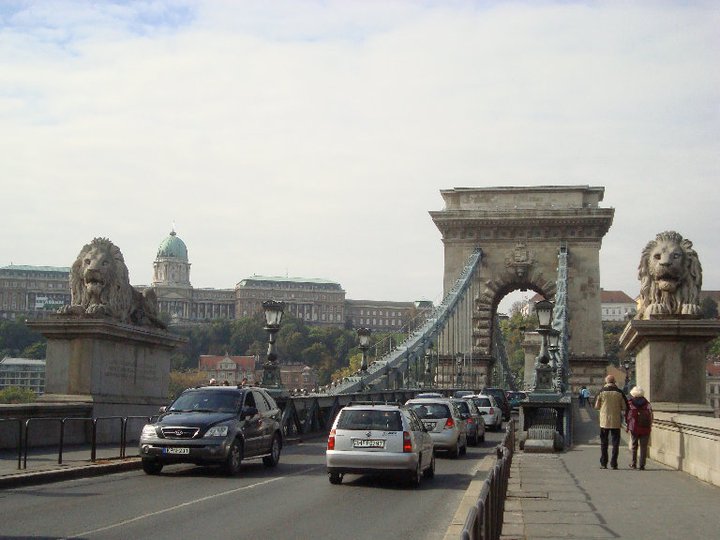
Our tour guide walked us over the bridge, and then proceeded to share about the history of it.
The story she shared was that Széchenyi (the man) lived on the Pest side of the Danube, and his father on the Buda side.
Széchenyi’s father was becoming ill, and it did not look like he would live much longer, so he wanted to be able to get to the other side of more quickly (regardless of the season – the Danube is impossible to cross by water during the winter because it freezes over).
There was no bridge, and Széchenyi’s father died before the end of the winter.
As a result of this, Széchenyi gave the government the funds needed to build the bridge.
Unfortunately, that is not true.
Hungary has a history of being on the losing end of… most everything.
You can see this history in the faces you pass on the street in Budapest.
No joy – just stoicism.
They try to drown it in cigarettes, drugs, and alcohol (alcoholism is a common addiction and major cause of death here).
Last night, cutting through a metro station on our way home, we saw a man sitting on the ground sniffing the vapors of a liquid in a bag.
Recently, I have not been able to think about this city without wanting to cry.
I feel like I am being given such a small taste of God’s anguish over the lies Budapest has bought into, but it’s overwhelming for me.
Not to mention a solid reminder to not try to take these things on myself.
If I couldn’t handle the weight of my own depression and sin… why should I try to shoulder the weight of an entire city?
I don’t want to pass out.
All each of us can do is be a drop in the bucket.
We just need to ask God which drop He wants us to be, because we can’t fill the bucket on our own.
And I want the same for you, too.







