

1960s, advocated a radical Communist revolution that would wipe out
Western influences in Cambodia and set up a solely agrarian society. In
1970, aided by North Vietnamese and Viet Cong troops, Khmer Rouge
guerrillas began a large-scale insurgency against Cambodian government
forces, soon gaining control of nearly a third of the country.
By 1973, secret U.S. bombings of Cambodian territory controlled by the
Vietnamese Communists forced the Vietnamese out of the country,
creating a power vacuum that was soon filled by Pol Pot’s rapidly
growing Khmer Rouge movement. In April 1975, the Khmer Rouge captured
Phnom Penh, the Cambodian capital, overthrew the pro-U.S. regime, and
established a new government, the Kampuchean People’s Republic.
As the new ruler of Cambodia, Pol Pot set about transforming the
country into his vision of an agrarian utopia. The cities were
evacuated, factories and schools were closed, and currency and private
property was abolished. Anyone believed to be an intellectual, such as
someone who spoke a foreign language, was immediately killed. Skilled
workers were also killed, in addition to anyone caught in possession of
eyeglasses, a wristwatch, or any other modern technology. In forced
marches punctuated with atrocities from the Khmer Rouge, the millions
who failed to escape Cambodia were herded onto rural collective farms.
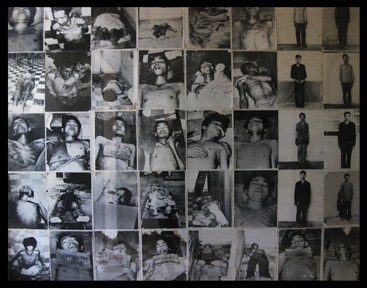
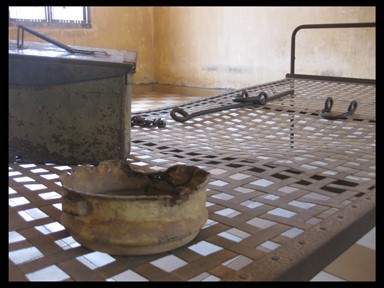
Between 1975 and 1978, an estimated two million Cambodians died by
execution, forced labor, and famine. In 1978, Vietnamese troops invaded
Cambodia, capturing Phnom Penh in early 1979. A moderate Communist
government was established, and Pol Pot and the Khmer Rouge retreated
back into the jungle.







