
Cambodia home school
Jome-reap-sooa from Takeo, Cambodia!
This month has been one of my favorite so far! Cambodia is definitely a special place and I think a lot of people who come here feel an unexplainable pull to come back. This country has a history that is terrifying and painful, as the genocide and destructive regime of the Khmer Rouge happened just in the 1970’s.
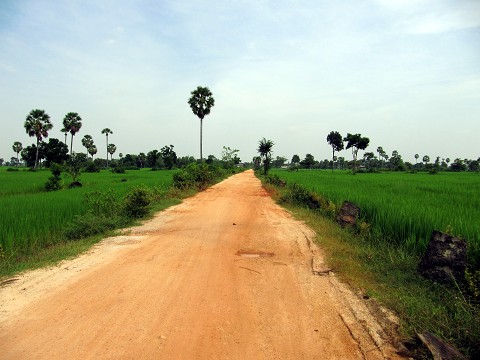
Located in between Thailand and Vietnam, the countryside here does not look too different from Thailand. As a tropical climate, there are lots of palm trees, rice fields, and lush green plants. My team lived out in a village this month, and we were surrounded by all of these, with a mountain far off in the distance. The weather in Cambodia is, in a word, HOT. We were lucky enough to be arriving at the start of the rainy season, which means that most afternoons there is a pouring rainstorm that cools everything off, but the temperature is always pretty high. Going for a run in this heat and humidity will make you sweat more than you ever knew possible!
Back in the 1970’s, Cambodia experienced a truly awful genocide that continues to affect its people. The vast majority of the people in this country are under the age of 30 because so many people were killed. The Khmer Rouge was a governmental establishment that sought to kill and destroy any people that they felt were preventing Cambodia from being the “perfect” country they desired. Men, women, and children of all ages and backgrounds were brutally killed for any long number of reasons that the government deemed “undesirable.” The country was in turmoil while the USA was involved in Vietnam, and throughout the 1970’s there was a great deal of warfare and torture happening within Cambodia’s borders as the Khmer Rouge reigned, and as Thailand and the USA used Cambodia for different military purposes. To this day, you have to be careful where you walk in some places because there are still many active land mines in the Cambodian countryside.
Praise God that the Khmer Rouge finally ended. Unfortunately, such destruction takes decades to recover from, and Cambodia is still striving to rebuild its structure and its morale. Cambodia is a third world country, and many people do not have clean water, electricity, adequate nutrition or education, or advanced healthcare. The official language is Khmer (pronounced kuh-my) and the country is ruled by a king.
The education system in this country suffers from being underpaid and fails to be the priority it should. Many of the students I worked with gave examples of this: teachers will withhold complete disclosure of information about a given subject unless the students personally pay them. In order to actually learn much, the students have to pay the teacher to “tutor” them, or teach them what they will not teach them in class. Students also have to pay to take tests, so young children often have to find ways of making money outside of school in order to pass a grade. Some of the students I worked with sold sweet bread or bracelets to try and earn money to take their required tests.
Our FOOD this month has been incredible! Our host mother, Sam-ol, is an amazing cook, and most meals were a colorful, delicious collection of fruits, vegetables, fresh meats, and carefully crafted flavors or garlic, onion, and soy. We have been so spoiled by her! The Cambodian diet in general is often very focused on rice and soup. In the area I lived, the main source of both income and food is rice. The people often spend their entire lives in cycles of planting, harvesting, and preparing rice to sell; sometimes the families do not actually sell much of it but work year-round just to continue to feed their families. Many families also have chickens and sometimes a cow, so there is fresh meat on occasion as well.
The religious practices in Cambodia are hard to identify specifically, as they often practice a sort of combination of Buddhism and animism, or the belief that all natural things have a spirit that can be addressed. Most families have a shrine in their house on which they offer sacrifices, like rice or fruit, to Buddha with the belief that he will work things in their favor. Many homes also have a spirit house, or little gold house that looks sort of like a large bird house, that sits in their front yard and often has incense burning on it to ask the spirits of their ancestors to work in their favor.
People are often willing and open to hearing the Gospel of Jesus, but it is often an entirely new subject matter and they may need to be pursued. Our ministry here is extremely diligent about discipling new believers and strives to make sure that the opportunity for discipleship is offered to everyone. Twenty-two children, teens, and adults have all come to Christ through this ministry and experienced a true life change. Although in contrast to some ministries that report thousands of salvation stories, this may not sound like much, but each and every one of these people is intentionally discipled and prayed over regularly, and the life-changes that result are filtering into these peoples homes and families.
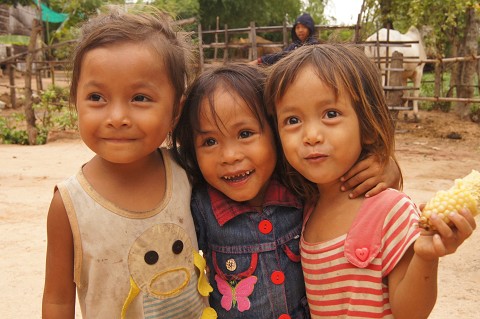
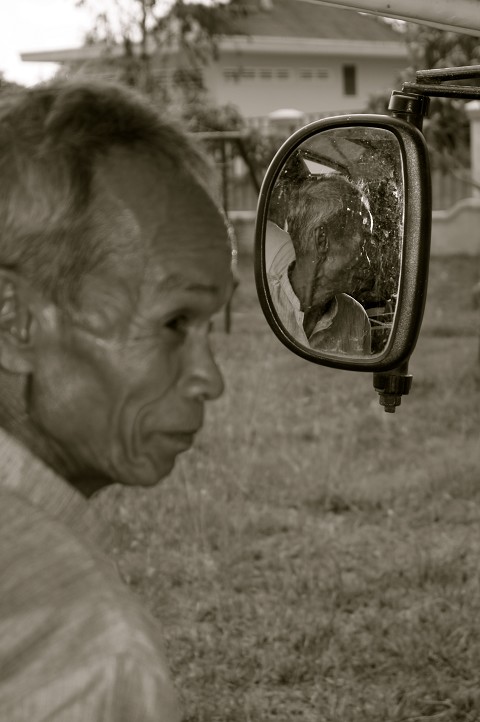
The Cambodian people are beautiful, warm, friendly, and respectful. They have shown my team and I so much kindness and hospitality, and the new believers here are so disciplined in seeking the Lord more. I would definitely encourage people to consider missions work here, and to be praying for the continued healing of a nation with a scary past but promising future!







