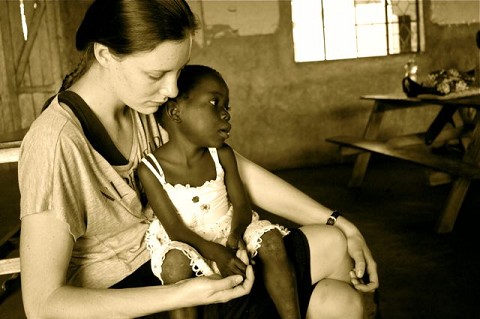
Africa! What an exciting, unique, and colorful place!
I did not write home school lessons for each of the countries in Africa because I found them all to be quite similar on several different points that I often write about. So here is the compilation of three months worth of interesting things I learned in Africa!

Africa is the second most populated continent in the world, and home to some of our planets coolest wildlife and geographical landscapes. The people and lifestyles of Africa are very diverse and unique, with an incredibly broad spectrum of influences and cultures.
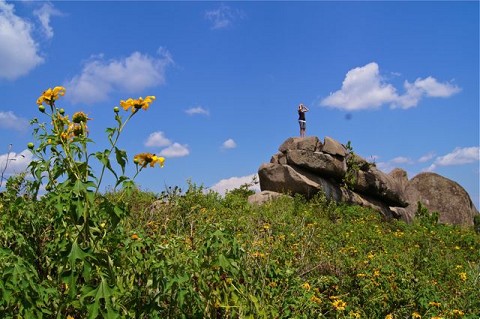
I had the pleasure of getting to know three countries in east Africa for the months of July, August, and September. Africa was full of surprises, starting with the way the countryside looks. When many people they picture Africa, they think of the yellow and brown flat lands in the Lion King, or perhaps envision pictures of the Sahara Dessert. I had quite the opposite experience, as East Africa has been one of the most lush and green places I have seen.
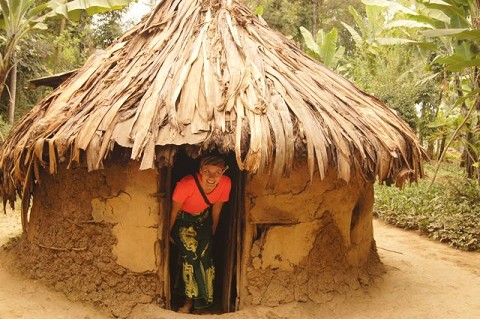
Rwanda was known as the land of a thousand hills, and both Rwanda and Kenya had one beautiful, grassy green hill after the next. Images of Scotland and Ireland even came to mind as we rolled through the countryside, though rather than being dotted with cottages, we saw small mud huts littering the hillsides. Tanzania, home of the Serengetti, was semi-arid and very brown for miles and miles while we drove to Arusha, with Mount Kilimanjaro and other huge mountains visible in the distance, but was again lush and green in Arusha. Throughout these countries, brilliantly colored wild flowers and blossoming trees added bright colors to every scene. One thing I could never understand, however, was how impossibly dirty and dusty a place that is so green can still be. I had dust and dirt all over everything I owned for three solid months, including myself!
Let’s talk about one of my favorite topics: food! The food in Africa covered a huge spectrum from incredibly delicious to downright scary. In general, the people in these three countries do not put much emphasis on breakfast, and we had white bread with butter and tea every morning. The tea in Africa is usually made from whole, unpasteurized milk straight from a cow out back, which is then boiled with black tea leaves, sugared, and served in thermoses that seem to keep things hot for days. All of the food prepared for me in Africa was fixed over a wood or coal fire outside, and almost all homes did not have kitchens, refrigerators, or stoves.
Lunch and dinner were usually quite similar to one another in each country. In Rwanda, we usually had fried potatoes, rice, ugali (white corn mush), noodles, peas, and sometimes beans or beef at each meal. In both Kenya and Tanzania, we had the best white rice I have ever had, beans, greens, cut up fresh vegetables, and huge slices of avocado every day. Although there was very little variety, the food was fresh, flavorful, and healthy! My favorite foods in Africa were the rice, the huge $0.30 avocados, fresh fruit for super cheap, and chapatti, which is sort of like the African version of a tortilla. Although I loved the food we were served, I definitely have missed drip (as opposed to instant) coffee, pizza, baked goods, trustworthy meat, and cheese!
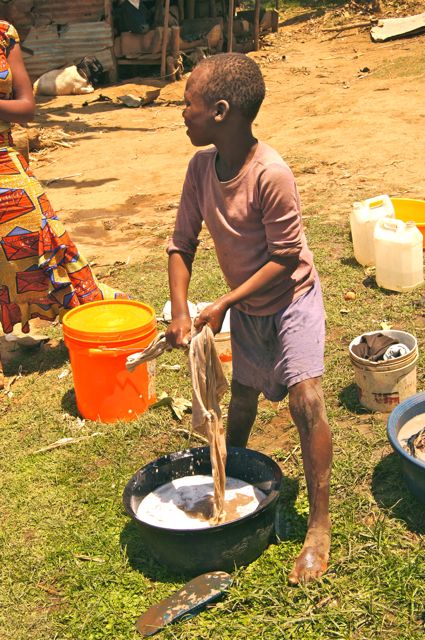
Families in this area of Africa usually live with many people sleeping in each room of any given home. Homes can be made of mud bricks or, for the wealthier people, cinderblocks and cement floors. Single families often have one room for sleeping and one room for living in, while multi-room homes usually have several families living in them. The wife in a family is usually primarily responsible for cooking and cleaning constantly, while her husband earns the income. Children are expected to help with chores from an early age, and the chores are usually quite intense! Children are often seen washing clothes by hand or hauling huge buckets of water on their heads from the community well or stream. To supplement the income, women will often carry huge tubs of fruit on their heads and sell at the local market, while others work as tailors. Another common job in Africa is to be a “house girl”, which is when somewhat wealthier families hire a local young woman to handle household chores.
Even while doing their daily work, the women are often seen sitting among one another, laughing, singing, and talking as they accomplish that day’s work. Children love playing a game I like to call “hoop and stick”, in which they run alongside a rubber or metal circle and coax it along with a stick. I also loved playing usual kids games with the kids, like ring-around-a-rosie and hand-clapping games.
Almost everybody in East Africa has cattle, as they are considered extremely valuable property. When a woman gets married, her husband must pay a dowry, or “bride price” to his new wife’s family, and it is almost always in the form of cattle. Chickens and goats are also both very common, and they usually just roam freely in whatever space the owner sets them free in, with a young boy working as a shepherd. I was often reminded of stories in the Bible when I would see a young boy with a staff in his hand chasing after a herd of sheep or goats! It is also very common in southern Kenya and Tanzania to see members of the Masaai tribe, who still are often dressed in the traditional red pattern wraps, carrying a staff and sporting beaded jewelry. I made a new friend named Jacobo while visiting the tropical island of Zanzibar off the coast of Tanzania, and he informed me that he “used staff to kill simbas”…he had killed two lions with his staff!
Primary education itself is usually free, although many schools will require the child to purchase their own uniforms and books, which can prevent children in more impoverished families from receiving an education. The same subjects are studied in school in Africa as in America…English, history, math, science, social studies, foreign languages, PE, arts, and others. Once a child is of age for secondary school, schools fees are quite high and many families struggle to help their children attend. Those who have a secondary education are often much better off in finding work and earning an income that is above the poverty level, so attending school is an honor and a privilege in east Africa.
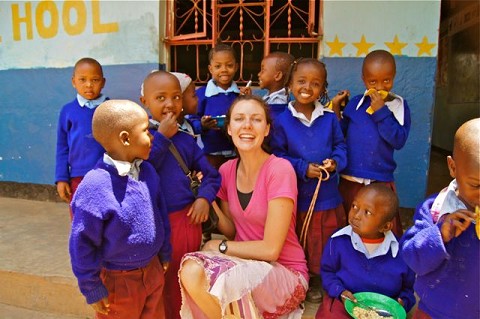
Church is Africa is an adventure of its own! Having come from Asia, where any movement or excessive emotional expression was considered out of place, Africa was like a shock to our systems! The women usually wear the beautifully patterned bright African fabrics you often see representative of Africa, with elaborately configured wraps on their heads, while the men are often dressed to the nines in tailored suits. This was one thing about Africa that fascinated me: no matter how poor people were, they always took great pride in keeping their clothes very clean and presenting themselves as nicely as possible at church.
There is no way to communicate how lively, impressive, and passionate the song and dance presentations at church are. Men, women, and children alike sing in loud, melodious voices while rhythmically dancing in ways that I am just not capable of. In Rwanda, the only accompanying instrument was a cow hide drum, while in Kenya and in Tanzania there was a keyboard to egg us on to dance crazier and sing louder. The preaching, when it didn’t come from myself or a team mate, is usually delivered with a screaming voice and sweaty brow, although I could not relay much of what was preached on as it was usually in either Kenyirwandan or Swahili.
One of the coolest things in Africa was the dedication of sincere believers to their Church and faith. In Tanzania, we worked in Oldadai village, where believers gather multiple times a week for many hours to simply worship God and pray, and even have an all-night prayer service every Friday night. The stronghold of legalism still needs to be broken, as many people still categorize certain people (for example alcoholics and prostitutes) as incapable of Christianity because of their sin. Praise God that there is much truth being spread about the grace that our faith is based upon, and eyes are being open to the need to reach the people in the community that are otherwise thought of as unapproachable.
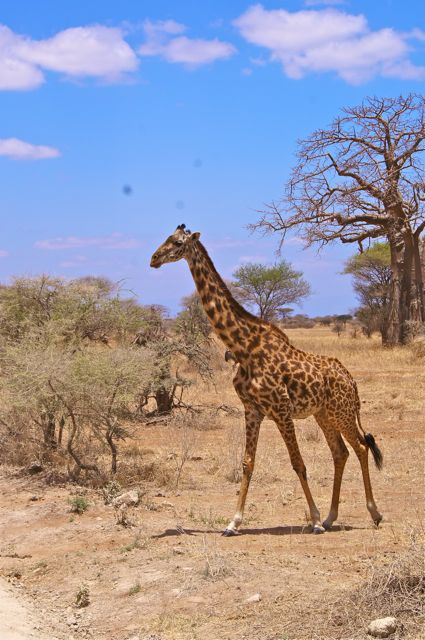
My three months in Africa have been an incredible adventure. At times I was overwhelmed and ready to leave right away, and at times I could totally understand how people are able to live in an African village for long term missions. Missionary life in Africa is anything but easy: we bathed with cold, dirty water out of a bucket, ate the exact same thing every day, battled insects and diseases constantly, regularly lived without electricity or running water, were constantly being asked for money, and felt like home was on another planet. But there is no question that Jesus has a huge heart for the forgotten village people of Africa, and I would not be at all surprised if God called me back there one day. And He blessed me with the opportunity to go on a safari, which is where the pictures of elephants and giraffes came from!
Hakuna Matata!