
I'm a tourist. I'm a work tourist. I'm taking a gap year. I'm just interested in other cultures. I'm just here for the experience. I'm a backpacker. I just love traveling.
These were some of the excuses we came up with/were directed to use when people asked us, "What are you doing here in Turkey?"
We were missionaries in a closed country, for the second time on the race, for the final month of the race.
Before we arrived, our contacts asked our entire squad to remove the words "missionary" and "world race" from our facebook profiles. Your social media is scanned for those kinds of catch phrases on entry to the country.
We were asked to never use the word "missionary" & to call ourselves "workers" instead. Turks have a deep-rooted, irrational fear that the goal of Christian "missions" is to undermine their country – and since that is the furthest thing from the truth, we certainly didn't want anyone to believe that about us.
The six different teams on my squad were sent out to six different locations in Turkey, all working with different ministry contacts. Some of the teams had very different experiences than my team had, because of the nature of their contacts' presence in the cities and the types of their ministries.
But I am just sharing my team's experience. Our ministry contacts are Americans by birth, but Turkish at heart. They have lived in Turkey for thirty years. They have dual citizenship and speak Turkish fluently. They have become respected elders in the village. They own a business in Turkey. Their two children have grown up, gone to college in the states, and returned to the Middle East as "workers", one in Turkey, one in Iraq. They eat Turkish food, wear Turkish clothing and decorate with Turkish carpets. They love Turkey. And most of all, they love the Turks.
They truly exemplify a lifestyle of missions like no one I had seen on the race up to this point. They live like Turks. And they love like Jesus.
They asked us to be extremely careful with our words and actions – the worst possible thing would be for our team, in one month, to totally jeopardize the lives they had been carefully building for so many years.
So, instead of our team storming the frontlines like we had done so many times in other countries, we were asked to take the backseat. Instead of being a loud voice used to draw attention, we became a silent weapon, used to open doors of opportunity for our contact family.
We taught English in schools. Our contacts were able to meet with all the school officials and gain increasing influence within the village's educational system.


We worked in cucumber gardens. Our contacts were able to provide free labor and then invest time into their relationships with the gardeners and their families, finding those golden opportunities to share Jesus.

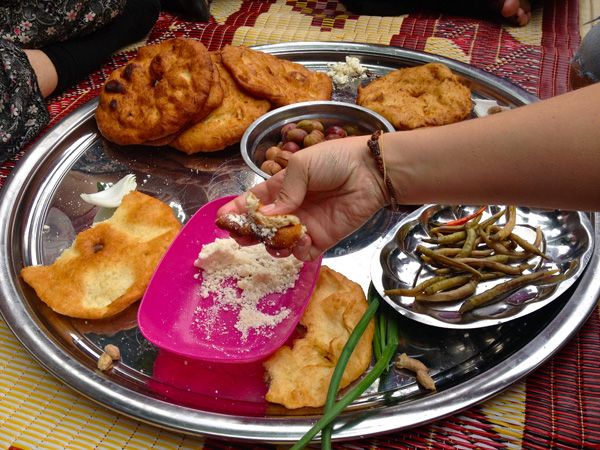
We sat with Turkish women and enjoyed their amazing hospitality (and seriously delicious food!). Our contacts were able to have more time to build trust and true friendships with the women in the community.
And we were able to serve, not only our contact family, but also other "worker" families. We helped paint a house, move a family out of an apartment, babysit, work in an olive orchard, cook and lots of other random things.


Before meeting our contact family, I still hadn't grasped the idea of really living the gospel. I didn't understand how to go from being a 9-5 "missionary" to a 24/7 "worker", how to become an integral part of the community, not holding back on false "holier-than-thou" pretenses, not pretending my culture is the best or preferred culture, but just diving into the place God calls me to with total abandon.
I couldn't see myself as a 9-5 "missionary" before the race. And I can't see myself doing that now.
But I DO see myself as a "worker" for Jesus, in America and all over the world. Because missions is not a job, it's a lifestyle. It's not a career, it's an identity. And it's not a temporary gig, it's a lifetime commitment.
Names and photos of workers and locals are not included or blurred out as a safety precaution.







