
I nervously walked through the hospital gate, following closely behind my translator and praying furiously that God would show up in a big way. I didn’t really know what to expect. I hadn’t done hospital ministry before and I’d never been in a third world hospital. I’ve barely even been in any hospitals in the United States.
As we walked into the first room, I was overwhelmed by the strong stench and shocked that there were at least 12 beds squeezed into the room. There was blood on the floor, filthy linens on the bed and flies swarming around. Everywhere I looked there were patients groaning in pain. No one seemed to be receiving any kind of medical care, except for a few IVs and a few urine bags (don’t know the proper terminology), most of which looked desperately in need of changing. There wasn’t a nurse or doctor or piece of medical equipment in sight.
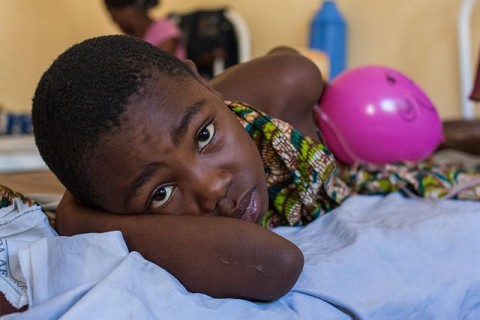
What horrified me the most was that many of the patients were sharing beds. They were barely twin-sized beds to begin with, and two grown men had to share. I cannot imagine having to sleep in a place like that, let alone with less than two feet of space in the bed and another adult’s open wounds rubbing up against me.
It was a government hospital, which in Tanzania means the nurses were there only to provide medical treatment. Feeding, bathing, changing linens, and general care is left up to the family of the victim.
As we approached Hussina’s bed, his eyes were rolled back in his head and Erica and I looked at each other with big frightened eyes, wondering if this guy was even still alive. No one was around to know, or even care, it seemed. Hussina was alive and he eventually opened his eyes. He could barely speak but he told us he was HIV positive and that he had no relatives, so he hadn’t been fed all day. Erica left to buy him the juice he asked for, but other than that all we were able to do was pray for him.
That’s all we were able to do for anyone.
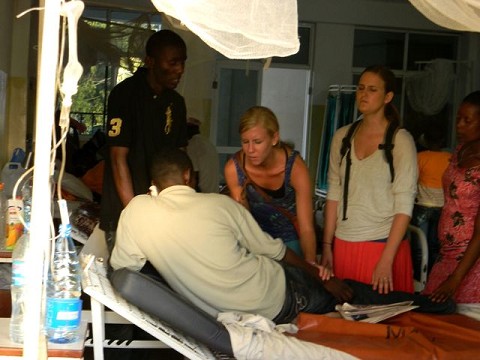
One of the things that bothered me most was when we asked the patients what was wrong, most of them didn’t know. I’ve never been in the hospital myself (thank you, Jesus) but I’m pretty sure if I was I would demand the doctors find out what was wrong with me. All they could tell us was “Pain all over my body, paralysis, surgery on my neck, or cancer somewhere in my abdomen.”
There was Helena, who complained of extreme pain in her entire body, and Victoria, whose back pain was so intense it prevented her for being able to walk. There was Martha, who had swollen feet and talked of spine issues, and Lucy, who had what she thought was a toothache but the entire right side of her face was swollen. Her mom was upset that the doctors had failed to do anything to help her.
And then there was Aisha. Aisha was severely burned in fire. Her mom pulled back the blanket to reveal that both of her legs were covered in burns. Not bandaged up at all, just bright red, exposed wounds.
Tanzania is a Muslim country, so many of the patients we talked to were Muslim. One guy adamantly refused us, but a few others let us talk to them about Jesus and even allowed us to pray for them.
In the men’s ward we met Vumeris, who was paralyzed on the left side of his body,
William, who had extreme pain with urination, Kennedy, who had a nail go through his foot and now it was severely infected, and David, who had severe malaria.
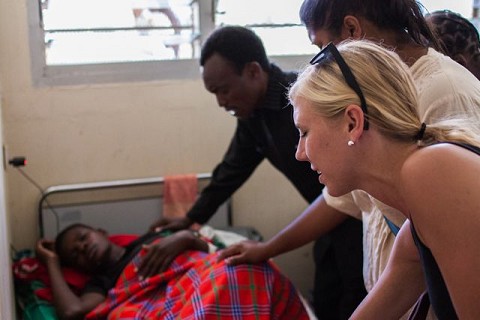
Johannes was my favorite patient of the day. Even though he was obviously in pain and uncomfortable sharing a bed with another man, his smile shined so bright. I tried to tell him I liked his smile, and apparently it was translated as I love him, so there was lots of ensuing laughter and confusion. Johannes eagerly showed us his wounds and told us how he was injured in a train accident. Seeing his open, infected wounds was one of many times I had to keep myself from throwing up. I don’t know how you nurses and doctors do it!
We were all split up into groups of two and spread out all over the hospital. One of my teammates saw a man with leprosy lying on the floor in the corner of one of the rooms. She said his stench filled the entire room. He was missing a foot and some fingers and they said his leg looked like it was rotting away. And yet he too, had a giant smile.
It was so moving to see how much JOY these patients had despite their dire circumstances.
I left the hospital not knowing whether I wanted to cry or throw up, whether I was sad or angry, whether I should ingrain this memory into my mind forever or try to pretend like I never saw the horrors of the afternoon.
When we went back the following day, we visited the children’s ward. The hospital didn’t even have cribs, so the babies and small children were just laid out on the beds. In the first room we prayed for healing for children with cerebral malaria, pneumonia and skin disease. There were babies with high fevers and diarrhea and an extremely premature and sick twin.
When we walked into the second room, I took a quick glance around and realized that every single child in the room had major burn wounds. Their poor little arms and legs and chests were covered with big burns. Where their black skin should have been, it was only redness.
Their stories both broke my heart and filled me with rage. First my heart broke for the sweet, innocent child who pulled an entire pot of boiling water on himself. Despite my best efforts I couldn’t help but feel angry at the mother. Although I’m sure she only wanted a cup of tea and didn’t mean for this to happen, it baffled me why you would ever let a toddler out of your sight while you were simultaneously boiling water over an open flame at ground level.
One child had stuck his arm into the boiling pot of water and burned off all the skin up to his elbow. Another child burned his hand after sticking it into a mug of hot porridge. Multiple children had tripped and fallen into an open flame or a small stove on the ground.
I just kept thinking to myself, “this would never happen in America.” Sure, there are children with burn wounds in the States, and accidents do of course happen, but it just seemed like each of these innocent children was stuck in this dirty hospital with horrifying wounds that could have easily been prevented.
I guess it’s just a part of the culture here. Children as young as one or two years old are left to roam freely. So many times I’ve been walking down the street and seen a small child wandering completely by herself and thought to myself “Where is your mother?!” Oftentimes children as young as four or five are left to care for their younger siblings.
At least in America children have to be at least tall enough to reach the stove to injure themselves, but not here. There are no ovens and very few stoves. The majority of the cooking here is done on the ground, right outside, and sometimes even inside, of the home.
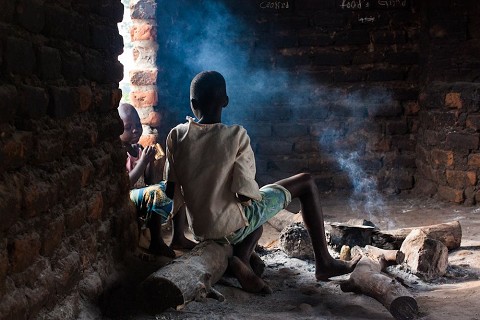
I hold my breath every time I see a child even get near the fire, and since witnessing the scene in the children’s burn victim unit, I wish I could just rush over and sweep up every child and explain to their mothers how careful they must be.
My heart went out to every patient I met this week in the hospital, and I know I won’t soon forget their stories. It’s sad to imagine that so many of the illnesses could be prevented with immunizations, clean drinking water, better sanitation and better medicines. Sure makes me thankful for our quality of medical care in the USA.
Please take a moment to say a prayer for all of the patients here in Mwanaza, Tanzania, as well patients in similar run-down hospitals with undertrained staff all over Africa and other third world nations.







