(As a quick disclaimer for anyone who may be waiting for an update on my last blog, I’ve Got My Backpack On, My Shoes Tied Tight, it thrills me to report—spoiler alert—that we already have over 40 children sponsored! Be looking for a blog later in the week with the final results! I simply haven’t written or posted it yet because the numbers are still coming in! Here are some thoughts I had in the meantime, though…)
A recent prayer of mine has been the prayer for God to grant me his “vision”, so to speak. Though I am not God and thus will never experience the depth of emotions he experiences, I still believe that we, as Christians, need to make every effort we can to pursue the character of God (Hebrews 12:14). After all, this is what pursuing holiness is all about—pursuing God-likeness. It’s amazing how much of the Sermon on the Mount (Matthew 5-6) is filled with direct commands to do things “just as your heavenly father” does them. I want to love righteousness and love people like God does and I want to hate sin like God does as well.
A big turning point for me in my Christian life was my realization that emotions are something that can actually be prayed for. Previously, I had always thought of the emotional realm as some sort of sacred “untouchable realm”—far beyond the realm where prayer was allowed to venture. Emotions were reserved for reacting to answered and unanswered prayers and emotions, when negative, where confessed in prayer, though they had never been something that I actually prayed for. As I realized more and more, however, that it was God who granted joy, God who granted love, and God who granted peace—all of which are emotions—it began to make sense that one could actually pray about emotions. Even if we recognize emotions as biochemical reactions, we still have to recognize that every force of nature must bow down to the sovereign God of the universe.
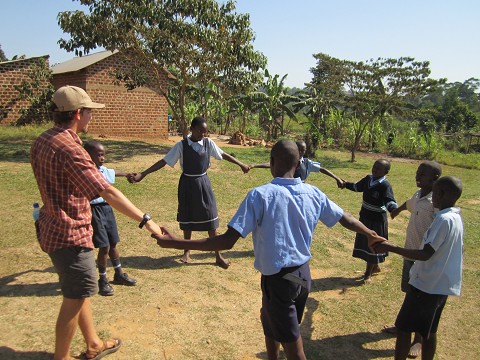
As much of our ministry this past week has revolved around teaching at Champions Christian Primary School, it follows that the natural manifestation of my prayers for God-like vision and God-like emotions has been in my emotions towards the children we teach, play with, and attend church with.
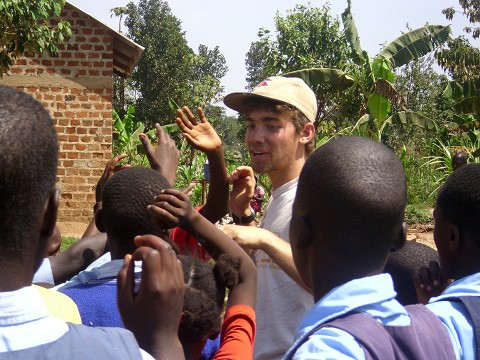
Most of the children are incredibly easy to love, and I recognize that ease in loving them as an answered prayer. They are quick to offer bearhugs and will unashamedly shout my name—or my “African name”—“mzungu” (white person)—until I show them the same affection, be it a piggy-back ride or even a high five, that their lucky neighbor just received. They thrive off of physical affection, and they subject all other things—reputation, shame, appearance—to the dogged pursuit of it.
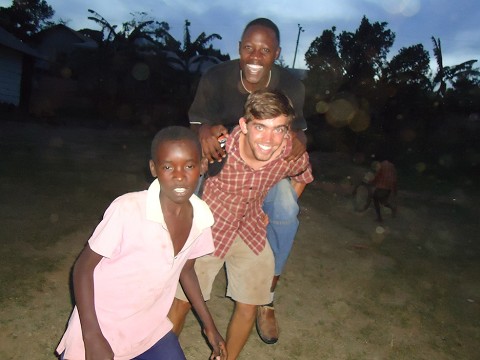
Every day, I am blessed to experience what I call “slow-motion” moments. These are the type of moments, where, if they were to be shown in a movie, would likely be shown in slow motion with some sort of epic theme song in the background—moments that seem to capture the essence of what the God-fueled, sweaty, passionate, carpe-diem life is all about. I had one of those “slow-motion” moments as I held a child, Catherine, up to the evening sky last week. As our eyes met and locked, in unspoken agreement that it was good, everything slowed down tenfold as I thanked God that he had permitted me to experience, even if only briefly, the nectar of earthly life trump its typical triviality—a foretaste of heaven.
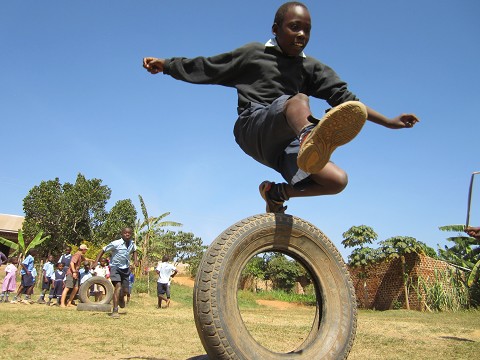
I have no doubt that this “slow-motion” type of love was brought on by my prayers for God’s emotions and God’s love. As our pastor, Joseph, filled me in on many of the children’s backgrounds throughout the week, my emotions deepened. I must show male love to Juma—his father is not in the picture. Maybe it’s not the biggest deal if Sharuwah or Shakira stay at the church, even after the sun sets—if they return home, it will be far too early. Both of their mothers are prostitutes. I must cheer louder than I had before for Claire as she races two other girls around the impromptu grass track in my gym class—at age 11, she is HIV positive.
As I have tried to passionately pursue Christ’s emotions, I have found that my love for the children increases in almost direct proportion to the struggles they face. At first, I thought this was quirky—or even wrong. Now, however, I am realizing that it is neither quirky, nor wrong, but rather natural. My soul, in its natural genetic thirst for cosmic equilibrium almost feels as if it must lavish love upon the downtrodden in an effort to make up for their lack of love from the expected vessels and feels that once they too are given the same degree of access to “the fragrance of Christ”, justice is done.
“When (Jesus) saw the crowds, He felt compassion for them, because they were weary and worn-out, like sheep without a shepherd.” (Matthew 9:36).
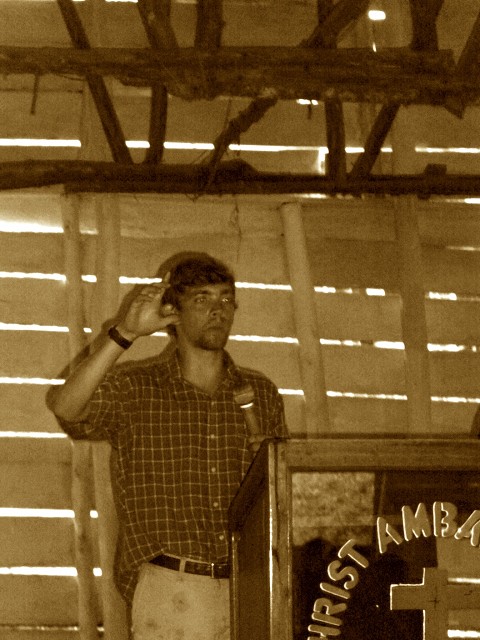
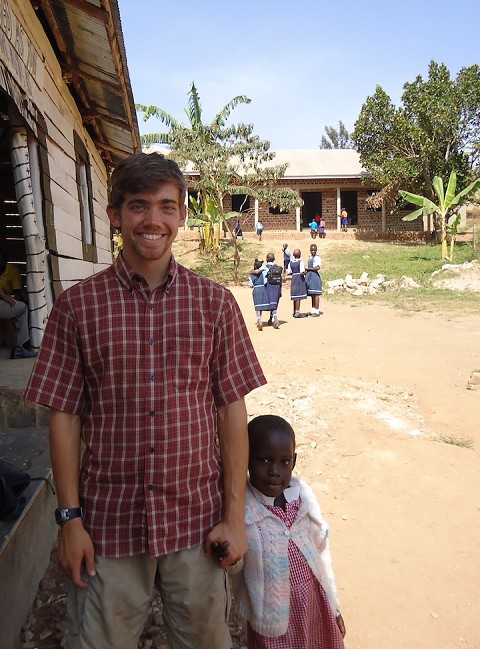
Though most of the children are easy to love with this type of love, not all are. One child in particular comes to mind. Shaffic, a very young Muslim boy, who always hangs around the church, is the epitome of “hard to love.” Though he is certainly cute and though his smile and his bushy eyebrows cast him as innocent, he certainly has a rebellious streak.
He has clung to me since day one. Because his father left him when he was younger, he uses me as a human jungle gym to satisfy his thirst for male attention. This in and of itself doesn’t bother me—I actually like it! However, when I try to drink even a sip of water, and he spills it—in church—or when he hits other children who try to hug me, in unwarranted jealousy and with unwarranted violence, he can become a little harder to love. My patience becomes shorter when he touches the lens of my camera with his dirty finger and shorter still when he kicks, screams, and cries the second I ask for it back.
As I prayed, on the spot, for the ability to love him nonetheless, I felt as if God was telling me something profound—or at least profoundly new to me. “Ben: To me, loving you is much more similar to loving Shaffic than it is to loving shepherd-less sheep.” I started to see everything in a new light when I realized, not that I was that kicking, screaming child, but that I am that kicking, screaming child—present tense. This is not an overstatement for humility’s sake, but rather a gross understatement—a result of the English language’s sad failure to express what goes on in the heavenlies.
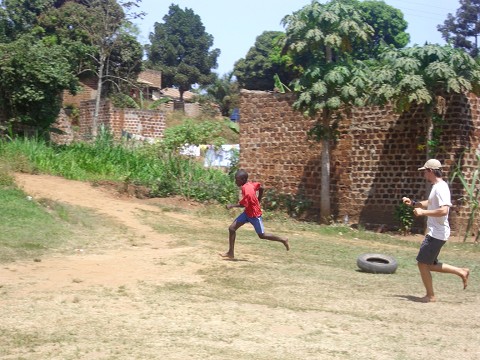
I try not to be an enabler, of course, as God is not an enabler either, and as he disciplines those he loves. Shaffic knows it is not okay to hit other children and he knows, much better than Mick Jagger, that he “can’t always get what he wants.” I try my best to show him, however, that despite his hitting and subsequent punishment, despite his tears, despite his greed, and despite his inability to share, he is still well-qualified to receive my tangible love—not because he is cute, or because he is young—but rather because I am a grown man who can love whomever I please, whenever I please. “For God proved his love for us in this way: while we were still sinners, Christ died for us.” (Romans 5:8).
When I compare my own daily actions to God’s infinite perfection, I see, all too clearly, that my lifestyle amounts to a whole bunch of kicking and screaming. Where Shaffic has a rebellious streak, we have a rebellious core. Because of this, I thank God that the amount of love He gives me is not contingent on my own lack of kicking and screaming nor on any amount of “cuteness” that may bail me out of the judgment I deserve, but rather upon his own good pleasure in extending or withholding love. Luckily for us, God is well pleased to love us.

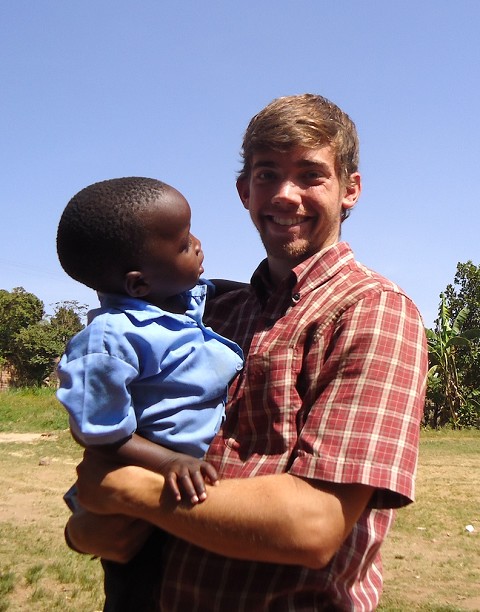
We love because we were loved first (1 John 4:19). When we pray for God’s emotions, he often answers us in ways we do not expect. Though I certainly long for more “slow motion” moments, as they help me to appreciate this side of eternity, I also long for more Shaffics, as they help me to approach the love I have from the father who dwells on the other side.