
Our time in Cambodia has moved along at what I would call a “World Race pace”—yes, a World Race pace. The hours of the day meander on slowly. The sun yawns, with its hands in its pockets as it crawls across the Asian sky, leisurely and distracted, with no intention of setting quickly. The days themselves, however, they fly by like thieves in the night. It’s as if the hours and the days are coconspirators; the former drags on in an effort to sap the sustainability of your zeal and the latter flips the pages of the calendar at lightning speed in an effort to keep you from realizing that the former is even happening.
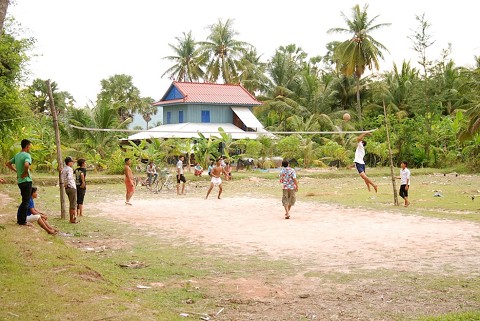
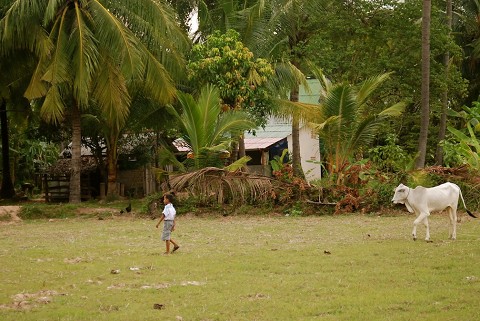
Despite my time-related hallucinations, the village life has done well to preserve the magic, for me, of this adventure I call the World Race. Like I’ve written about before, this place (Toch village, Kampot province) also moves to its own rhythm. The roosters exercise their sovereignty over alarm clocks as skinny white cows share the dirt roads with old motorcycles in the morning. Smiling children come in and out of our property at ease throughout the day, seemingly unaffected by the scorching heat and humidity. Shirtless old men puff cigarettes and watch teenagers—younger versions of themselves—play volleyball as women cut mangos and coconuts. Everyone is up early—the sun leaves no other option and everyone is in bed early, too—the day’s heat leaves no other option. It’s a completely different rhythm than the States, but it’s a rhythm I can dance to.
Despite the ethnic flavor and the cultural flourishes of village life, however, there has always been a sense of mission for every month—a driving sense of mission that works under, around, and through any local peculiarities. Though the mission is always, with unswerving focus, to know God and to make him known, that mission always expresses itself with different emphases in different months. In Serbia, God cut right to the chase and broke me to the point where humility was my only option. In India, he taught me about faith, in Kenya, purity of focus, in Uganda and Thailand, obedience. It’s been something different every month. This month—month ten of eleven—it’s taken on a beautifully simplistic form: love. 1 Corinthians 13 love.
This sounds so simple, but it’s been a real shocker for me how high of a concept Christian love is. I was surprised that God chose “love” as my mantra for this month specifically because I could discern, until now, a clear pattern of God “starting with the basics”, so to speak, and then building on the foundation he’d laid, month by month. I couldn’t have learned obedience in Uganda, for example, if God hadn’t taught me how to be humble enough to be obedient in month one. I am finding that love, though, is hard.
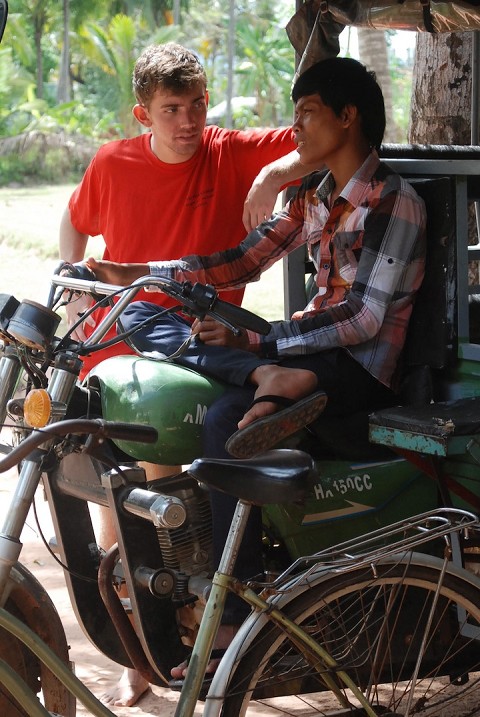
The words that God has repeatedly whispered in my ear have been, “love the one in front of you, love the one in front of you, love the one in front of you.” I have several opportunities throughout each day to put this into practice, as we are teaching English, doing children’s ministry, and doing house visits this month.
Many times, the act of extending love is as easy as throwing a child over my shoulders or being patient when students struggle with English. It’s a constant dying to myself and seeking others’ best interests. I have found, however, that it is nearly impossible for me to love the people of this village in the way they deserve to be loved if I am not seeing them with Jesus’eyes. Now, this is clearly sounding very cliché. What World Race blog doesn’t mention something about love, children, and the eyes of Jesus? But, as common as all of this talk about love is, I believe that it has huge implications on how we carry out the Great Commission (Matthew 28:19).
To put it bluntly, I have made people into projects in the past. I would often “love” people insofar as those people were potential projects—future Christians in the making—Gospel files only 50% downloaded. People were to have tabs kept on them and my acts of love were to be calculated and premeditated—steps in a mechanical factory flowchart of good deeds—assembly line evangelism. Don’t get me wrong—spontaneity doesn’t equate to higher love—but there is something about on-the-spot love that attracts me.
To his disciples, Jesus said:
“The harvest is plentiful but the workers are few. Ask the Lord of the harvest, therefore, to send out workers into his harvest field.” (Matthew 9:37-38).
I have always pictured these verses very mechanically—battle plans devoid of emotion. State of harvest: plentiful. State of workers: few. My battle plan: go into already plentiful harvest field and reap souls. What I completely forget to take into account however, was the verse before these two verses: “When (Jesus) saw the crowds, he had compassion on them, because they were harassed and helpless, like sheep without a shepherd.” (Matthew 9:36). Jesus’ “battle plans” to his disciples were a direct result of what he felt when he looked out at the crowds—compassion, helplessness, lostness.
Make no mistake: I am here to preach Christ and Christ crucified. I am here to make disciples. But “loving the one in front of me”—in whatever small way that looks like—in no way works against, or even works to damper that driving goal. “Loving the one in front of me”, I realized, is not synonymous with a simplified, politically correct, secular version of the Great Commission. Rather, it is the oil that lubricates the wheels of the Great Commission. Scripture tells us that “(saving) faith comes through hearing, and hearing through the word of Christ” (Romans 10:17). Without love, however, all people will be hearing is a clanging cymbal (1 Corinthians 13:1).
I truly desire for God to give me the ability to “love the one in front of me” as the oil in my Great Commission. I want to do so with the compulsion of my heart as the driving force. There are too many lost people in Cambodia not to love this way. Again, however, people are not projects. Let me love them, Father, not as projects yet to be finished but as heartaches yet to be fulfilled.
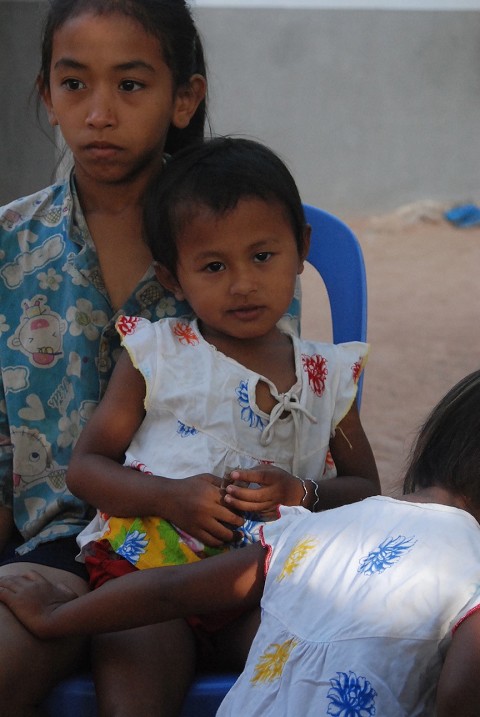
(All photos taken by my teammate Mallory Martin. Click here for a link to her blog!)







