
In school, we learn a lot about things that happen in the Western world…and not much else. For example, I was taught so much about the Holocaust and other hard times for Europe & the US in WWII, but nothing about the East. Not much about the Rwandan genocides. and NOTHING about the Khmer Rouge. nothing. I remember watching a TV show in which they made a joke about Pol Pot, and I had to look up the answer. Ridiculous! During our time in Cambodia, we learned a lot about this dark time in the country’s history, and visited the Cheoung Ek extermination center, or the “Killings Fields”. My heart broke to hear about this genocide, to hear that they are missing entire generations of people, the majority of the population is below the age of 40, and they are left with large, hurtful scars that Pol Pot & his regime inflicted.
So, of course, I wanted to write a blog about it. But another Racer had written one that was good enough to replicate 🙂
This was written by my friend Jessica Sims, an O-squader. We actually went to the same high school but befriended each other in college…now we are both back to living with our parents in good ole c-ville. Enjoy!
[be warned, she is an amazing photographer]
—————————————————————————————————–
While we were in Phnom Penh, we took a trip to the Tuol Sleng Genocide
Museum and Choeung Ek extermination center, more commonly known as S-21
Security Prison and the Killing Fields. Both were used as places to
hold and execute over 17,000 men, women, and children during the Khmer
Rouge genocide between 1975 and 1979. It is still unknown how many
people were killed throughout Cambodia during the reign of this
Communist regime, but most estimates fall between 1.2 and 1.7 million
people who were either executed, starved to death, or died from
easily-treated sicknesses.
The Khmer Rouge evacuated the cities, and began to exterminate anyone they didn’t like, including:
- anyone with connections to the former government
- ethnic minorities
- intellectuals
and professionals (basically anyone with an education, including all
teachers, doctors, artists, musicians, writers, and people who wore
glasses because it implied that they were literate) - the people who had been evacuated from the cities, if they hadn’t already starved to death
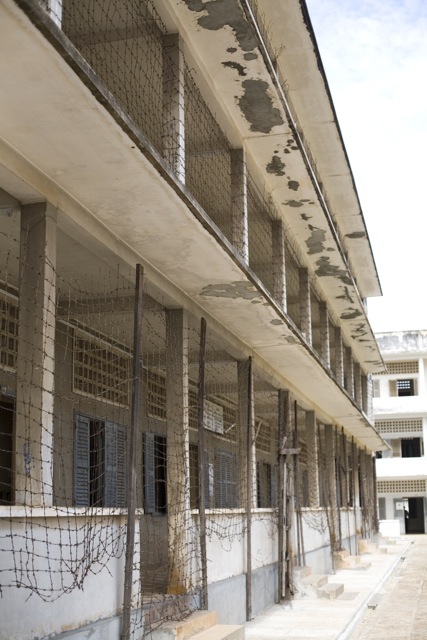
S-71 was formerly a high school before it was turned into a prison and
torture center. The prison held between 17,000 and 20,000 people during
Khmer Rouge rule.
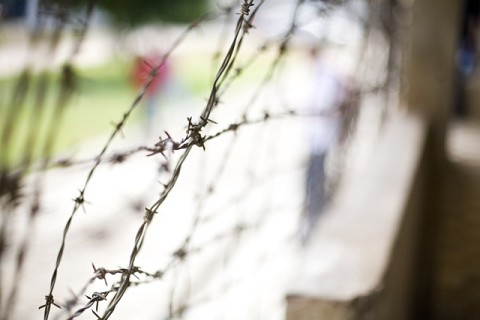
The barbed wire was mean to keep the prisoners from attempting suicide over the balconies.
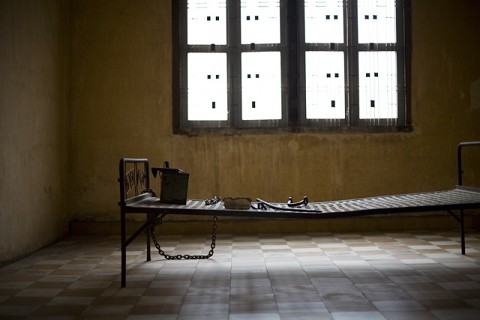
Certain
classrooms were used as torture and detainment centers for really
“important” prisoners. The prisoner was chained to bed frames like this
one, and repeatedly tortured for information. Bloodstains still cover
the floors of these classrooms.
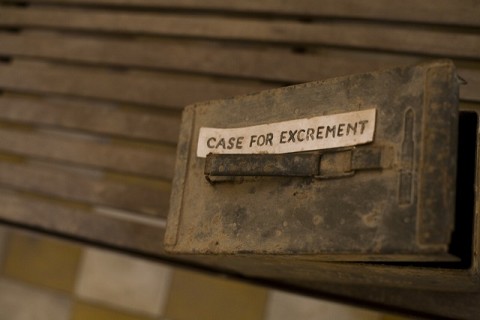
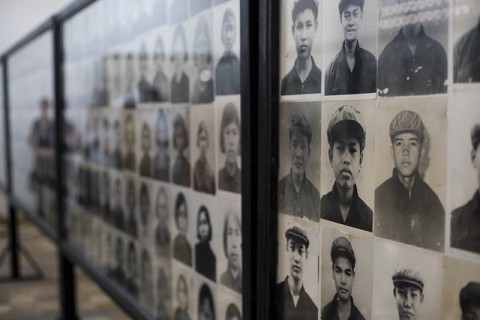
They photographed every prisoner that came into the prison.
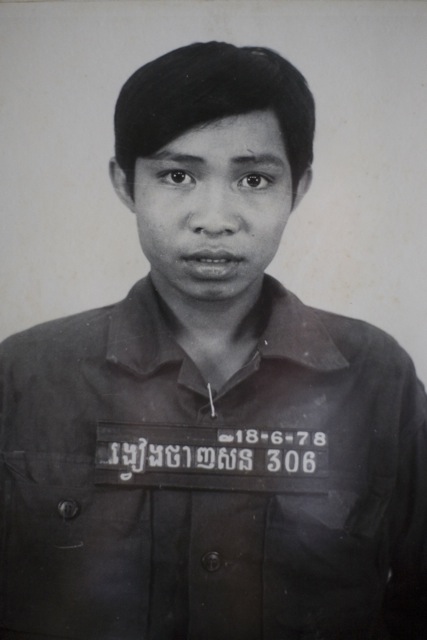
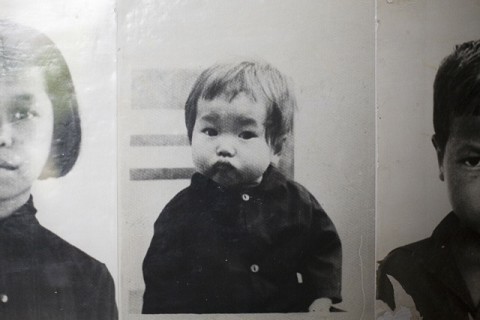
The
Khmer Rouge also made a point to kill all of the children and family
members of their victims to protect themselves from future retaliation.
After walking through 3 rooms lined wall to wall with pictures of the
prisoners, this baby is when I finally broke down. She was too little
to even know what was going on, and she didn’t even fit in the chair
they used to photograph the prisoners.
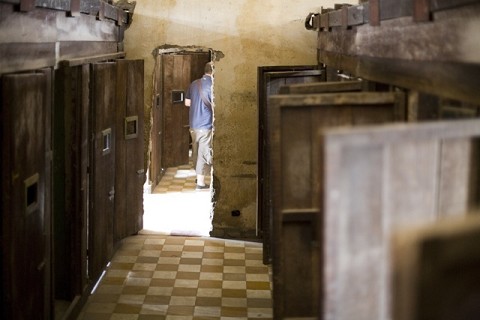
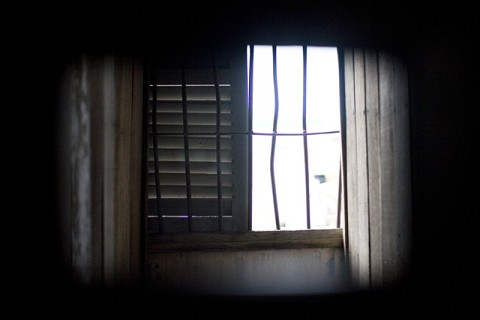
View through a prisoner’s window
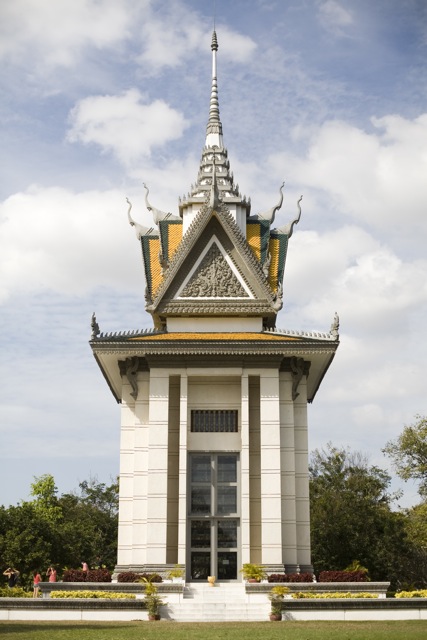
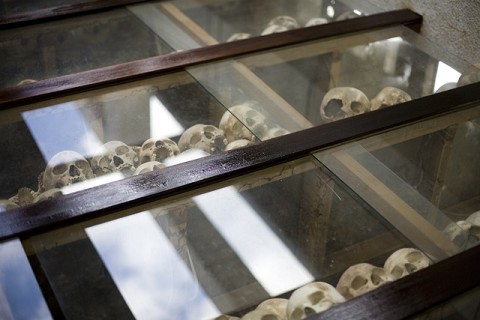
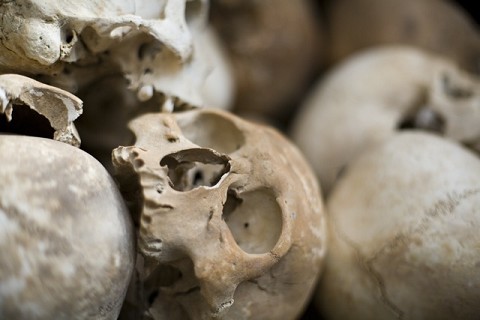
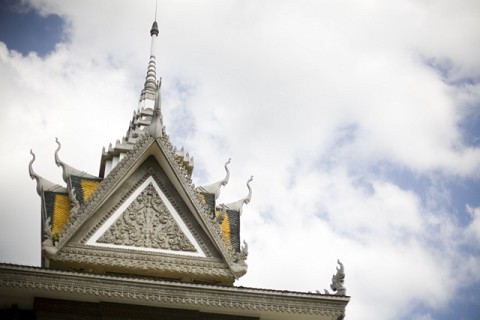
This
Buddhist stupa was built as a monument at the Killing Fields, and holds
over 5,000 skulls recovered from the mass graves. Over 17,000 people
were killed at The Killing Fields– so far 8,895 bodies have been found
in mass graves there.
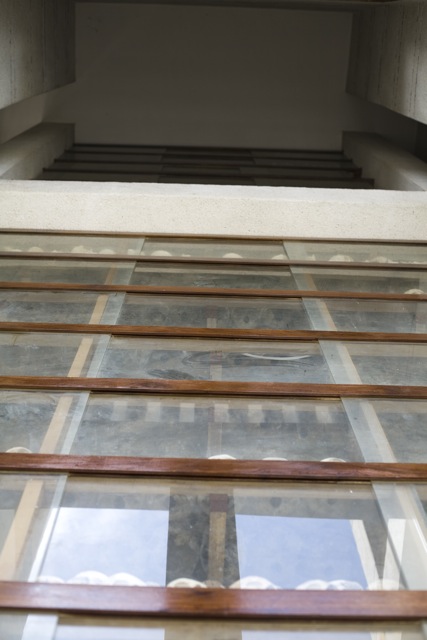
The shelves that fill the stupa, packed with skulls.
I
can’t believe something like this happened 30 years ago, and yet most
people know nothing about it. Some of the Khmer Rouge leaders still
haven’t even been tried for their crimes, and these events are rarely
mentioned in schools. I didn’t know anything until I actually visited
the site. It’s amazing how our cultures pick and choose which tragedies
to actually pay attention to, and the rest we brush under the carpet.







