
Let’s take some time to talk about western stereotypes of Africa.
I spent four months there over the summer, in four different countries, and while I recognize that this is a far cry from making me any sort of expert on the topic, I have a lot of experiences that I still want to unpack. I will admit, going into Rwanda back in June, many of the traditional western assumptions about the continent had a hold of my mind. My team had been pretty spoiled for the first five months of the Race, and many of us were mentally preparing ourselves to be stripped of the modern conveniences that we had become used to having provided for us by our ministry hosts. For example, most of our hosts had provided us with showers, WiFi (or at least somewhere nearby to access it), laundry services, and stores close by the purchase snacks and other nonsense to our hearts content. While I didn’t expect to always have all of that going into the Race, it was something I had gotten used to nonetheless.
When my team arrived in at our host’s home in Kigali – the capital of Rwanda and winner of the title ‘Cleanest City in Africa’ – many of those presuppositions immediately went out the window, and I had to reevaluate what I had been told to expect. Not what I had been told by the organization, but what I had been told by the western media, western church, western culture, and my general western upbringing. On the car ride front the airport, one of us made the comment, as we were driving through a suburban neighborhood, that they didn’t feel as though we were even in Africa, and our host asked, ‘Why not?’ That’s when it all really hit me that I needed to think again about where I was versus where I had been told I was going, because it wasn’t the same place. Not entirely, anyway.
During my time there, I found myself in a country that was trying its best to distance itself from the tragedy that had occurred there just over twenty years ago (read more about that here), while still respecting the memory of those who had passed away, and those who had survived but had still suffered grief and loss. It was a country that refused to be defined by that event, but instead had made massive strides in social and economic development over the last two decades. And those efforts were obvious. It didn’t look like the Africa I had been told to expect. We lived in a neighborhood whose houses would not have looked out of place in an American suburb, though many of the roads were still dirt. The city itself was beautiful, and it was obvious that it was becoming one of the continent’s main hubs for international business.
The next month that we spent in Kampala, the capital of Uganda, was a similar experience. We didn’t have the benefit of a host to tell us all about the country like we did the month prior, but my observation of the city was enough to confirm what I had begun realizing in Rwanda, and that is that Africa is not all poverty and desperation. It is not full of people constantly in need of help and who don’t know how to live on their own. It is not a desolate wasteland of uncivilized tribes and refugee camps. There are thriving cities and economies here that are doing well. There are governments here that are stable and no less corrupt than other parts of the western world. And there are people here that do not conform to the stereotypes placed upon them by the perpetuation of damaging blanket statements and false information.
However, there is still another side to all of this, and after two more months of living in cities and still having access to a lot of conveniences, I wanted to see what that was. Because, as damaging as those blanket statements and stereotypes about an entire continent can be, they did not come out of nowhere. They weren’t made up. There is a side of this place that really does look the way we might imagine it, and I didn’t want to spend four months in Africa without experiencing that side of life as well.
In Kenya, we weren’t in a city. We were in a small village an hour bus ride away from one, but during our time there we went to places even more remote than that. Our ministry host was a couple that runs an orphanage for children from the community who were in need of a home. The time that we spent there was primarily focused on them, and on the other children of the village that came to spend time on the compound. We organized VBS-style programs for them several days a week, with games and music and skits that kept them busy for hours. The longer we were there, the more children started showing up. Towards the end, we had over a hundred kids in attendance. It was sometimes a lot to handle, but we honestly loved every minute of it.
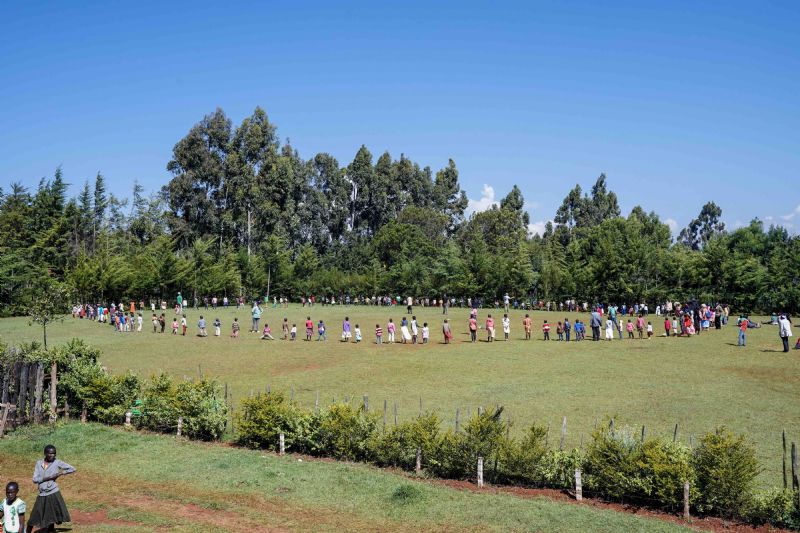
These were the kids that you read about when organizations ask for your money. The village we were in was extremely poor. The families here were living in tiny huts, and had very little to claim as their own. Many of the kids we worked with showed up in clothing that seemed to be more holes than fabric. Our host told us that many of them were suffering from diseases resulting from poor diets and malnourishment, and that many of them also had some sort of STI. When we walked through the village, it was not uncommon for the kids that lived in the homes we walked by to run out and ask for our money, often following us all the way to where we lived. (One member of my team even had some of the older kids throw rocks at him when he wouldn’t give them any.) It was a hard thing to experience, but nonetheless important. Despite the fact that our western stereotypes may not be representative of the continent as a whole, it is important to know that there are parts where they are very much accurate.
We didn’t spend our entire time in Kenya in this village. Our host also took us to other churches in his network of pastors that wanted us to come visit them and participate in their services. And it was on one of those trips that I experienced the most remote location I have ever been in.
One of these pastors had an outreach in a tribe that was, until very recently, unreached by the Gospel message. To get there, we drove several hours off of paved roads into the desert, out of the range of even the strongest cell service. We went to a place where the land is so bad that nothing grows, and to survive, the people there often only eat a meal a day, or less. Their church is a small hut built around a tree, and the community gathered there every evening we were visiting. We received a warm welcome of song and dance from the people that live there when we arrived, and they welcomed us as visitors into their community. (While I was there, I also ran into a couple workers from Compassion International’s office in Nairobi, who were there as part of the process of getting the children from this tribe into their sponsorship program. Compassion is one of the organizations I would love to work for after this is all over, so it was really cool to get to talk to them for a bit.)
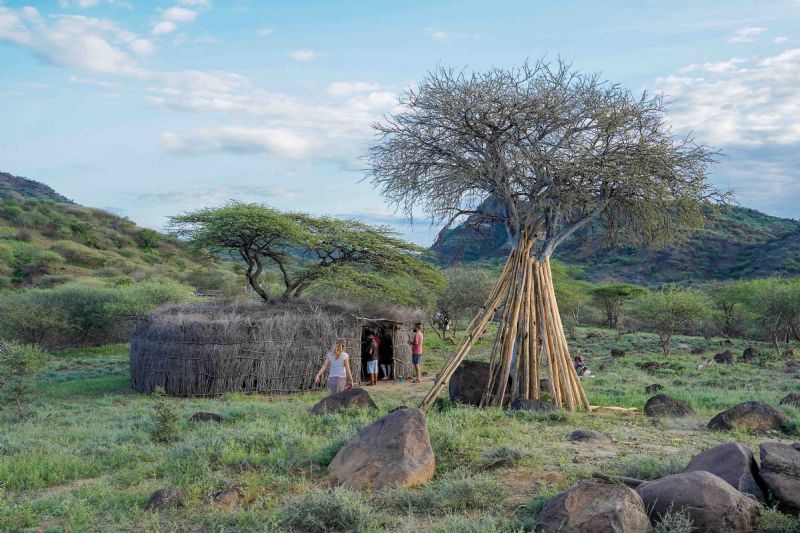
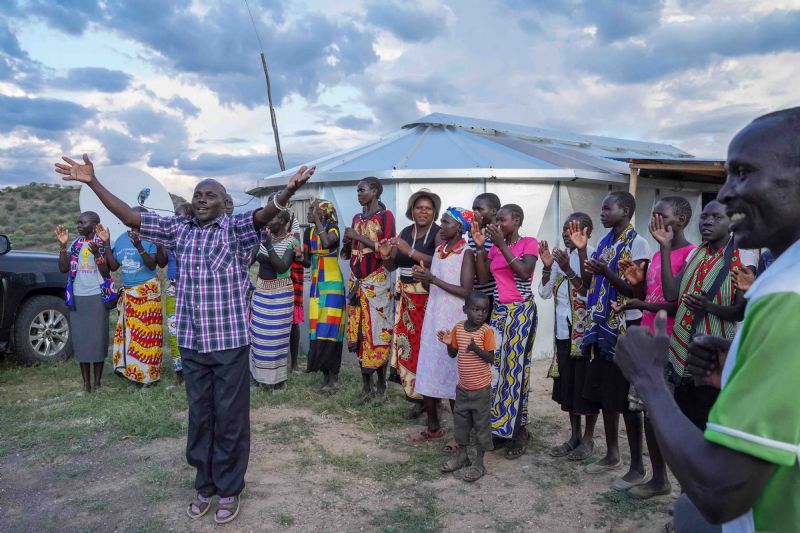
Again, these are the places that come to mind when you think about Africa. You think about tribes living in the worst conditions, with little to no contact with the rest of the world. And I’m so glad that I got to experience a place like this, even if it was only for a couple days. Our team was able to help lead bible studies, preach at one of their church services, and do some home visits to pray for families in the community. It was a beautiful time getting to know the people in this community, and also see an incredible part of the country that most people will never get to see, except in pictures. The problem is, those pictures don’t do these places justice. They focus on the poverty instead of the beauty, and on the need instead of the people behind it. I got to experience both. I got to go beyond the stereotypes and to know the people behind them.
I think the most important takeaway I got from seeing and living in the two sides of Africa is that, although there are places that fit the stereotypes, they are far from a complete picture of this beautiful continent. I’ve only been to four countries there, so again, I’m far from the most experienced person to be able to say these things. But even from my limited experience, I now know first-hand how wrong those blanket statements are, and how beautiful and diverse of a place Africa really is.







