
We’re serving on an island so we’ve gone to the beach often on our off days. The sand is soft and the water is warm. It’s not jellyfish season and as we talk to locals they say it’s not common to encounter a jellyfish sting. And yet a quarter of the women on my team have been stung.
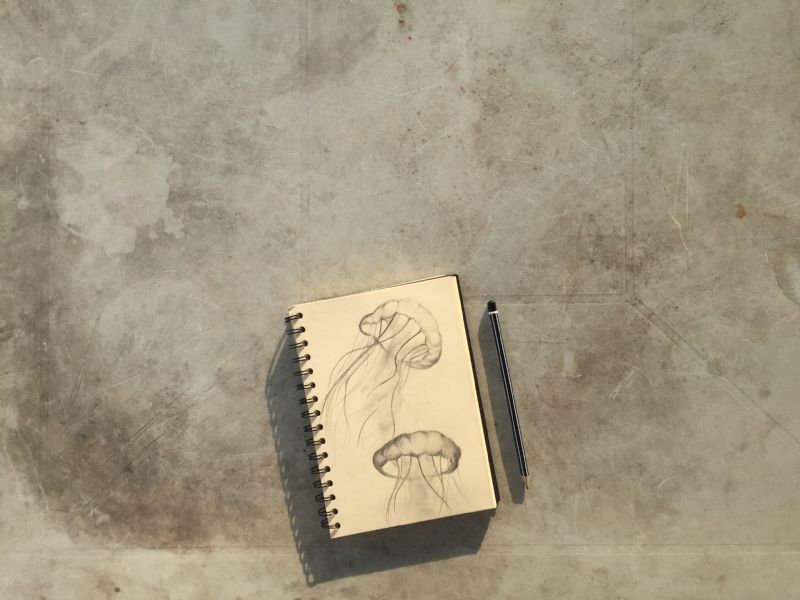
Their skin reddens and begins to rise. They describe a burning sensation without relief. And it’s a wonder how a creature so delicate could cause so much pain. A creature as fluid as the sea, floating without thought and innocently unaware, could bring so much fear and hurt.
“The more fragile the animal, the more it needs to protect itself. So the more venom a creature has, the more we should be able to forgive that animal. They’re the ones who need it the most. And, really, what is more fragile than a jellyfish, which doesn’t even have any bones?” – Alli Benjamin, The Thing About Jellyfish
And my mind starts to wander to the ways I’ve been stung by people. The pain they’ve brought. And how much I’ve grown in forgiveness through the years. We can hate people for hurting us, or we can try to understand the cause. It doesn’t justify, but it allows room for grace.
And a thought strikes me. When I walk into a darkly lit aquarium and find the glow of dozens of jellyfish between the glass, my only thought is their beauty. I am mesmerized by their soothing movement as they keep tempo with the water. I have no thought of the poison that flows through their trailing tentacles. In this environment, safe and secure and far from danger, there’s no one for them to harm because there’s no one to harm them. They are peaceful and beautiful.
Often times people hurt others as a form of defense. It sounds wrong, but pain has distorted what’s right. If we lived in a place of safety and security, a glass wall separating us from danger, there would be no need for defenses. There would be no opportunity to hurt others because there was no one to hurt us.
So the more venom a person has, the more we should be able to forgive them. They’re the ones who need it the most. And soaking in this understanding is a part of grace. This truth doesn’t help fully remove the pain of a person’s sting. But it soothes it, in the way lemon juice works against a jellyfish sting (that’s a little tip in case you ever find yourself in jellyfish invested waters).
Note that peeing on a jellyfish sting is supposedly a myth, but I’d tell you to still try it. At least you’d have a story of that one time you got stung and someone peed on you. Sounds legit.
All the women of our squad are serving together for the month, fifteen woman working alongside Kawan in the island of Penang, Malaysia. Kawan translates to “friend” in Malay. Their mission is to help provide care and improve the quality of life for the street community. They provide needed services such as free breakfast and lunch, a safe sleeping area, bathing, laundry facilities, and more.
We’ve also had the opportunity to speak at church services, attend Penang’s International House of Prayer (Penhop), promote English learning to 4-6th graders, do street outreach, and prayer walk through village slums just across the street from expensive high rises.







