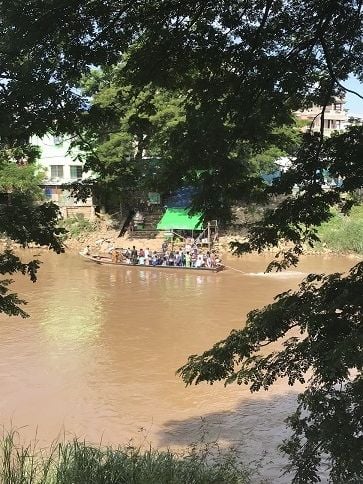
What do you think of when you hear “No Man’s Land?” Often times, this is just an expression that people use to describe a barren place, but after this past week, it has taken on a whole new meaning. Our team took a 7 hour journey out of Chiang Mai to northern Thailand. The town we traveled to is called Mae Sot. Mae Sot is on the border of Thailand and Burma, and there sits a place called “No Man’s Land.”
A little history behind Burma: they have been in a civil war for over 70 years now. Because of this war, Burmese families often flee from Burma to Thailand because they are forced to fight in a war in which they do not agree with or believe in. They also flee because there is literally no work for them in Burma, so they come to Thailand for work and to provide for their families. There are a lot of Burmese refugees that reside in Mae Sot.
Since these Burmese families are in Thailand illegally, they get deported back to Burma. Often times, instead of staying in Burma they will reside in this place called “No Man’s Land.” They have absolutely no desire to live in Burma but they are technically not allowed to live in Thailand, especially now that Thailand is cracking down on work visas for these immigrants. Also, a lot of people who are born in Burma aren’t given a identification/citizenship card showing they were born in Burma, so they technically aren’t a citizen to either country. Due to this flawed system, they live in “No Man’s Land” because they don’t have anywhere else to go.
One morning before our Hygiene Clinic started, our ministry host took us to this place called “No Mans Land.” This place sits on a narrow winding piece of property that follows the contour of the border. Neither Thailand or Burma own it, hence the term “No Mans Land.” Since neither country owns it, anyone can live there. We were told it’s a pretty dangerous place since anything goes. There are no rules, regulations, or laws. The living conditions are extremely sad and poor. It sits on a river bed, and as flooding often occurs during monsoon season, the rising river takes out the makeshift shelters they live in.
While our team was there, it made me reflect on how I often felt and lived my life before I had fully given my heart to Christ. I was stuck in a place called “No Mans Land” spiritually. I had a void in my heart and I was constantly searching and filling my life with things that were never actually fulfilling. And so similar to those Burmese refugees, I was longing for my identity. I was searching for my identity in everything but the Lord. I was lost. But, by the grace of God, nobody can be too lost for the salvation that Jesus offers. When I first became a believer, I used to focus on my sin and think “how can certain people be forgiven?” What I’ve learned, is that what Jesus did on the cross covers any and all of our sins, and not to focus on the sin, but to rejoice in the grace, love, and freedom that He offers. This doesn’t mean that there won’t be times of trial in our lives, but these times of trial produce perseverance and continue to build on our faith even if we don’t understand the “why” at that time. The only thing that could fill the void I had in my heart was Jesus. No matter the trial or season of life we’re in, I trust in Him.
My prayer for everyone who lives in “No Mans Land” physically or spiritually, is to know our God brings hope to the lost and to know that there is healing and forgiveness in the cross. And just as those Burmese refugees often times have no identification card, our God provides the greatest of all ID cards. My identity is rooted in Him, and that offers such freedom. The cross brings freedom and God wants everyone to be free.