
The familiar, comforting drone of the fan halts. Immediately, I open my eyes from my late afternoon slumber. Confused and slightly annoyed, I look over to see if one of my teammates shut it off. Nobody is in the room, and the fan is still plugged in.
With a puffy, quizzical look on my face, I walk into the living room and Teresa, our host, tells me, “The power went out. There was a big storm. Didn’t you hear it? We saw things flying overhead.” Leave it to me to sleep through a storm but jolt awake when the fan stops.
Suddenly, there is a knock on the door. A woman and two kids enter the house. While crying, she speaks in Spanish frantically and recounts what just happened to her. I translate for Teresa and her husband, Mike, to make the exchange easier.
The woman, Carolina, tells me that her roof blew off her house during the storm. Everything she owns is soaking wet. The rocks that held down the roof fell into the house and broke some of her belongings. She doesn’t have any dry beds, a way to cook dinner, or money to repair the roof.
Since Mike and Teresa have an established relationship with her through the local church, they hand her enough money for some food and roof repairs. She graciously embraces them and asks if her two boys can stay at the house for a night. She and her youngest daughter will stay at a friend’s house. Teresa and Mike agree, and our team is introduced to Jonás (five) and David (fifteen).
After our menial dinner of peanut butter sandwiches, we play cards and practice English and Spanish. Jonás and I play Hide-and-Seek throughout the house toting headlamps. His infectious giggle gives him away every time.
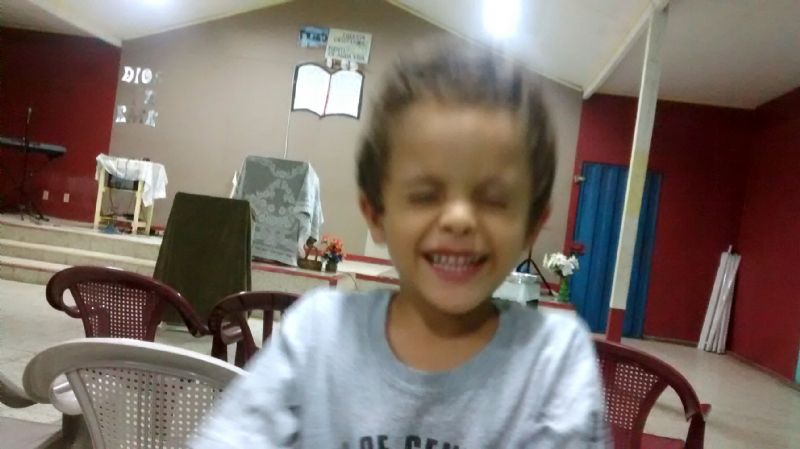
Later, I take Jonás to bed and notice that he smells musty and sweaty. For a bedtime story, he chooses the account of Jesus calming the storm. As I begin reading, he interrupts me with his sweet, high-pitched voice, telling me about how scared he was during the storm earlier that day. He said things kept falling and that he had to climb on a chair so he wouldn’t get too wet. I reassure him, “You are safe now. The roof will be fixed soon. Jesus can calm any storm.” He eventually falls asleep.
The next morning, we expect Carolina to pick up the boys. Instead, they stay with us for another night. And another. She stops by the house intermittently but always pleads for them to stay with us again. The local pastor helped her repair the roof, but she continues to drop her kids off at the house without communicating with anyone.
We have a blast, but I begin to wonder if we are helping or hurting. Jonás gets piggyback rides (or “horseback rides” as they are called here), watches Cars, plays games on my phone, and rides Jenna’s skateboard. We give them special attention and buy them snacks, none of which are sustainable practices for the future.
Teresa and Mike think that Carolina is taking advantage of our love for the boys by neglecting them in turn. As a result, we have some difficult conversations with Carolina about creating boundaries. We begin to establish healthy limitations with her and her family.
All of this happened while I was reading a book called When Helping Hurts by Steve Corbett and Brian Fikkert. The book talks about common errors people make while attempting to alleviate poverty. It says, “One of the biggest mistakes that North American churches make—by far—is in applying relief in situations in which rehabilitation or development is the appropriate intervention.”
The situation with Carolina, Jonás and David was very difficult internally for me. As much as I wanted to continue caring for the boys, I realized that I was taking on a maternal role which was unnecessary and unsustainable. Our means of relief would likely end up hindering this family in the future, not helping. This is one of my biggest fears during this year of service.
In the book, an African Christian storyteller illustrates the point in this way: “Elephant and Mouse were best friends. One day Elephant said, ‘Mouse, let’s have a party!’ Animals gathered from far and near. They ate. They drank. They sang. And they danced. And nobody celebrated more and danced harder than Elephant.
“After the party was over, Elephant exclaimed, ‘Mouse, did you ever go to a better party? What a blast!’ But Mouse did not answer. ‘Mouse, where are you?’ Elephant called. He looked around for his friend, and then shrank back in horror.
“There at Elephant’s feet lay Mouse. His little body was ground into the dirt. He had been smashed by the big feet of his exuberant friend, Elephant. Sometimes, that is what it is like to do mission with you Americans. It is like dancing with an Elephant.”
May I never dance like an Elephant.







