
September 10, 2014
Thank you to everyone who helped support me in the World Race thus far. Because of you, I have met my first deadline!!! It was $3,500 and I have $3,681! Thank you so much again!!
Ireland!
I got this information form Cultures of the World: Ireland by Patricia Levy, and historyireland.com.
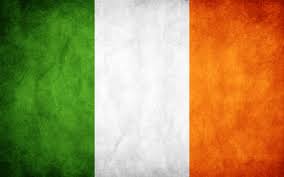
-The orange color, in the Irish flag, represents the British supporters of William of Orange who settled in Northern Ireland in the 17th century (most of whom are Protestant). The white in the center of the flag represents peace between these two groups of people.
-The Wicklow Mountains, a series of granite peaks covered by a surface layer of peat bog, are a haven for wildlife, just as they were once a haven for rebels who attacked the English settlers to take their crops.
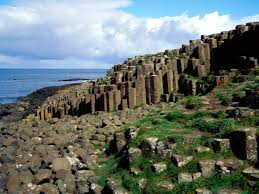
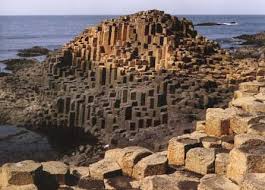
-One the coast of Antrim in Northern Ireland is a strange cliff area known as the Giant’s Causeway. It consists of hundreds of hexagonal pillars of basalt rock stacked up neatly and forming what looks like a giant’s pathway disappearing out to sea in the direction of Scotland.
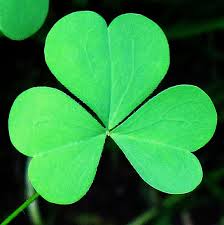
-Saint Patrick began the conversion of Ireland to Christianity in the fifth century. He was brought there first as a slave, where he lived for six years tending sheep for his master. He escaped back to Britain and then had a vision to go back and tell Ireland about Christ. Snakes are not found in Ireland. Legend has it that Saint Patrick drove them all into the sea, and they never returned. 😉 The shamrock is associated with Saint Patrick’s day because it is said that he used them to explain the concept of the Holy Trinity to non-believers.
-Under the rule of Elizabeth I, Protestant adventurers were encouraged to attack Ireland and take away the lands of the Catholic Irish lords. They used as an excuse the conversion of Ireland to Anglicanism, but in reality it was an attempt to gain control over the country.
– Grace O’Malley was sea captain who defied gender stigmas, and fought nobly against the English oppression. Grace was chieftain of the O’Malley clan following the death of her father. She also became the Captain of his large shipping and trading business (sometimes accused of being a piracy trade). She protected Ireland and multiple clans again and again against invaders and criminals—English or other. In 1593, when her sons and her half-brother, were taken captive by the English governor of Connacht, O’Malley sailed to England to petition Elizabeth 1 for their release. She formally presented her request to Elizabeth at her court in Greenwich Palace, and Queen Elizabeth relented.
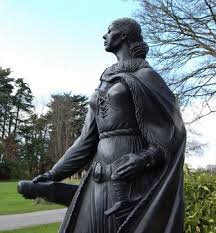
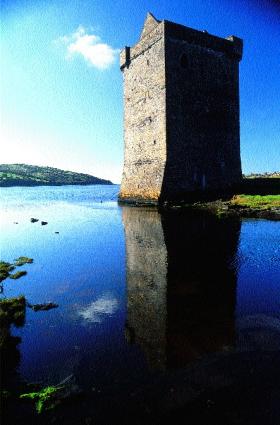
“Vilified by her English adversaries as ‘a woman who hath imprudently passed the part of womanhood’, Grace O’Malley was ignored by contemporary chroniclers in Ireland, yet her memory survived in native folklore. Nationalists later lionized her as Gráinne Mhaol, a warrior who would come over the sea with Irish soldiers to rout the English. She finally became an icon of international feminism, both as an example of a strong and independent woman and as a victim of misogynistic laws.” Nevertheless, her life is still shrouded in myth. “Behind the myths of Grace O’Malley, pirate queen, and Gráinne Mhaol, icon of Ireland, stands Gráinne Ní Máille, a proud and courageous woman, determined to ensure that she and her family received their rights. She earned and lost fortunes, each time rebuilding ‘by land and sea’. Her enemies were those who sought to impoverish her or her children. The ethnic origin of those enemies was immaterial.” (historyireland.com)
-Under the Penal Laws of 1695, Catholics were excluded from public life. They could not vote, join the army, hold public office, own a gun, or own a horse worth more 5 pounds.
-The potato was the chief crop grown for subsistence and as a cash crop. Unfortunately, it was particularly susceptible to potato blight, which could wipe out an entire crop very quickly. The Potato famine lasted for four years! During this time at least a million people starved to death, while more than a million others immigrated to avoid starvation.
-The term “Bloody Sunday” refers to the day in Ireland where 14 demonstrators were shot and killed by British troops. All those who were shot were unarmed.
-Ireland as to governments. Northern Ireland is part of the United Kingdom and is represented in the British House of Commons by members of parliament. The rest of Ireland is an independent republic, with its own constitution and democratic system of government.
-If Ireland is associated with one thing, it is the stout black beer originally produced by the Guinness brewery. Distilleries manufacturing Irish whiskey are highly profitable, while the Guinness brewery is known worldwide for its beer.
-About 70 million people across the world today have Irish ancestry. The first period of mass emigration occurred during the great potato famine in 1845, and later, many Irish left the country to escape poverty and unemployment.
-James Joyce, Briam Stoker, and William Butler are all considered to b a part of the English literary canon.
-Theater writers include Oscar Wilde, John Millington Synge, and Samuel Beckett.
-Former presidents Andrew Jackson, Woodrow Wilson, Richard Nixon, and John F. Kenney were all of Irish descent.
-Actors such as Pierce Brosnan, Colin Farrell and Liam Neeson are irish-born.
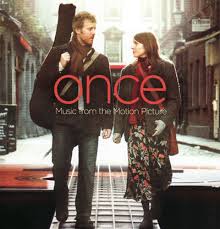
-Musicians such as U2 (still one of the world’s most popular bands), Damien Rice, Glen Hansard (the guy who starred in and helped write the Oscar winning song from the movie Once), and The Cranberries (who wrote the hit song Zombie) are all Irish. All of them were known for “busking” on the streets before they made it.
-Crossroads once held a significance in Irish country life. Without money to spend in the pub or to pay for the dance hall, many young people in Ireland used to spend their weekends at the crossroads where the local fiddler, tin whistle player, or concertina player would strike up a tune and a dance would be held. Until recent times, crossroads held another special significance. Traditionally, coffin-bearers would rest at crossroads on their way to the cemetery, and often un-baptized, stillborn babies would be buried there. Now crossroads are just points where two roads cross and cars and trucks zoom past.
-In rural areas of Ireland where the population density is low, schools are quite small. A typical country has two classrooms, one for children under age 7 and the other for children aged between 8 and 13. Two teachers would be allocated to the school and class sizes might be very small compared to classes in the cities.
-In Ireland, superstitious relatives of the deceased might listen for the cry of the banshee, a mythical creature said to wail after death.
-In Ireland, “fairies” is the name in English for the supernaturally powerful who are said to live in a parallel world that can be entered though certain caves. Fairies can move among mortals without being noticed because they are full-size people, not little creatures with wings. The banshee is a woman of the fairies whose mournful howls can be heard whenever death is about to occur in a family.
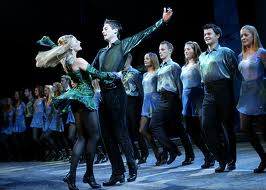
-The world was introduced to Irish dancing when River dance and Lord of the dance went on tour. I used adore watching these, and still have the soundtrack.
-Irish is an inflected language—the spelling of the words varies depending on how they are used in a sentence. So the Irish word of cat can be spelled cat, cait, chat, gcat, or gcait, depending on the intended meaning.
-The most famous Irish word to have entered the English language may be “boycott.” The word comes from a land agent named Boycott whose policy of turning out tenants unable to pay their rent led to a collective refusal by the evicted person’s neighbors to rent the land. Thus, to boycott something means to refuse to have anything to do with it.
-Gaelic has no words for “yes” and “no.” They will simply rephrase the question or answer so they do not have to use those words.
-A word has entered Irish English that covers all things of a technological nature and somehow sums up the whole technological age. It is the word “yoke.” It means anything from a supercomputer to a door hinge.
-The Rose of Tralee festival in Ireland is based on the song of the same title. It was written by William Mulchinock, a poet and the son of a wealthy family. He fell in love with a kitchen maid called Mary, but his family forbade the marriage. Later, he married someone else and left the country. There he pined for home and Mary and returned to Ireland. Arriving back in Tralee, he went in search of Mary to discover that she had died. In his sorrow he composed the famous tune.
“Yet ‘twas not her beauty alone that won me
Oh no ‘twas the truth in her eyes ever dawning
That made me love Mary, the Rose of Tralee.”
-The Irish are acutely aware of food shortage and hunger and give generously to countries in need of food. According to a CNN news report in 1997, the Irish gave more money, per head of population, to famine relief and other charitable appeals than any other country in the world. The Irish government has helped countries with food shortages such as Ethiopia, Uganda, and North Korea.
That is it for random information on Ireland. Next time I’ll write about the more serious aspects of Ireland and what I’m praying about this week! If any of you want to add anything else, feel free!!!
God Bless!
~Tori







