
September 7, 2014
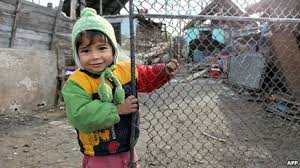
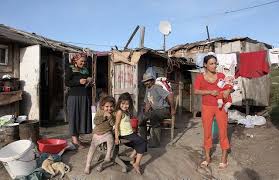
The World Race gives a brief description of Romania: “The northern regions of Romania are home to the gypsy community. Though strangers in their homeland and forgotten by society, the gypsies are a strong and vibrant people who embrace the light of Christ in an inspirational way. Here, you will teach English, lead sports camps, live life with the gypsies, and more. It will be an exciting time of learning about a people group you may not have known even existed.”
I got this information from The Cultures of the World: Romania by Sean Sheehan, worldvision.org. christianaid.org, and humantrafficking.org.
-While the Romanian economy is improving, about 45% of people in Romania live below the poverty line.
-The World Bank estimated that 5 to 20% of all timber cutting in Romania is illegal.
-Environmental pollution is a major problem in Romania. It has existed since the communist era, and especially during the years of the Ceausescu.
-Romania has about 500,000 Roma, but many believe that there are almost 1.2 million Roman living in Romania. This is because some Roma do not want to be identified as Roma because of the prejudice they face. Roma are generally ostracized by Romanian society. In a 2003 Gallup poll, 31% of Romanians thought that Roma should not be allowed in public places such as restaurants and bars.
-During the 1970s and 1980s, ordinary people were brutalized by the constant struggle to survive and became progressively demoralized. Having been watched constantly by the state police for decades, many observers agree that it will take a long time for Romanians to shrug off the sense of suspicion and intense self-interest that was imposed on the otherwise warm Romanian personality.
-Women especially suffered under the rule of Ceausescu because of the role they were forced to play in the government’s population policy. Everyone woman was required by law to have at least five children, and there were tax penalties for those with fewer than three children. Married women up to the age of 45 were subjected to compulsory monthly gynecological examinations to ensure that no illicit abortions had taken place.
Abortion and birth control for Romanian women under 45 years old were banned before 1989. After the bans were lifted, more than three abortions were recorded for each birth the next year. Recent statistics have shown that abortions are declining in number, but there are still more abortions than births in Romania today. Abortion still remains the main form of birth control because it is cheaper than buying contraceptives and is freely available.

-The government’s drive to increase the country’s population led to the birth of thousands of unwanted children. The Human consequence of this, and the full horror of the government policy, only came to light after 1989 when the veil of secrecy was lifted. Romanian hospitals were full of both unwanted children and women still suffering the effects of illegal abortions. In 1989, after the fall of the Ceausescu regime, there were an estimated 130,000 children in Romania’s orphanages. In the 1990s, the country was deluged with visits from European and North American adoption agencies, resulting in many Romanian infants and children leaving the country for the new home elsewhere.
-Romania still has about 40,000 orphans today under the care of the government. Since government subsidies for food have been withdrawn, poverty has become more widespread and thousands of families cannot afford to keep their new babies, abandoning them at orphanages around the country.
Adopting a Romanian child was popular among European and American childless families in the 1990s, especially after pictures of the miserable conditions orphans were kept in appeared in the West. Abuse of the adoption system soon became a major problem, and the adoption trade also became entangled with child prostitution and organ transplant rackets. Romanian children were also being sold on the internet. In 2004 the Romanian government imposed a ban on all foreign adoption except those by close relatives abroad. While this helps protect the abuse, the ban brings back the initial problem—orphans not having home.
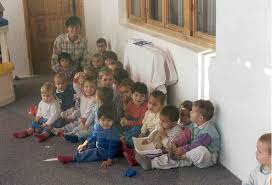
-The general lack of food and welfare services meant that undernourished mothers gave birth to premature and underweight children. Many mothers were unable to feed their children with sufficient nutritious milk because the country could either produce enough milk nor distribute it. As a result, hospitals had the task of intravenously feeding newborn infants with essential nutrients. In the past hospitals reused hypodermic needles to treat such children, thereby causing an AIDS epidemic among Romania’s infants. In 1994 Romania had over 3,000 cases of children with AIDS, more than half of Europe’s pediatric AIDS cases.
My heart broke researching these statistics, these harrowing stories of Romanian lives. Please pray with me for Romania, for the orphans who are alone, abused, and sick. For the poor, and the beaten down Romas, and for all the years of hurt and sorrow that only God can heal.
God bless.
Tori







