
August 21, 2014
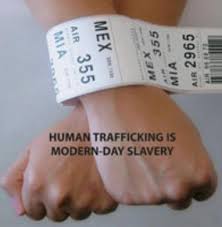
The World Race provides a brief explanation of what racers can expect in Bulgaria: “This southern-central European country is the 16th largest in Europe. Its geography is varied with mountain ranges, plains and a coastline along the Black Sea. Its economy is growing, but among all the European Union members it ranks lowest in terms of income. Organized crime is an issue as is human trafficking. Bulgaria is mainly a source of trafficking in persons yet also, to a lesser extent, a transit point and destination of trafficking. Here, about half the population claims to be orthodox and over 10% are Muslim.”
I got this information from Cultures of the World: Bulgaria by Kirilka Stavreva and Lynette Quek, christianaid.org, and humantrafficking.org.
“I spoke recently with Antoaneta Georgieva, the executive director of Face to Face Bulgaria, about the problem, and about what her organization is doing to help fix it. ‘From a very closed society,’ she explains, ‘Bulgaria changed into democracy, which has its negative effect on young people who are unprepared for how to immigrate safely, for the different situations in which someone can be misled, and why he might be misled … There was a sort of innocence in our society, which is normal and understandable after 45 years of communist rule, but unfortunately makes exploitation far easier.’
In Europe alone, more than 500 000 people become victims of human trafficking annually, the majority of them women and girls forced to work in the sex trade. According to 2003 statistics, more than 10 000 of these were Bulgarian girls involved in prostitution. Another study from 2003 says that 11.2 per cent of all women forced to be prostitutes in Germany were Bulgarians. However, even these figures might be somewhat low: ‘There are statistics, but I don’t personally believe in the statistics,’ Georgieva says. ‘For me, when we talk about human trafficking and the victims of human trafficking, the statistics are like an iceberg – the tip of the iceberg. But the real number of young people who have become victims is the lower part.’ (humantrafficknig.org)
-Both Catholics and Protestants got harsh treatment during the years of the cold war, allegedly because of their ties with “hostile foreign canters” in the West. Pastors, priests, nuns, and lay believers were charged with spying for the West and with spreading anticommunist propaganda. The church was banned from its traditional activities, such as running orphanages and hospitals. Religious holidays and rites of baptism, marriage, and burial were replaced by socialist holidays and ritual.
After communism fell, Christianity grew once again to be the main religion of Bulgaria. However, few Bulgarian Orthodox Christians have a clear understanding of the meaning of their faith. The religion is largely a matter of tradition and is symbolic of their loyalty to the nation.
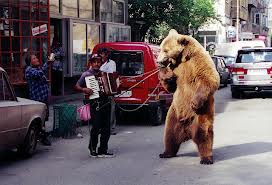
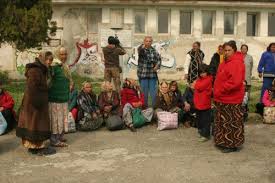
– Bulgaria is one of the poorest countries in Eastern Europe and Gypsies are among the country’s poorest of the poor. Numbering some 370,900, the Roma, or Gypsies, form the third-largest ethnic group in Bulgaria, yet they have little stake in the nation. Roma used to live in caravans and roamed the countryside. A small number of them still travel in the old-style caravans, and a few keep performing bears even now, hoping to collect a few coins during their stops in towns. Today most Roma live in slums on the outskirts of the big cities, and they speak their own language. They are mostly illiterate and have an astronomical unemployment rate of 90-95%. Their life expectancy is much shorter than the average Bulgarian’s. Few Gypsies can overcome the stigma handed down from their ancestors, and are usually denied employment.
-The air in Bulgaria’s cities was polluted from industrial and vehicular emissions; the rivers were full of raw sewage, heavy metals, and detergents; the forests were scarred by acid rain, which resulted from air pollution; and once-fertile soils had been contaminated with heavy metals from metallurgical plants and other industrial wastes.

The ecological balance was also badly disturbed. Over 40% of Bulgaria’s population lived in areas with dangerous levels of pollution. The local residents saw a serious rise in respiratory and other pollution-related diseases, with children being the worst affected.
-Bulgaria has a low birthrate of 9.6 births for every 1,000 of the population, while its death rate is much higher at 14.2 deaths per 1,000.
-There are two main classes in Bulgarian society—the wealthy and the impoverished. The gap has grown continually in the last 6 years.
-Most young couples have no more than two children. Stringent family planning is due both to tradition and to economic hardship.
Please pray with me for Bulgaria. Against the prevailing poverty, pollution, and human trafficking. And even though many have heard the name of Jesus, so many don’t recognize Him and haven’t found the hope and salvation in Him!
God bless!
Tori Thompson







