
August 15, 2014
The World Race provides a brief explanation of what racers can expect in Zambia. “After years of British colonial rule, Zambia became independent in 1964. Since then, the economy has grown and the official religion has become Christianity, but there are still great needs in Zambia. With the country near the bottom of the United Nations Human Development Index, the Zambian people still suffer from poverty, short life expectancy, malnourishment, lack of clean water, and the AIDS crisis. Zambia needs encouragement from missionaries who can remind them of God’s faithfulness in the face of challenges.”
I got this information from Cultures of the World: Zambia by Timothy Holmes and Winnie Wong, worldvision.org, christianaid.org, and humantrafficking.org.
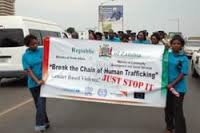
-“The IOM describes Zambia as a ‘hub’ for human traffickers operating in southern Africa.’Human trafficking is already a huge problem in the region and is second only to drugs as a profit-making business for the criminal underworld’, said Olivia Kafukanya of the International Organisation of Migration (IOM) in Zambia. ‘After a few high-profile cases the [Zambian] government is finally taking the problem seriously, though it is hard to catch anyone because the victims are almost always too scared to talk’, she added.
The tipping point that forced government action came in 2005 when a Congolese woman was caught trying to smuggle 14 children through Zambia into South Africa. The case received huge media attention when the Zambian government failed to prosecute the woman because the country had no specific law against the crime. Recent cases uncovered by Zambian authorities include that of two Chinese girls being flown from Lusaka to Johannesburg on forged passports. The girls were recently repatriated to China, but the Chinese man accompanying them escaped. In another case, an Italian was caught trying to take eight Zambian girls to Australia, promising them lucrative careers as high-paid ‘models’.
‘Those cases are probably just the tip of the iceberg’, said Thompson. ‘We really don’t know how bad the problem is in Zambia or across southern Africa, but there is definitely a constant stream of stories, so we know the traffickers are out there’. After the case of the 14 Congolese children, Zambia hastily enacted an anti-trafficking law, with a minimum penalty of 20 years in prison for a prosecuted offender and a life term if the case involved defilement of a minor. The penalties are harsh, but the government has yet to throw the book at a single trafficker.” (Humantrafficking.org)
–Gender based violence is a serious social issue with almost 50% of women aged over 15 having experienced violence and abuse.
-Food security is one of Zambia’s major worries. The severe droughts of 1992 and 2005 brought the country to the brink of starvation, from which it was saved only by humanitarian assistance. Crop failures also contribute to Zambia’s famine. Erratic rainfall and higher temperatures decreased the rate of plant growth, as farmers no longer knew when to plant their crops to coincide with the arrival of rain.
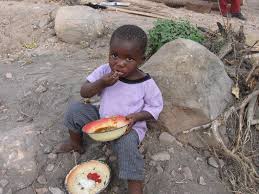
-Zambia is among the 50 poorest countries in the world, though it possesses a wealth of natural resources. About 86% of the Zambian population lives below the World Bank poverty threshold of one dollar a day. Due to Zambia’s population growing faster than its economic development, many Zambians are getting poorer.
-Decades of copper, cobalt, zinc, and lead mining in the Copperbelt region have left 60,000 children and adults at risk from lead poisoning.
-There are five areas of environmental concern in Zambia: air pollution, water pollution and sanitation, land degradation, deforestation, and wildlife depletion.
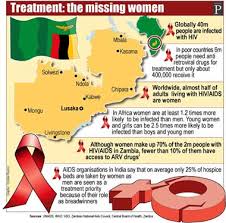
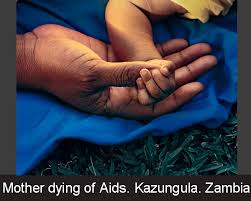
-The World Health Organization has put the life expectancy in Zambia at less than 39 years, one of the lowest in the world. This is mostly due to the huge impact of AIDS on the community, with around a million people living with the disease. About 650,000 children have been orphaned due to AIDS.
-An increasing number of young Zambians are becoming drug addicts, especially to the drug Mandrax, a sedative manufactured mainly in India.
-Zambia is a nation that believes in one god, Lesa, spirits, witchcraft, and ancestors. They don’t believe in an afterlife, but a new life as spirits walking on earth. Even though 87% of Zambia believes in Christianity, most of the population fuses their animistic religion with Christianity. More Zambians are becoming Muslim, because the Muslim community is known for its charitable work, including assistance to Christian hospitals. Many Christian families have sent their children to Muslim schools in the hope that a free Islamic education is better than none.
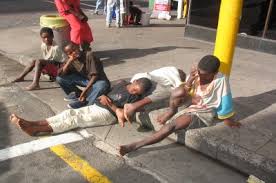
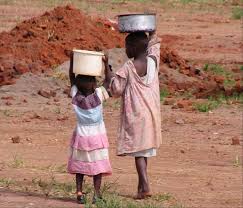
-Only one-third of Zambian children proceed from primary to secondary education, as there are not enough schools; also, schooling has to be paid for. This, together with general poverty, causes the growing problem of “street kids” in the urban areas. Clean water is often located far away for many of the rural people. As a result, young kids usually forego an education, as the collection of water is given greater priority.
Please pray with me for Zambia, against the human and drug trafficking, poverty, AIDS, and abandoned children. That the truth of the one true God would invade their lives, and they will find new life and true joy in Him.
God bless you all!
~Tori







