
August 14, 2014
Zambia!
I got this information from Cultures of the World: Zambia by Timothy Holmes and Winnie Wong.
-The country of Zambia is shaped like butterfly.
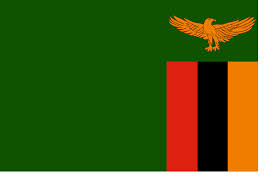
-The green in the flag represents agriculture, red is the struggle for freedom, black represents the people of Zambia, the orange represents the country’s natural resources and mineral wealth, and the eagle in flight symbolizes the people’s ability to soar above the nation’s problems.
-The country, like Zimbabwe and Malawi, is full of a variety of animals, such as lions, elephants, buffalo, large antelopes, leopards, thousands of different kind of birds and butterflies, and a unique species of giraffe.
-Victoria Falls is also in Zambia. When Dr. Livingstone saw the waterfall for the first time in 1855, he named it after the reigning queen of England, Victoria.
-The country was also plagued by the slave trade. From the west coast, the Portuguese shipped the slaves to mines and sugar plantations in Brazil. Being a big fan, prayer warrior, and citizen of Brazil, I never knew this!
-Another thing that I didn’t know was that the Scottish medical missionary. David Livingstone, was also a follower of one my heroes, Williams Wilberforce; the abolitionist who helped end slaver in the British Empire.
I know that I talked about Livingstone before in Malawi, but I wanted to emphasize that again that even if he never saw the end to the slave trade in the countries in Africa he loved so much, he was a key player and inspiration to those who did help end the trade. Livingston died in Zambia, never seeing the victory he sought for, but God used him greatly without him even realizing it! It is just another example of how God uses us in the harvest—We may be the ones who plant the ideas, work the field, or actually see the harvest, but all the laborers for his glory, whether we see it or not. I think that is so encouraging!
-Even though slavery was abolished in the country, the Zambians were subjected to a system of forced labor intended to supply manpower for gold and diamond mines of South African. It was a new form of servitude, and racial discrimination became the law of the land.
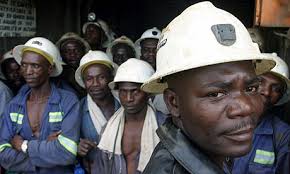
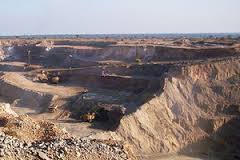
-“During the 1920s, the discovery of copper along the Copperbelt let to an influx of migrants, who were brought in to work the mines…By the end of World War II, in which Zambian troops served with distinction in Burma, Zambia had become one of the world’s top producers of refined copper. But Zambian workers in the mines suffered racial discrimination—the “color bar” that kept them in unskilled positions.” (Holmes and Wong)
-Zambia became an independent republic on October 24, 1964. Independence day is the most important holiday in Zambia.
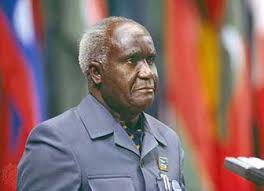
-The first president of Zambia, Kaunda, politicized the civil service, police, and defense forces, and an all-pervasive secret police force was created. Opponents were jailed, often for years without trial, with many tortured and some murdered. The president, who called his ideology Zambian Humanism, became a dictator. Sadly, the next president, Chiluba, was arrested in 2003 for corruption; he and his aides stole $46 million from Zambia!
-According to the constitution of the Third Republic, orphans who cannot prove their parentage are ineligible to be president.
-For decades Zambia, with the help of the UN and other agencies, has provided a safe haven for refugees from strife in Congo, Angola, Mozambique, South Africa, Namibia, Zimbabwe, and Rwanda.
-Marriage between members of the same clan is regarded as incestuous and forbidden by custom. The clan system operates over much of Africa.
-In Zambia it is very unusual and considered disgraceful for the aged to be placed in an old-age home.
-“There can be no doubt that Christians have made a deep impact on the development of Zambia, as it was the missionaries who introduced Western education. They were also the forefront of the movement to suppress the slave trade in the 19th century, some of the first mission stations being refuges for liberated slaves. Nearly all the leaders of the struggle for independence came out of mission schools.” (Holmes and Wong)
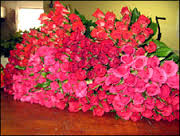
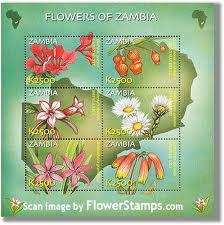
-One of the biggest export industries is floriculture. The production of roses accounts for 95% of the industry.
-English is the official language of Zambia.
-Here are some Zambian English terms:
Butchery—Butcher’s shop
Honda—Any motorcycle
Salidi—Any salad or cooking oil.
Vanette—Small pickup truck
Beer—Any alcoholic drink, e.g. “Whisky is my favorite beer.”
-Here are some Zambian proverbs:
“A child who does not travel praises his mother as the best cook.”
“The mouth gets the head into trouble.”
“If you followed what a chicken eats, would you eat the chicken?”
“A cow does not find its own horns heavy.”
“The snake bites because its hole is blocked.”
“Firewood for cooking an elephant is gathered by the elephant itself.”
“The person who does not listen learns when he is struck by an ax.”
“It takes more than one day for an elephant to rot.”
-Although women today have as much right to an education in the arts as men, very few have made a mark as painters or sculptures. They are ok with women working and providing for the family, but are against women finding self-realization through artistic creation outside traditional structures. Actresses, dancers, singers, musicians, and writers are looked down upon and almost all single.
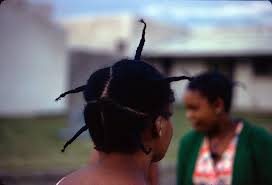
-“The earliest European travelers noted with admiration the care with which African women dressed their hair to create stunning coiffures. This tradition has continued, and mothers even today spend hours plaiting their daughters’ hair and patterning it in intricate designs. Girls at school spend much free time doing this for each other.” (Holmes and Wong)

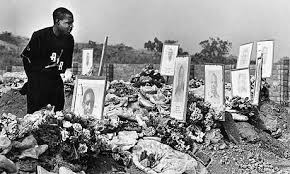
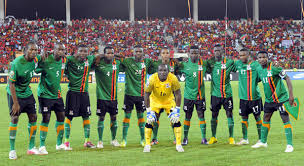
-Football (soccer) is huge in Zambia! Their professional team is among the top three in Africa and among the world’s top 20. However, because the country is so poor, the football association is always short of money for the development of the game. The Zambian national team was well placed to get into the finals of the 1994 World Cup, but on April 27 the plane carrying the team to their last qualifying match, crashed in the ocean. When the news reached Zambia the next morning, people were so stunned that they shut down their offices, and crowds of mourners were seen weeping in the streets. Donations for the Zambian public generated a large sum of money to provide for the families of those who had died.
However, within weeks a new team was formed in honor of the fallen, with Kalusha Bwalya, a Zambian soccer star playing for a Dutch club, as captain. Against all odds, Bwalya’s team came within an ace of qualifying for the 1994 World Cup and winning the African Nations Cup. It was acknowledged to be the best team in Africa.
That’s it for fun facts on Zambia. Next time I’ll write about the more serious aspects of Zambia and what I’m praying about this week! If any of you want to add anything else, feel free!!!
God Bless!
~Tori







