
August 8 2014,
Malawi!
I got this information from Enchantment of the World: Malawi by Martha S.B Lane.
-The Malawi flag features a black stripe that represents the people of Africa. The color red stands for the blood spilt in Malawi’s struggle for independence. The color green symbolizes the country’s vegetation, and the rising sun represents the dawn of freedom and hope on the African continent.
-Malawi one of the smallest countries in Africa. It is about the size of Tennessee.
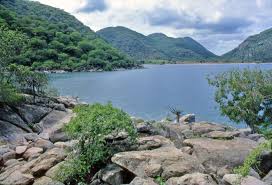
-Lake Malawi is the third largest lake in Africa and the twelfth largest in the world.
-Fire is still an important symbol in Malawi today. It is used as a symbol of personal transition and fires are built to mark important moments in the lives of ordinary people, such as the moment when a child becomes an adult. Fire is also the national symbol, and in the fight for independence from Britain, the president of Malawi used to rally his followers by the cry of “kwach”, which means “dawn”.
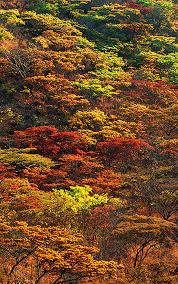
-The most common type of vegetation is the indigenous brachystegia forest, which covers thet slopes of Malawi. The brachystegia are distinctive because their new leaves are deep red and gold, later turning bright green, and then, finally, a very dark green. When the early morning sun catches a hillside of new leaves, the forest can look like it is on fire.
-There are many varieties of animal life; the elephant, giraffe, black rhino, hippo, zebra, buffalo, antelope, baboon, monkey, hyena, wolf, zebra, lion, and nocturnal cat.
-Over 10% of the country’s land is protected in game and nature reserves, one of the highest percentages in Africa.
-The slave trade in Malawi began in the eighteenth century when Muslim traders from the lands of the Middle East moved down the coast of Africa trading for slaves, ivory, and gold. The Arabs found a rich source of slaves around Lake Malawi, which then became on the strongest centers of the slave trade in East Africa. The slaves who were taken in raids were rounded up and marched in pairs to the coast. They were forced to march to the lake carrying ivory or other goods that also that were to be traded. The slave trade was disastrous for Malawi. Many people were also murdered in the raids, and many of the elderly and young children were left to fend for themselves during harvest time, so there was a great deal of famine. Today, the paths where the slaves were marched still exist.
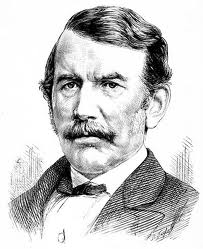
-In 1859, Dr. David Livingstone, the famous Scottish medical missionary and explorer, reached Lake Malawi. Livingstone believed that if Malawi found other profitable things to trade, then the slave trade would be destroyed. He established the country’s first mission station at Magomero. However, the mission failed because of tension between the missionaries and the powerful slave traders. May of the missionaries died from fever, and the British government withdrew its support. Livingstone died in Zambia on another journey to the African interior in 1873. His body was carried thousands of miles to the coast but his faithful African porters and taken by ship to England where he was buried. “Although he did not live to see the end of the slave trade, Livingstone’s efforts had made Africa known to Europe. His love of the land and the people came through in his writing and gave a small number of Europeans a new respect for Africa.” (Martha S.B Lane) After his death, Europeans became more and more involved in African affairs, which then contributed to end of the slave trade. 
-Since Malawi (or as it was known back then, Nyasaland) was under British rule, its people were required to defend Britain in its conflicts with other nations. Malawians fought in both World Wars! Lake Malawi was the site of the first naval engagement of World War 1 when the only British gunboat on the lake was sent to destroy the German gunboat. The German boat was in fact captured in a bloodless battle.
-The imposition of British colonial rule on Malawi was not welcomed by all, especially because the whites, the minority, had control over most of the land. There were many uprisings throughout the years but only in 1959 did the Africans band together to try and create their own federation so that they will be treated equally. The federation was disbanded, and the leaders imprisoned or killed. Britain finally realized that their rule couldn’t last without the support from the African majority. Finally, Malawi was granted independence in 1964.
-Most people in Malawi (90%) live in traditional agricultural villages.
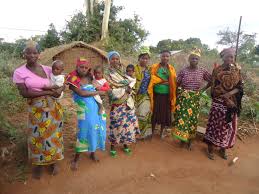
-Family is very important in Malawi. Villages not only take care of their immediate family, but extended. Family culture is also different from Western thinking. For example, family property is passed down from father to his sister’s son rather than from father to son. The husband is also considered a part of his wife’s family. This system of matriarchy gives social power to women in Malawi with the result that they are often less oppresses than women in other African cultures.
-It is against the law for women to wear trousers, shorts, or short skirts, as it is considered offensive for a woman to show any part of her leg above the knee.
-The most common food in Malawi is “nsima”, a kind of thick porridge made of ground maize (corn).
-The two most important and joyous occasions for Malawians are the passage from childhood to adulthood and weddings. In the passage from childhood to adulthood, the children are taken to separate “camps” in the bush where they stay for as long as two months. At these camps they are trained to act as adults. When the training is over, the children are given new names, and it is then an insult to call them by their childhood names.
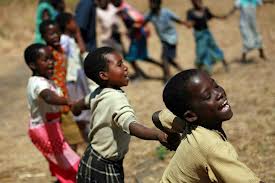
-“Chiwewe” is a form of jump rope played by children in Malawi.
-In the past all of Malawi’s literature was spoken than written. This oral literature includes traditional tales, songs, riddles, and proverbs. Written literature in Malawi began in 1934.
-The “chimwenyumwenyu”, a kind of fiddle played with one string attached to a hollow gourd, is a traditional Malawian instrument.
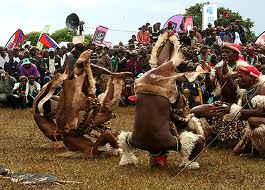
-Malawi has a wide variety of traditional dances celebrating various aspects of life. Such dances include the Ngoni war dance known as “ingoma”, and the “gule wa mkula”, the dance that is performed in the ceremonies marking the passage between childhood and adulthood.
-Tea is Malawi’s most important crop.
That’s it for fun facts on Malawi. Next time I’ll write about the more serious aspects of Malawi and what I’m praying about this week! If any of you want to add anything else, feel free!!!
God Bless!
~Tori







