
July 26, 2014,
Thailand!
I got this information from Welcome to Thailand by Jo Wynaden, Countries of the World: Thailand by Ronald Cherry.
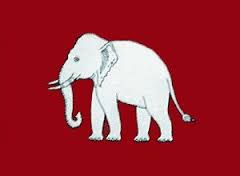
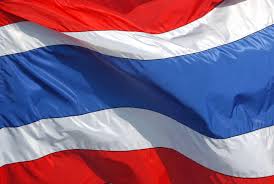
-The flag of Thailand has gone through many changes. In the later half of the nineteenth century, the flag featured a white elephant, a symbol of the country and its monarchs, centered on a red background. The elephant was later removed and red, blue, and white stripes were put in. The flag of Thailand today symbolizes the three important forces of Thai life: The red represents the Thai nation; the white represents the Buddhist faith; and the blue represents the monarchy.
-Thailand’s name used to be Siam.
-There used to be 23 types of Siamese cats, and today, only 6 are left. The most famous are Korat and Si Sawat. Some people believe that Siamese cats bring good fortune and wealth to their owners. Giving a pair of Si Sawat cats to a bride is supposed to bring good luck to the marriage.
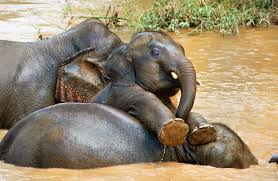
-Thailand’s wildlife includes elephants, tigers, leopards, rhinoceroses, bears, and monkeys. My goal sometime while I am in Asia this next year is to ride an elephant, something that has been on my bucket list for a while!
-After he was crowned king, General Chao Phraya was given the symbolic name Rama, after the hero in the epic poem the Ramakian. All the kings since then have also taken the name Rama.
-Thailand is called “the land of smiles” because of the kind and easy going nature of the Thai people.
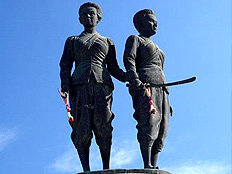
-Chan and Mook are culturally famous sisters for repelling a Burmese invasion in 1875. When the Burmese launched a massive invasion along the Thai-Burmese border, there was no Thai army in the south to fight them. Chan and Mook organized a militia, collected weapons, directed the construction of fortresses from coconut trees, and developed a strategy to repel the invasion. The women, dressed as male soldiers, led the militia into battle. They defeated the Burmese despite being greatly outnumbered, and the girls were recognized as heroes.
-Thailand exports more rice than any other country in the world. It is one of the largest rubber producers, controlling 33% of the world’s total production. 95% of the world’s exports of tapioca, which is consumed by both humans and livestock, come from Thailand.
-Children in Thailand are usually given short, one syllable nicknames, because Thai names usually consist of four or five syllables. Common nicknames for girls include Soam (orange) and Nit (little). Common nicknames for boys include Wute (weapon) and Wat (temple).
-Buddhism is the official religion of Thailand and is practiced by 95% of the population. It is extremely ingrained in everyday life and thinking.
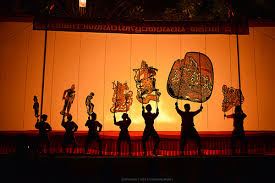
-Thailand is known for their puppet theater called Nang yai and Namg Talung. The puppets are hidden from the audience behind the white screen and are lighted from behind. Thus, the audience can only see the puppets’ shadows.
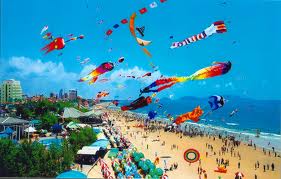
-Kite flying is a traditional sport in Thailand that began hundreds of years ago. Thai kites are made of bamboo and paper and can be really large and elaborate. The competition involves two teams that try to get their opponent’s kite to touch the ground.
-Traffic jams in Bangkok are rumored to be the worst in Asia. Perhaps the longest traffic jam recorded was in 1995 during the Songkran public holiday, when it took drivers 14 hours just to leave the city.
-Tiger Woods is the son of an American father and Thai mother.

-Thai people used to have to bow and crawl in the king’s presence. Even thought they don’t have to do this anymore, it is illegal to remain seated while the king’s anthem is playing and to speak ill of the royal family.
-The brothers who gave the world the term “Siamese Twins”were born in 1811. Their names were Eng and Chang. They were joined at the chest, and they used this unique trait as the basis for their traveling show that played to audiences around the world.
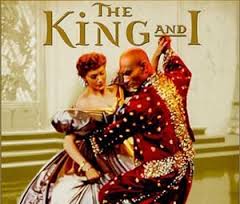
-The musical The King and I is based on the memoirs of Anna Leonowens, the royal children’s English teacher. “The King and I is banned in Thailand because of its historical inaccuracy and its disrespectful portrayal of King Mongkut. The king is depicted as immature and unable to deal with threats from foreign powers. Anna Leonowens was later found to have written false accounts of the king in order to sell more copies of her book. She, in fact, had very little direct access to the king. Many historians claim the King Mongkut was nothing like the character portrayed in the story. He was a brilliant statesman and an enlightened monarch, believed to be the first Asian ruler to speak, read, and write English fluently.” (Countries of the World: Thailand, Ronald Cherry)
That’s it for fun facts on Thailand. Next time I’ll write about the more serious aspects of Thailand and what I’m praying about this week! If any of you want to add anything else, feel free!!!
God Bless!
~Tori







