
I’ve been wondering how to even begin this blog for a while now. I haven’t posted anything since December, and I apologize for not keeping everyone updated. These past couple of months have been difficult and I found it harder to write about than I ever could have expected. We left the children’s orphanage soon after Christmas and moved to a homestead near Manzini. We were originally going to be working at carepoints where there are discipleship lessons and food programs for children in impoverished areas. Unfortunately the carepoints didn’t open while we were there, so our teams looked for other ministries. Some people went to a hospice center called Hope House to spend time with individuals who were terminally ill from HIV/AIDS or unable to care for themselves without help. Others spent time near the carepoints playing with the kids near the ministry base, and the guys on our squad did sports ministry with our ministry contact. Our team was asked to spend time in the pediatric ward at a local hospital.
It is hard to describe what we walked into that first day. The children’s ward smells of sweat, urine, and hot food as carts roll around with food for the patients during visiting hours. There are children with sores covering their bodies, IV tubes with dirty bandages that are kept in to ensure the parents don’t try to leave with the child before paying, and no visible doctors or nurses. The children are mainly cared for by their mothers who sleep under their children’s cribs on thin pieces of cardboard. Most of them are there for weeks and sometimes months. We quickly learned that any child on oxygen would likely die unless they improved within a couple of days. The healthcare system in Swaziland doesn’t have the capacity to help children or people in critical condition. We learned that if someone has endured a trauma or needs surgery they are usually left to die unless they have the money to be transported to South Africa for treatment.
I wasn’t prepared for it. I don’t think anyone ever really could be. I didn’t realize it at first, but I had walked into the hospital with a readiness to accept what I would see. I wanted to be strong and do my best to care for the people I came across without thinking too much about what I was seeing. It didn’t work.
I spent the majority of my time in the malnutrition unit. My teammate Kaitlyn and I developed friendships with the mothers and babies over the weeks we visited them. They were like family and we became especially close with two moms in the unit. They even gave us Swazi names. Mine is Sebenele which means “we enough.” I asked them why they chose that name for me, but they just shrugged and smiled at me. I met one of the mothers, Thulile, on my second day at the hospital. Her daughter, Nonsindiso, was severely malnourished from being unable to keep food down and was basically skin and bones. When I first walked up to her crib she cried. Her mom said she never smiled and when she went to sit her up, Nonsindiso was cringing in pain as she tried to support her own weight. I pulled up a chair and asked Thulile if I could pray for her. I prayed healing and joy over Nonsindiso and Thulile and then just sat with them awhile talking. Thulile seemed a little confused as to why we were there, but didn’t seem to mind the company. I eventually decided to start singing to Nonsindiso to see if it would cheer her up and sang Hakuna Matata like I did in the nursery in the Philippines. Kaitlyn walked in and sang with me. Nonsindiso started to crack a watery smile. Instantly the other moms in the unit started pulling out phones to try and get a picture of her. Thulile was shocked. She said she hadn’t seen her smile in months. After that they welcomed us into the unit and we started coming back frequently to visit with them.
Over the next few days Nonsindiso began to reach for Kaitlyn and I to hold her when we walked in the room. We realized that she wasn’t used to being held, but that she loved it. We mentioned it to Thulile, and she began to hold her daughter as well. After months of struggling to keep food down and never smiling, Nonsindiso got better. On our last day of hospital ministry she had reached her goal weight and was laughing as we helped Thulile pack up her things to walk them to the bus station.
Nonsindiso was a miracle in dark place. I don’t want to give the impression that everything about the hospital was bleak, it wasn’t, but neither was it an entirely bright experience. The hardest day was when I walked into the malnutrition unit one afternoon to find a crib gone. There had been a set of twins next to Nonsindiso and one of them had been on oxygen for several days. She had passed away that morning. When I asked about the mother, they said she had been terrified and there was nothing the doctors could do. It is hard to explain the feeling in that room. The other mothers were sad about what had happened, relieved it hadn’t been their child, guilty for the feeling, and, worst of all, resigned to inevitability of the death. They knew the doctors wouldn’t be able to do anything. I wrestled with The Lord after that. My last two weeks in Manzini were extremely difficult. After I said goodbye to Thulile and Nonsindiso I couldn’t bring myself to go back to the hospital and found a different ministry. I prayed that God would give me his eyes for the pain I had seen and that he would show me some good in it, because I really didn’t understand. I have always believed that things happen for a reason, but I could not see any value in what I had seen in that hospital.
I began this blog without any answer to my question, and as I wrote God showed me something new. The women in the hospital gave me the name Sebenele–we enough. I didn’t understand it then, but God was present in that hospital ward. He was there in Kaitlyn and I and the rest of our team. And while it might have hurt, and we might have wanted to do something to make everything better, our presence was enough. We brought light into a dark place. We brought hope despite pain. And we brought Christ into that room. Even when we felt helpless to what we were seeing, we were enough because of Christ in us. We reminded those women that they are not alone, and showed them they are loved. In the end they helped me to understand that wherever we go with the love of Christ, we are enough.
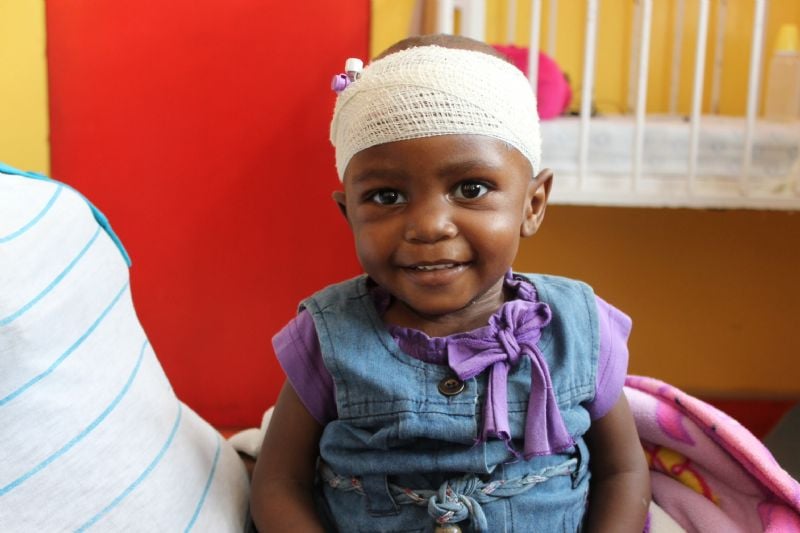
Nonsindiso
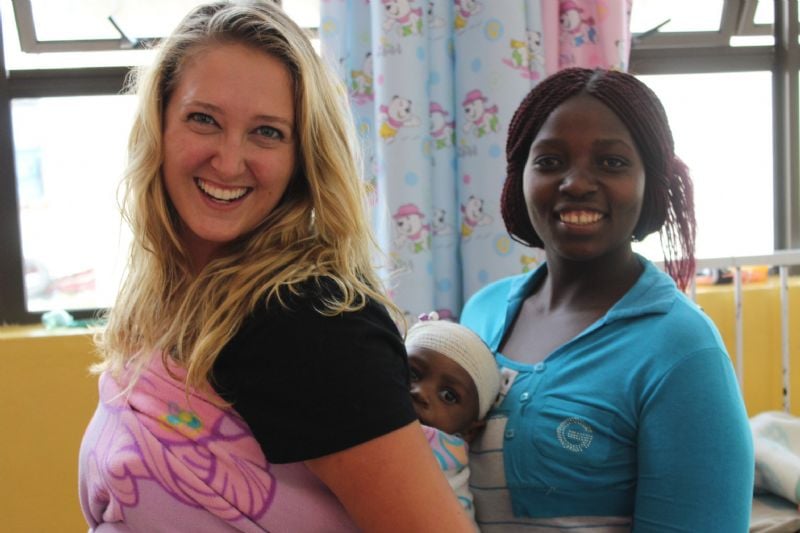 Me, Nonsindiso, and Thulile







