
but don’t have the money; what do you do? You look out in to the local
community and seek business opportunities that can be run at a low cost, that
benefit the people of the community, and that produce a profit that is
sufficient to cover the operating expenses of the orphanage. If you find enough
of these business ventures, you can run multiple orphanages! This blog is part
one in a three (or more) part series on how a few missionaries had a goal and
how they used the elements of microfinance and entrepreneurship to make their
dreams happen.
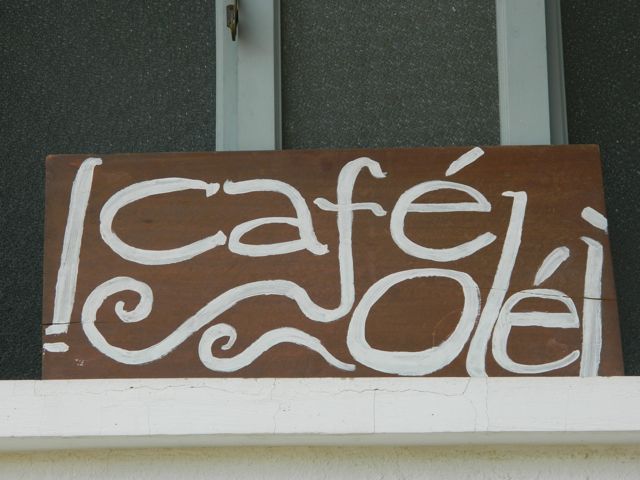
Part of our ministry this month is working
at a restaurant called Café Ole. Café Ole is located right next to the airport
here in Cochabamba and primarily serves the employees of LAB, a bankrupt
Bolivian airline that still has employees an mechanics that work on the planes
for the airport. The restaurant is special in that it is run for the purpose of
helping to fund the orphanages run by International Orphanage Union (IOU), along
with offering a cheap, Bolivian dish for lunch to the LAB employees.
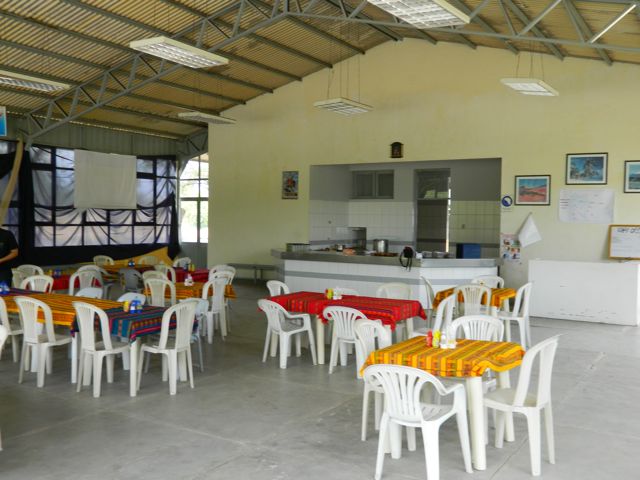
in was given to the orphanage by LAB free of cost, including utilities, with
the agreement that a restaurant would be set up and run at that location. The
restaurant has currently been open about four months, and Katherine Gurley, one
of our contacts and a recent graduate of Culinary Institute of America in New
York, runs and operates the restaurant. This includes buying all of the food and
supplies on Wednesday and Saturday mornings at the market, the day to day
operation of both the business and logistical side of the restaurant, the
hiring of two Bolivian women to assist in the cooking, and the handling of all
volunteers (like myself) who come to work. Café Ole is only open for lunch and
serves food from 12-2 and is open Monday to Friday. Katherine and her two
employees arrive at the restaurant everyday around 8:00 am, volunteers arrive
at 9:00, and everyone stays until 4:00 pm when the restaurant is all clean and
tomorrow’s meal prepped. Our team rotates two people at the restaurant each day
during the week
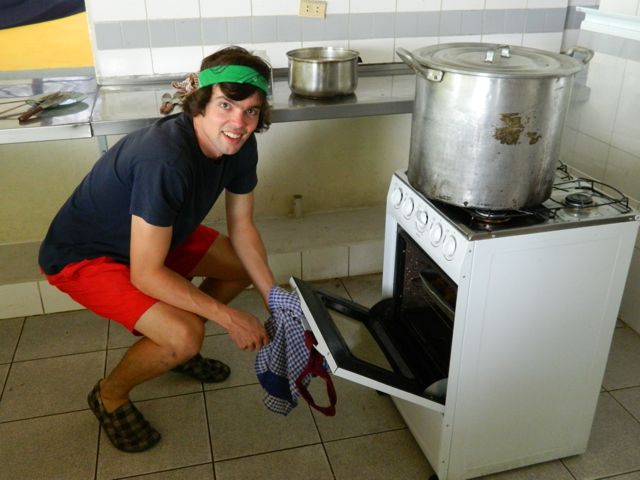
The workdays are long, but not too
difficult. Most tasks consist of washing dishes, pealing potatoes or peas, and
assisting Katherine in preparing some of the dishes. Each day a soup, two
options for a second course, a dessert, and juice are offered to the customers;
a complete meal is 10 Bolivianos (roughly $1.40 USD). Some of the dishes
offered so far have been pollo frito (fried chicken), picante de pollo (spicy
chicken), sloppy Jose (sloppy joe!), and a bunch of others that are delicious
but whose names I couldn’t remember for the life of me. It is fun to watch her
and learn how to create some of these native dishes. Frying chicken, making
French fries, chopping vegetables for a salad, making jello or juice, among
other things, are all now a part of my cooking repertoire. Simple, yes, but
time intensive and in my mind, worthy to brag about!
An interesting aspect of the restaurant is
that it seeks to be holistic in everything that it does. Basically this means
that it seeks to benefit as many people or systems as possible through its
operation. For example, the leftovers from the restaurant are sent home with
the employees to feed their families or taken back to the guest house for us to
have as lunch; the food scraps are put into a bucket and at the end of the week
taken to the deaf orphanage and fed to the pigs that are raised there; on
Sundays the building is used for a church service; nothing is wasted and the
restaurant fills needs for the community (lab employees), the orphanages, and
the missionaries. The restaurant is also used as a chance to witness and be a
light to the customers on a daily basis. No, we don’t stand up and preach to
the customers while they eat, but we do serve them with a smile and offer them
a friendly and enjoyable escape from their long workdays.
that it will turn a profit and be able to fund one or more of the orphanages
run by IOU located here in Cochabamba. Currently, the restaurant gets 25-50
customers a day. Katherine is hoping to expand this so that the restaurant will
ultimately turn a profit after food and employee costs, with the profit going
to fund the orphanages.
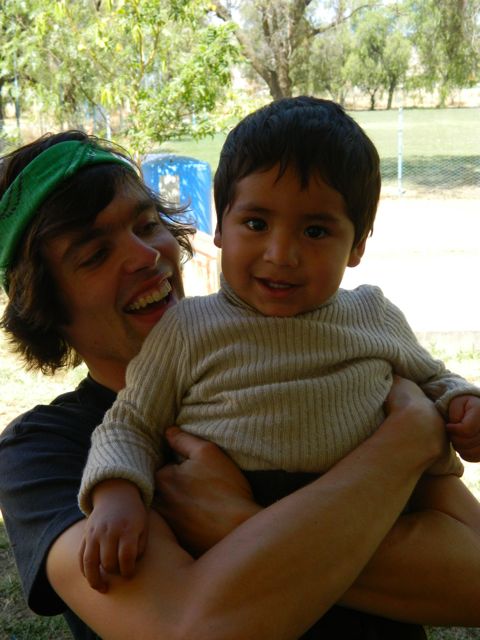
I have thoroughly enjoyed working at the
restaurant so far. Prior to the race I worked at Outback Steakhouse for five
years and enjoy the restaurant business, but this has been nothing like my past
experiences. It has been special to be a part of work
that will ultimately benefit so many people.
Bon Appetit!







