Warning: this blog may be PG-13 due to reality…the fate of Couy (Guinea Pigs) in Peru. Couy is a delicacy. For most Peruvians, it is their choice meat. Each to their own I guess.
So, those of you who have been dying to know how to prepare couy yourselves – think of this blog as a personal guide to killing, preparing and eating this little rodent! (First tip: You need to get rid of the idea that guinea pig is a pet. Just like chicken, they are raised for consumption.) Up in the mountains, each house is amply supplied with their own couy stash. While in Utupampa, I had the privilege of not only consuming this delicacy, but helping with the entire 4 hour preparation process!
The typical coey habitat.
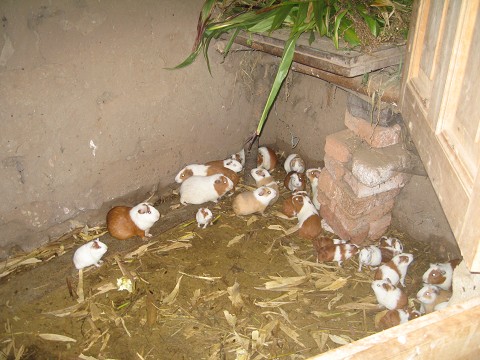
Step 1: Catching the little buggers. They’re quick ones. I think there is a technique to it: you just gotta go for it. Note: pregnant coey are off limits. (Though we failed in this aspect. One that met it’s Maker, unfortunately, had two little ones in the oven.)
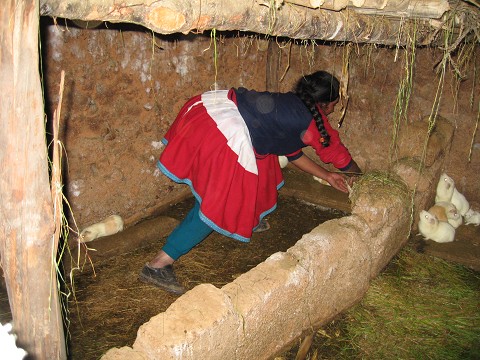
Step 1.5: After they are selected and caught (by the gruff of the neck), they are deposited into a holding tank or a plastic bag.
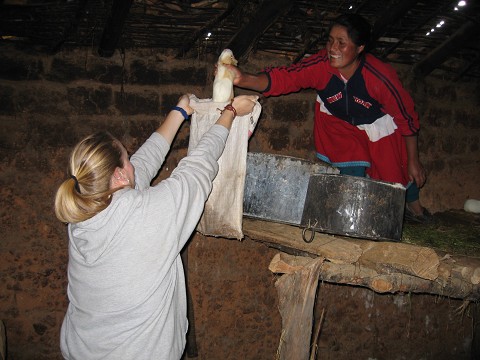
Step 2: Yikes! This one takes practice and a tough stomach. Just like chickens, a couy’s death is a quick one – just a slash of the neck. And yes, don’t be alarmed if the body still trembles for a while. That’s normal. Tip: recruit a helper who can stomach it. In this case two is better than one!
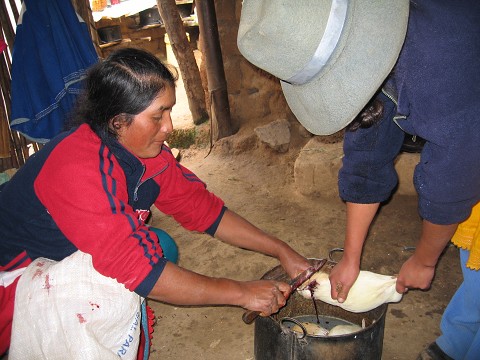
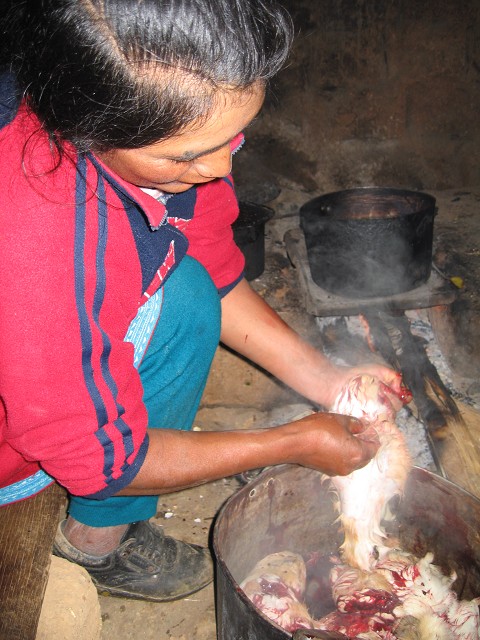
Step 3: Hair Removal. This does not include waxing. Sorry. But a more “refined” process of dipping the coey (head first) into a pot of boiling water. It shocks the hair right off of them and it easily slides off. Repeat the process with the hind end.
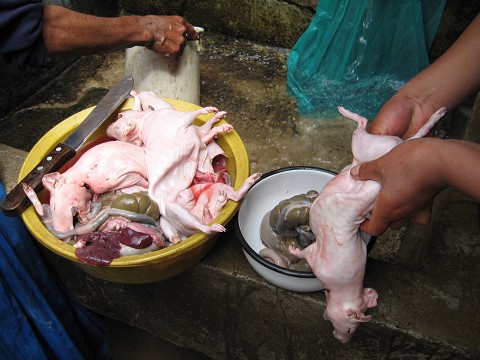
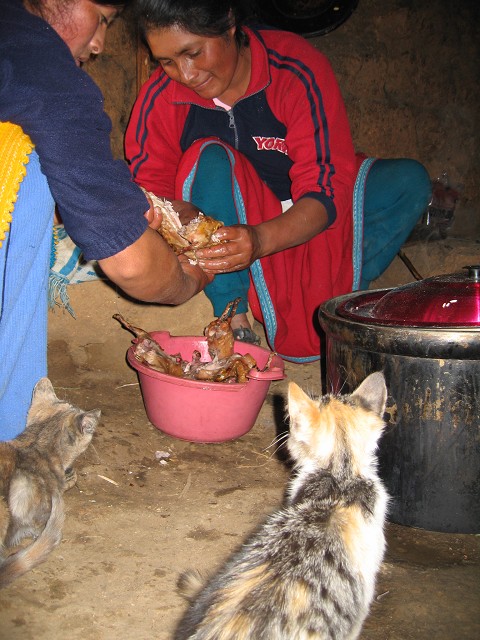
Step 4: Disemboweling or Biology 101 – the anatomy of a guinea pig. A slit of the belly and the innards pop right out. Most is fair game for consumption – intestines, heart, liver, kidneys. Note: Kidneys actually remain attached to the coey, the rest is fried up separately.
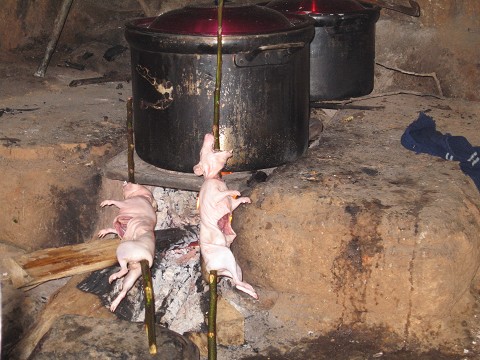
Step 5: Toasting the coey. I think “couy kabab” explains it best. Toasting the skin first, locks in all the precious juices and flavors.
Step 6: Rotisserie Time. Once the skin starts to brown, take the couy off the fire and rub oil all over it. A little minced garlic isn’t a bad idea also! Just think of those amazing rotisserie chickens that we buy in grocery stores in the States. Is your mouth watering yet?
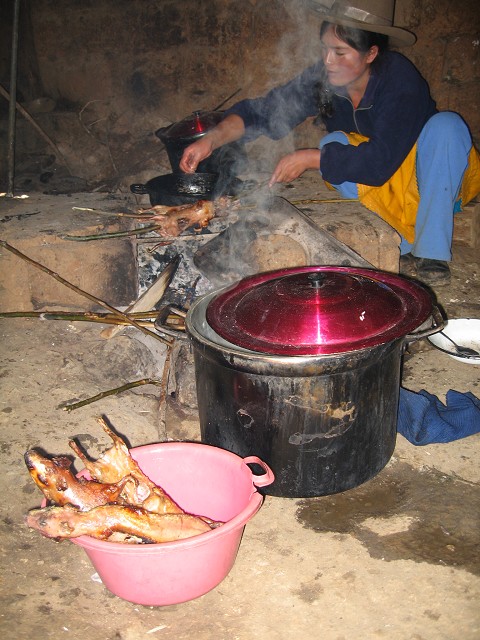
Step 7: Cutting the Coey. Your choice – halved or quartered. Or whole if you have an appetite. Normally, the head is also removed at this time, but not thrown away – just fried up on the side. Side note: the smell will attract visitors…
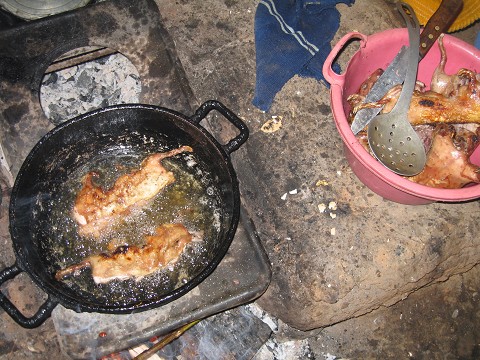
Step 8: Fish Fry – or I mean Couy Fry. Prepare your oil ahead of time. Toss in your couy. A couple minutes on each side. OK, so by now you must be drooling? Or at least anxious to try your hand at it?
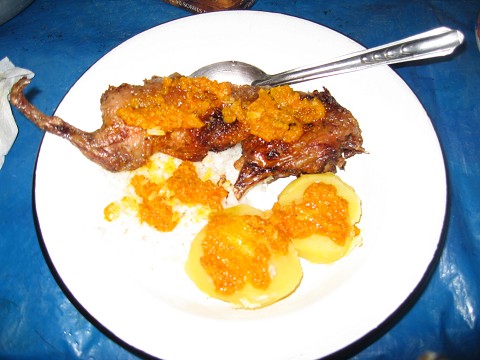
Step 9: Bon Appetit! Here is an example of a halved couy. Pick it up and tear into it. Don’t be alarmed by the tough skin (kinda like leather). I recommend the kidney. Coey is usually served with rice, potatoes and a special sauce prepared from the couy fat, peppers, salt and garlic.
So, I am sure that you are dying to run out and buy yourselves some couy? Just a little note: don’t tell the pet store owner your intentions…
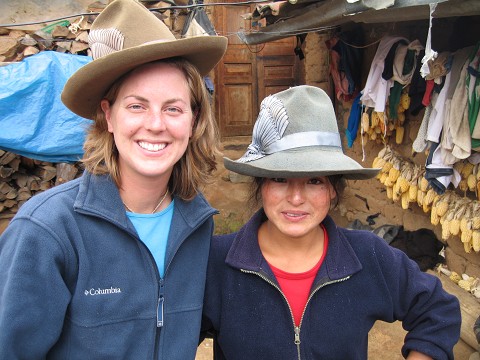
Maybe your wondering about cooking attire? It’s all about the hat! Thanks to Elizabeth (pictured below) and her mom, you have branched out and expanded your cooking repertoire. To leave you with an encouraging word: Coey tastes just like Chicken!