Life has been moving at a pretty good clip the last few weeks, and most days it feels like life is lived in a blender. We are busy! So let’s talk about Ecuador!
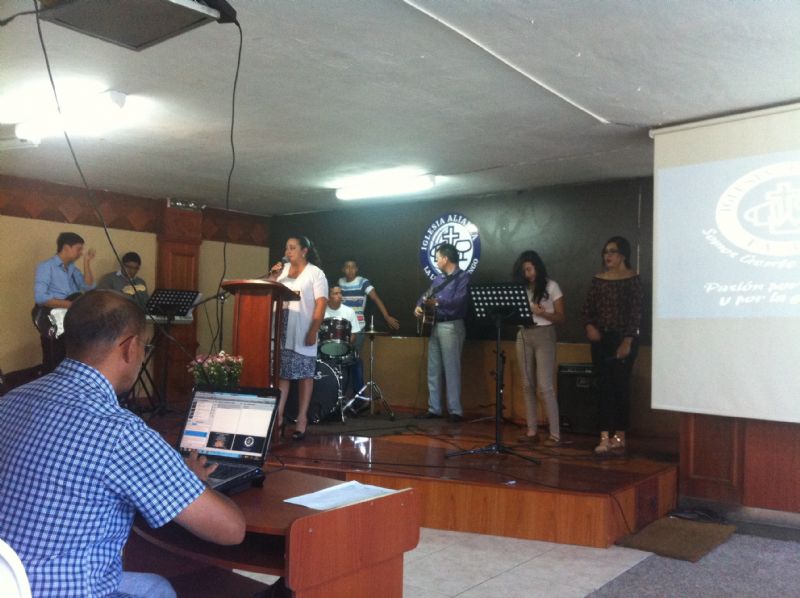
We’ve been working with two ministries this month: Camp Hope, which serves individuals with disabilities by providing physical rehabilitation and social skills, and Iglesia La Luz – Carapungo, a Christian and Missionary Alliance church, where we’ve been teaching English as an outreach. We’ve just finished our ministry for the month and are preparing for Columbia!
Camp Hope was an amazing experience. Three hours in the morning hardly seems enough to build relationships, but it really is. I’ve spent the last two weeks working closely with Fabian with his group in the “Pre-Vocational” class. We warmed to each other quickly; his zeal and creativity just pervade everything he does.
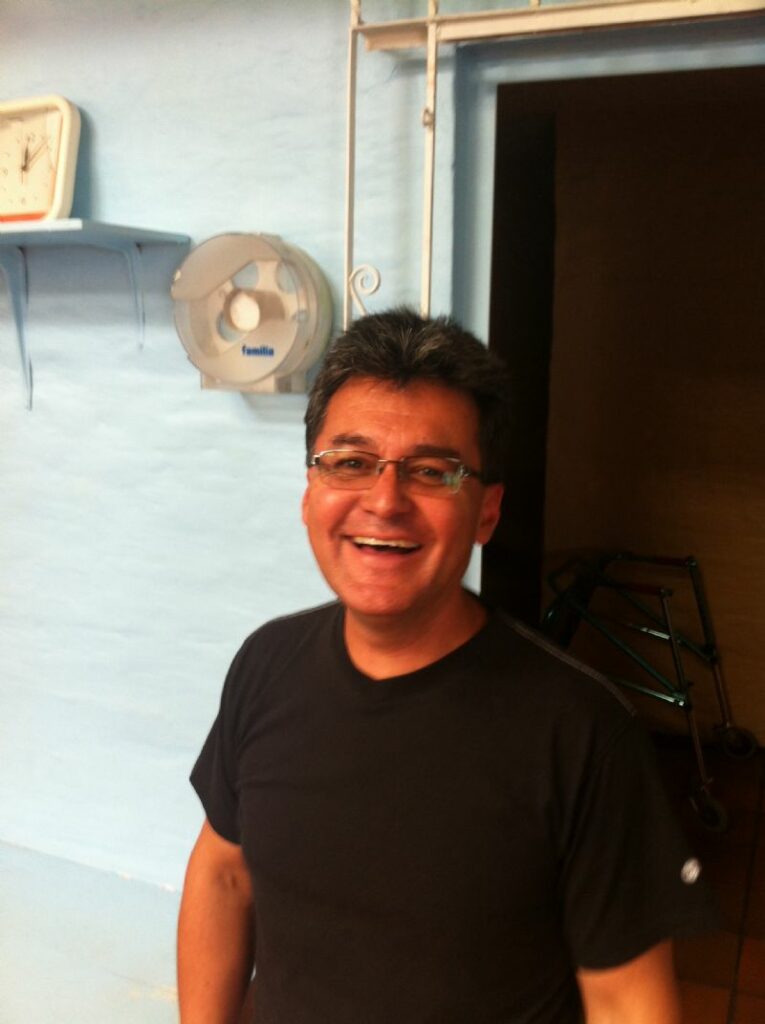
We agreed early on that neither of us spoke the other’s language perfectly, and that we would work together to help the other improve. He treated me like a colleague and a friend. Everything his class does is to provide a therapeutic benefit: hand/eye coordination, fine motor skills, distress tolerance, self-control, self-esteem, and social skills.
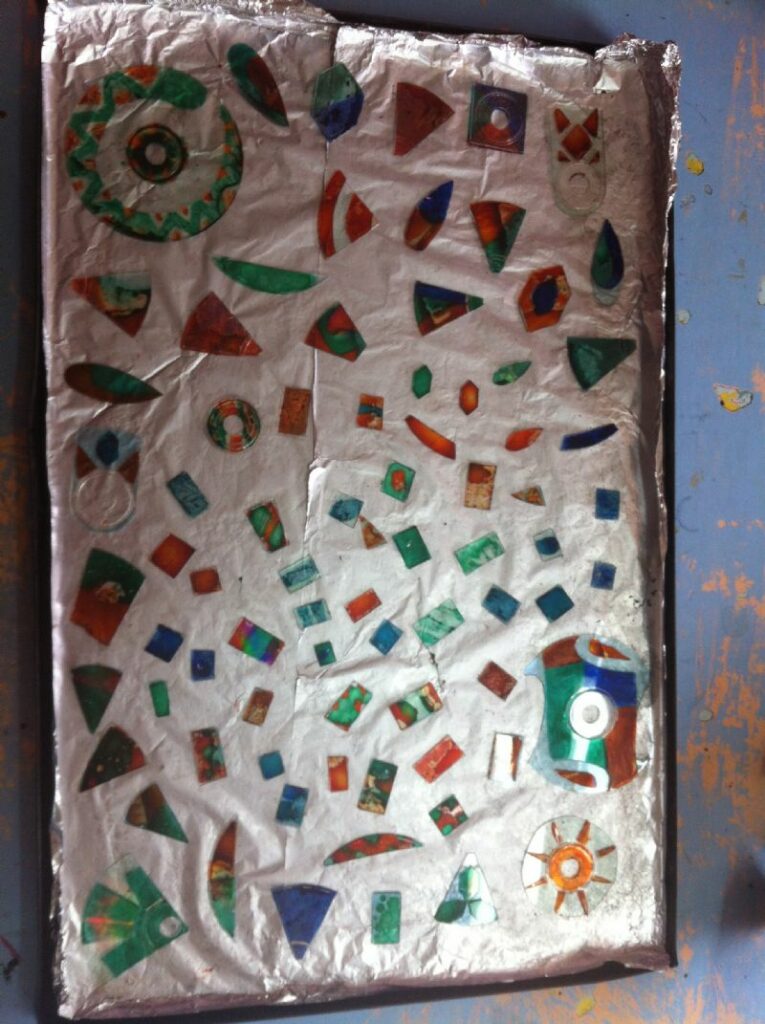
The group focuses mainly on crafts and food prep; they shelled lots of peas while I was there! The crafts are produced for sale, and the proceeds go towards funding the facility and providing services. (Fabian was excited when I came along and we were able to make some new designs for the jewelry they produce; I have introduced the hexagon and the tear-drop to Camp Hope.)
“It’s very different here than in the United States,” he told me. “Here, people don’t have the same resources to provide care for their kids. There aren’t as many options. Having the foundation means that people can go to work.”
He shared the story of one young girl who came to them a few months ago. “She couldn’t walk, she was obese, and she ate everything in sight – with her hands.” When he pointed her out to me, I couldn’t believe it: she was of average weight, and she had been walking around with Paris the day before. “She uses a spoon now.” Fabian told me with a twinkle in his eye.
Work is vitally important here in Ecuador. Soon after arriving, I got into some deep discussion about Ecuador’s economy and political structure with a number of people I came into contact with, from a broad section of society. There is a perfect storm of circumstances taking place right now.
The government – which has strong socialist leanings- is trying to grow Ecuadorean industry and the economy. They’ve instituted high tariffs on foreign trade goods, and the result is high prices on imports: the Crock-Pot that costs $30 in your Wal-Mart costs $100 in Ecuador’s Mega-Maxi. Now imagine an iPhone, or a television, or a car. The tariffs affect imported raw materials, though, and some fear that this is a factor working against the national economy, pushing entrepreneurs out of the country in response to high start-up costs.
Ecuador’s wages- for those who can work in the current employment crisis (because there is a BIG one right now) – are disproportionate to the price of goods, and many people live paycheck to paycheck. The perception of the “class warfare” varies here: the “pelucones,” (upper middle class) and the lower middle class are odds.
Some perceive that this is driven by the government’s desire to distract from perceived failings and criticism from those within the country who accuse the government of failing to enforce – and committing outright violations of- the rights of their citizens.
Others say that this is simply the result of the government’s attempt to approach a national equilibrium with regard to economic security: the proverbial redistribution of wealth. The rich are being taxed for the first time, and they don’t like it, so they take their money and enterprise to neighbouring Peru and Columbia.
I confess my ignorance of and lack of grasp on the whole situation; the downside of being American is that my news is filtered through the American media, which unfortunately seems more enthralled with the latest Kardashian gossip and giving coverage to political buffoonery than sharing information about potential civil rights violations in the place where all the flowers come from for the Rose Bowl Parade. I cheer when oil drops to $20 a barrel; here, people’s hearts drop in their chests.
My dear friend Debi encouraged me to be honest and share my experiences, “even the parts which aren’t so nice.” So here’s the crux of my angst: The language barrier and the lack of reliable sources of information is maddening when you are trying to sift out fact from rumour. My normal approach is useless in the absence of consistent Internet or a knowledge of national news agencies.
I know there is more to this story and I want to scream the truth from the rooftops; I just don’t know how to find it. The data is inconsistent; I get different statistics from different sources and all are intelligent, informed, and legitimate. I don’t want to get up in arms and be wrong, but the things that are being intimated in conversation are so shocking as to warrant thorough investigation. I find myself without the ability to understand the problem in its fullness, and I hate that feeling.
I felt compelled to assume a posture of learning this month, and while I have learned lots, I don’t have the ability to discern the truth. It is a frustrating and disquieting feeling, especially when there is much at stake for the people of Ecuador.
Still, there is brightness in the midst of all the national – and personal- difficulty. People here are friendly, and they are kind. My taxi drivers and I enjoy each other, and we talk about these things (Mr. Moran and Cesar were wonderful to talk with.)
George and Jenny run the tienda around the corner from our house, and their bread is the best I’ve eaten since I left Canada. (For obvious reasons: What grain isn’t grown domestically is imported from Canada.)
When I spoke with Efren, the pastor of Iglesia La Luz , I asked him how he responded to all the issues roiling underneath the surface in Ecuador; I commented that I firmly believe that one person taking a stand can change the world. He agreed.
“My job is to introduce people to Christ, and let him do the rest. One person at a time. If one person changes, then they change the people around them in their circle of influence. In this way, we change the country, and the whole world.”