The bus creaked and made sad sounds as it weaved its way around the dirt potholes. Jacob and I tried to keep the greasy chips from falling out of our laps as we held on to the seats in front of us. African roads are not for the faint of heart. It was a painfully bumpy ride back from Nairobi, where we left Rebekah with Aly to return to get her backpack from Northern Kenya. The previous, traumatic five days had been spent in a sad menagerie of Kenyan hospital with shockingly pitiful medical care as we watched Rebekah have seizure after seizure. The rough drive didn’t seem like an insult to injury. It felt almost symbolic- like a slow constant beating. Like a slow, heavy drowning tide. One bad thing after another. Assault and unsteadyness had become the norm.
We processed, as we had been for the entire week, the weight of the trials we were enduring. We were talking about the Spirit, about Sonship, about Freedom. About how we were doing big Kingdom things in Africa, and we were being attacked because of it. I was on some tangent about Jesus being filled with the Spirit, going into the wilderness for 40 days, and then coming out filled with the Power of the Holy Spirit.
He stopped me right in my tracks. “40 days. 40 days. That’s a season.” He curiously flipped out his phone to look at a calender. “40 days from September 6th is October 15th. Sydney said that night, hours before we found out that her mom had just died, that this would be a hard season. A season of suffering. Not sure. Just thinking out loud here. But maybe this won’t all be over until then.”
“Hmmm” I responded. Terrified to allow for such a possibility of more pain to come.
But oh, has it come. Like a tidal wave. Beginning with the tragic night where we had to send our precious friend home to grieve the accidental death of her mother, ebbing to a frightening week of seizures with Beks in the hospital, to THREE members of my team getting malaria, to Annmari going home due to lack of support. To countless stories rolling in from my squadmates about sick family members, insufficient funds in support accounts, and more hospital visits.
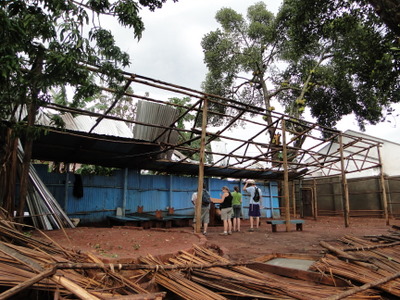
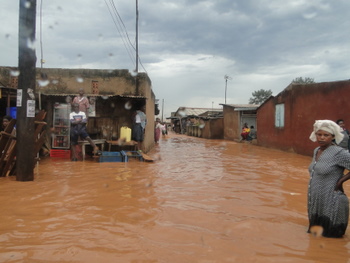
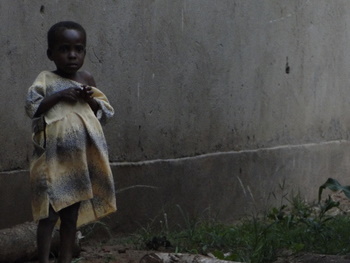
The wave has only grown here in Uganda. In Jinja where we rafted the Nile, I had a ridiculous, sobbing like a baby for days breakdown. The fire and fight that I felt I had been carrying to see Kingdom come through our squad kind of snapped, and decimated to tears and a massive feeling of being overwhelmed by all the brokenness around us. The past two weeks have included: me being fluishly sick for four days, us all being stuck in the middle of a flood, a little girl drowning in the waters, the church we are working with being destroyed by the storm, our contact’s taxi hitting and killing a man on the way home from dropping us off, two children being abandoned for good at the guesthouse we are staying at, food poisoning, and Casey getting blinding migraines right before she is supposed to preach. In the midst of it all we have been preaching twice a day, and doing house visits- of which we usually meet dozens of street orphans, single mothers who tell us they just want a job so they can feed their kids, and person after person who tells us they have no hope because they are going to die soon due to AIDS.
To be honest, I was hitting my breaking point. I’ve been exhausted because of all of the ministry. All the sickness. And the feeling that I can’t really fix the brokenness. That I’m dropping in for a time, an attention drawing Mzungo-apparently with dollar signs stamped all over me in their eyes, telling them about the hope we have in Jesus. Somedays I even feel I am making the situation worse. It’s scary, because I know the mess that humanity is in is only going to get worse, that creation is going to only groan in more labor pains until Jesus comes back. So I’ve been wallowing there: the proverbial rock bottom of human helplessness.
But on October 15th, exactly day 40, I found myself on another bumpy, dirt road ride. My team was heading out of Kampala to visit a mud hut village in the middle of nowhere. I was reading The Reason for God by Timothy Keller, an apologetics book answering some of American’s most common objections to Christianity. Chapter two is entitled “How could a good God allow suffering”? The main assertion of people is that a good God could not, and would not allow so much pointless suffering. That “If our minds can’t plumb the depths of the universe for good answers, well, then, there can’t be any”. Keller says that just because in our limited view of things we can’t see a purpose and meaning to all the suffering, doesn’t mean that there isn’t one.
I was intrigued. This is exactly how I was feeling at the moment. I read on.
Keller then describes several stories of people who have endured unthinkable tragedies in life easily admit that they would not trade their experiences, and the resultant “insight, character, and strength” for anything. In hindsight, many people are able to see some reason for it all. Then Keller says “If you have a God great and transcendent enough to be mad at because He hasn’t stopped evil and suffering in the world, then you have (at the same moment) a God great and transcendent enough to have good reasons for allowing it to continue that you can’t know. Indeed, you can’t have it both ways.”
The thing about Jesus is, that he doesn’t try to get off the hook for pain and suffering. He in fact, puts himself on the hook. He did not go to his death on the cross happily. He knew it would be awful, and pleaded for a way out of it. But it wasn’t just the physical pain He endured on the cross. Many people have suffered indeed more painful deaths. But You see, He went to the deepest level of suffering, having the biggest capacity for knowing just how great the Love of the Father is, having it for all of eternity, and then being separated from it. God put skin on, and knew “firsthand despair, rejection, loneliness, poverty, bereavement, torture, and imprisonment, ” but he went even further to suffer a “cosmic abandonment”. The ultimate forsakeness. Keller says He not only came to relate to us in our suffering, but He came on a rescue mission, “He had to pay for our sins so that someday He can end evil and suffering without ending us”.
So then one might ask, why can’t we just skip all the pain all together? Keller didn’t admit to having the complete answer to this, but he describes a dream in which he thought all of his family members were killed. When he woke to find that they were still alive, he had a exponentially magnified appreciation, joy, and love for them. And we feel the same way too, when we lose something, or break something, and then later find it or fix it. We cherish it on a whole new level. Revelation 21 tells of a new heaven, and a new earth. Heaven coming down, “death being no more, neither mourning nor crying nor pain, for the former things have passed away.” The former things are undone. Untrue. “Everything sad is going to come untrue and it will somehow be greater for having once been broken and lost.” We as humans may not be able to grasp the purpose and meaning for this right now, but somehow it is still true. Keller says that somehow it will be “an infinitely more glorious world than if there had never been the need for bravery, endurance, sacrifice, or salvation.
Keller closes the chapter with a quote from Doestoevsky. This blog is already super long, so hey, why not:
“I believe like a child that suffering will be healed and made up for, that all the humiliating absurdity of human contradictions will vanish like a pitiful mirage, like the despicable fabrication of the impotent and infinitely small Euclidean mind of man, that in the world’s finale, at the moment of eternal harmony, something so precious will come to pass that it will suffice for all hearts, for the comforting of all resentments, for the atonement of all the crimes of humanity, of all the blood that they’ve shed; that it will make it not only possible to forgive, but to justify all that had happened.”
So in closing, I don’t know what the complete answer is either. I don’t know if if every single tragedy and child I saw die while working in the PICU, if every single moment of pain and affliction that our squad has endured, that the people of Africa perpetually endure, that we all endure- will have an aha! moment of redemption to them. If there will be a “oh that’s why that happened”, wrapping everything up in a tidy bow moment. Maybe they will. I do know though, that when I look around, I believe that it’s not all for nothing. That on that bumpy van ride to the middle of nowhere, on exactly day 40, God spoke loudly to me through this book. And I found peace in the tsunami. I know that on the other side of it, and in the next season, myself and O squad will be victorious. I know that we serve a holy and good God. As Courtney prophecied right after Sydney did, we will find more life and freedom in Africa than when we started.








