
This is an article we have to read for Iris Harvest School written by David Wilkerson. It’s really good and such an encouragement. I thought I would share it.
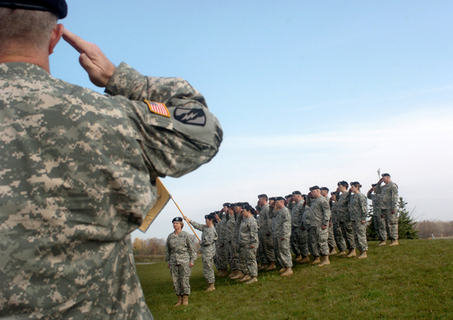 A Salute to
Those Who Stayed With the Stuff
Sharing in the
Spoils of Warfare
by David Wilkerson
November 26, 2007
In the book of 1 Samuel, David
and his men came home from battle to find their town burned to the ground.
Ziklag, where David was headquartered, had been attacked by the Amalekites. To
make matters worse, the enemy had taken the families of David’s army captive.
All the wives, children and livestock were gone.
When David and his men saw this, they fell on their faces weeping. They were
convinced their loved ones had been killed in a bloody holocaust. Scripture
says they all wept until they had no more strength.
Then David’s men rose up in anger against him. They picked up stones, blaming
him for the calamity. Yet, despite this, David encouraged himself in the Lord.
He called on Abiathar the priest and asked him to inquire what God would have
him do.
Abiathar gave David this word from the Lord: “Go, pursue the Amalekites. You
will bring back everything that was taken. You won’t lose a single thing. All
will be recovered.”
So David set out with 600 men in pursuit of the Amalekites. When they came to
the River Besor, they found an Egyptian slave who had been wounded. When the
slave heard their mission, he led them to the Amalekites’ encampment.
Of the 600 men in David’s army, 200 of
them weren’t able to move forward into the front lines of battle.
These 200 soldiers may have been weary from battle fatigue, or perhaps some
were injured or sick – but they were not cowards. They were simply held back by
circumstances. As David prepared to move on, he entrusted to these men’s care
all “the stuff” the army had to leave behind: equipment, utensils, weaponry,
clothing and such.
As David marched forward with the other 400 soldiers, they found the Amalekites
encamped on a great plain. And they were amazed at what they saw: the enemy had
over 1 million livestock in its possession, for the Amalekites had also raided
the Philistines and stolen their spoil. In the midst of this awesome scene,
David’s army saw what they came for: their captive wives and children.
As David and his men drew closer, they saw the Amalekites sprawled out among
their tents. They were drinking, carousing and celebrating their great
gathering of spoils. Combined with the sounds of 1 million animals bellowing,
it must have been quite a riotous, chaotic scene.
David spread out his men for the attack, and the 400 soldiers surrounded the
camp. The battle that followed was bloody, lasting a full day-and-a-half. When
it was over, David had triumphed – and just as Abiathar had told him, he
recovered everything. Not a single person, animal or possession taken from his
men had been lost.
David had a specific plan for the spoils
of war.
After the battle, as the accounting of the Israelite spoils was done, David
laid claim to the goods taken by the Amalekites from the Philistines. He
declared, “These also are mine,” and he had a specific purpose in mind for
them.
Now, as the returning victors approached the River Besor, the 200 soldiers who
stayed behind saw them coming with all their wives and children. What an
amazing sight it must have been as they rushed out to embrace their loved ones,
weeping.
Yet it was a moment both sweet and bitter. Though circumstances had hindered
these men from going into battle, they had been just as brave, just as
qualified, just as passionate to fight the enemy, even as the others went
forward. Yet they didn’t feel worthy to celebrate the victory.
David knew what these men were thinking as they hugged their loved ones: “I haven’t
earned the joy of this moment. I didn’t accomplish anything. I should have been
among those on the front lines.”
Indeed, some of the 400 warriors who had gone to battle began grumbling.
Scripture calls these soldiers “wicked men” and “men of Belial.” They said to
each other, “We’re not going to divide the spoils with these laggards. They
didn’t risk going out, as we did. They didn’t accept the challenge and pay the
price”
(see 1 Samuel 30:22).
Their murmuring was about to become a mutiny.
But David had the heart of God in that moment. And “when David came near to the
(200 men), he saluted them” (30:21).
At that moment – with that one great gesture – David laid down the law of
spoils. He told them, “As his part is that goeth down to the battle, so shall his
part be that tarrieth by the stuff: they shall part alike” (30:24). Simply put, all 600 men
were going to share in the spoils equally.
David wasn’t about to permit any soldier in his army to feel regret over not
being on the front lines of battle. So he called a meeting of his leaders and
instructed them, “I will not allow this division to happen. We are going to
share equally. This backup army is just as important as those who went to the
battlefront.”
When David saluted those 200 men, he was telling them, “Well done! This victory
is as much yours as it is of those who went out. You were useful right where
you were. And, as your king, I declare that you are to share equally in the
spoils of victory.”
From that time on, every king in Israel’s history kept David’s law of spoils.
It is my privilege today to salute God’s present-day backup army.
I want to speak to every Christian who can’t go to a foreign mission field but
has to stay back through circumstances. I’m referring to those who are faithful
in prayer, sacrificial in giving, supportive of mission works. To all such
believers, here is a clear message from 1 Samuel 30: You are the supply line to the battlefront. And the spoils of war
are yours, too.
On that glorious day when our battle has ended – when we are finally able to
lay down our spiritual swords – many will stand before the Lord thinking they
are empty-handed. These unsung, unknown saints will say to themselves, “I have
nothing to present to the Lord. I didn’t do much of anything. I never led many
souls to Christ.”
Yet what a glorious moment awaits them, as Jesus begins to divide the spoils.
They’ll be overwhelmed with joy, as their eyes are opened to see just how
important they were to the battle. Those who thought they had no good works or
deeds to present are going to share equally in the spoils! Among these will be
widows, shut-ins and retired people who gave sacrificially to support missions
works.
As I think of these unsung saints, I picture the American women who maintained
the home front during World War II. When I was growing up, my family would
visit my grandmother’s home near Pittsburgh, Pennsylvania. Nearby was a factory
that produced heavy bombshells. During those visits, I stood outside the fence
of that factory and watched the dozens of women laborers come and go.
While their husbands, brothers and boyfriends did battle on the front lines –
in the Pacific, Europe and Africa – these women manned huge assembly lines.
They worked around the clock, toiling and sweating, with the factory’s loud
noises constantly whirring in their ears.
Circumstances didn’t allow these women to be on the battlefront. So they “stood
by the stuff” in support of their loved ones. And without the fruit of their
labors – their faithful production on those assembly lines – the war never
could have been won.
Beloved, this is the true picture in eternity of every unknown saint who thinks
he has nothing to present to Jesus.
David based his law of spoils on a precedent that Moses set in Numbers 31.
During Moses’ time, an army of 12,000 Israelite soldiers defeated the
Midianites and five vicious warlords. When the spoils were gathered afterward,
Moses instructed:
“Take the sum of the prey [spoils] that was taken…and divide the prey into two
parts; between them that took the war upon them, who went out to battle, and
between all the congregation” (Numbers 31:26-27).
Here were two co-equal groups, according to Moses: combatants and congregants,
those who went to battle and those who “stood by the stuff.” The Lord himself
commanded that these two groups share equally in the spoils.
When Israel accounted the Midianite spoils, here is how the division went:
337,500 sheep went to combatants, 337,500 to congregants.
36,000 cattle went to combatants, 36,000 to congregants.
30,500 donkeys went to combatants, 30,500 to congregants.
16,000 captives went to combatants, 16,000 to congregants.
You get the picture: it was entirely equal, between those who went and those
who stayed.
On our day of accounting, I picture the apostle Paul being called forth. All of
his soul-winning victories will be recounted, as well as all the churches he
established.
Then a number of unknown men and women from Antioch will be called forward to
stand next to Paul. These are the people who fasted and prayed for the apostle,
who laid hands on him and sent him out as a missionary. They supported him with
sacrificial gifts.
Simeon, Lucius and Manaen were elders at that church in Antioch. They and other
unknown saints like them never went to the far-off battlefront. They probably
never crossed a sea or traveled to Macedonia. Yet they will be called forth to
share in Paul’s spoils.
Why will these others be handed a portion equal to the apostle’s? It is because
they played a part in every soul that Paul won, every church he built, every
trip he took.
God desires that we all rest – and
rejoice – in our calling.
Many Christians feel guilty that they’re not serving on a foreign mission
field. But staying home with the stuff is also a high calling in Jesus Christ.
If you love the Lord and walk in his Spirit, you can be sure of your calling.
God’s Word assures us:
“Now hath God set the members every one of them in the body, as it hath pleased
him” (1 Corinthians 12:18).
Do you see what
Paul is saying here? If you’re a church elder, you have a high calling in the
Lord. The same is true for those who teach Sunday school.
Yet the same is equally true for any single mother who’s striving to raise her
children for Christ. She has a high calling right where she is.
Likewise, if you’re a businessperson, a lawyer, a doctor: rest in your calling.
If you’re a salesperson, a mechanic, a teacher, a food service worker, you
don’t have to try to work up a calling to some mission field to please God.
Unless the Spirit himself is stirring you, you can be at rest where you are, in
what you do.
“Ye are the body of Christ… And God hath set some in the church, first
apostles, secondarily prophets, thirdly teachers, after that miracles, then
gifts of healings, helps, governments, diversities of tongues.
“Are all apostles? Are all prophets? Are all teachers? Are all workers of
miracles? Have all the gifts of healing? Do all speak with tongues? Do all
interpret? But covet earnestly the best gifts: and yet shew I unto you a more
excellent way” (12:27-31).
It is important
that every believer not be frustrated that he isn’t in Africa or some such
mission field. The Lord never brings condemnation to any of his people over a
mission calling when he himself has placed them where they are in his body.
Of course, it is important to stay open and willing to hear from the Spirit
about serving elsewhere. But we are to surrender the issue completely to the
Lord’s stirring and direction. God knows how to stir our nests and open doors
to ministry, at home and abroad.
The apostle Paul brings a deeply
convicting word on this matter of serving the Lord.
Paul was a world-traveling missionary with a heart of love for the poor. He
heard the cries of the poorest in every nation he visited. And he instructed
every pastor and evangelist under him, “Remember the poor.” Paul regularly took
up offerings for the poor, at one point traveling to several cities to raise
money for Jerusalem when a famine was imminent.
Of anyone who ever lived, Paul understood the cry of human need. Yet as much as
this godly apostle sacrificed – even to the point of dying a poor martyr
himself – Paul gave a convicting warning:
“Though I bestow all my goods to feed the poor, and though I give my body to be
burned, and have not charity, it
profiteth me nothing” (1 Corinthians 13:3, my italics).
I have to wonder:
are we ready to accept Paul’s convicting word here? He is saying, in effect:
“You can weep over the desperate cries of the poor. You could go to Africa to
the filthy slums. You could be ready to die a martyr. But if you have not laid
hold of charity, everything you do is in vain – whether at home or as an
overseas missionary.”
Think about this. Even Jesus told his disciples to begin their work in
Jerusalem, their home city, before going to the uttermost parts of the world.
This tells me our first mission has to be to our own hearts. In other words,
the Holy Spirit has to do his work in us
before he can work through us.
A few years ago, I began asking the Lord to enlarge my own vision for
missions. At the time, I had begun traveling the world holding ministers
conferences, and I’d seen some of the world’s worst slums. My heart burned to
know how to answer the desperate cries coming from those slums. So I spent
hours before the Lord in prayer, seeking his burden and asking for direction.
The first word I received from the Holy Spirit was this: “David, first of all,
take the lowest seat in the house. If you want a heart to reach human need,
humble yourself.”
I prayed for God’s grace to do this. I also began to preach this word in our
church, so our mission-minded congregation would receive the same word I was
hearing from the Lord.
Then, later in prayer, I received the following word: “Mortify the remnants of
your pride. I can’t work through you in fullness unless you deal with this.
Reaching human need is strong business, and all pride must be dealt with.”
Again, I asked God for his grace.
Then later came this word: “Deal with your temper. You are still easily
provoked at times, in your work and with family. That must be mortified by the
Spirit.”
In all of this, the Spirit kept reminding me of Paul’s words: “Yes, there is
faith, and there is hope. But the greatest of all is charity” (see 1
Corinthians 13:13).
Right now our
ministry is putting roofs over churches in Kenya. We’re helping finance a Kenya
Kids program for orphans in the capital city of Nairobi. We help dig wells in
poor areas. We’re helping support a center for addicts and alcoholics. We help
feed hungry children. The Lord has clearly called us to do each of these works
of compassion.
Yet all these works would be without profit if they were not flowing out of
true Christ-like charity.
It is amazing to hear what God is doing
through dedicated missionaries throughout the world.
In Iraq, a missionary friend grieves over the murder of two of his
associates. He and his church members are threatened daily, yet they refuse to
stop evangelizing among the poor and homeless. These are front-line soldiers of
Christ.
I think also of Kevin, a dedicated missionary serving in Swaziland, Africa. In
that nation, 42 percent of the total population is infected with AIDS. Chances
are nine out of ten that a fifteen-year-old child will die before reaching age
thirty-five. The unemployment rate is 40 percent. There is a terrible drought
and food is scarce. The average child eats only one meal every two days.
Hopelessness abounds.
Yet Kevin was moved by the Holy Spirit to do something. He began refurbishing
old, abandoned houses and turning them into homes for orphans. Each home,
staffed by a caring mother, houses eight children. Those orphans are provided
nutritional food, education and medical care.
The ministry also reaches out to the entire community, providing help to babies
infected with HIV and operating a live-in care center for drug addicts. Now
Kevin envisions sending teams into slum areas, to help feed families consisting
of single mothers and their children, and to teach the mothers life skills.
These teams would also care for the dying.
We are honored to be a major supporter of this incredible ministry. Kevin is
one of God’s front-line warriors giving his all on a foreign mission field.
Now let me tell you about an amazing
widow who never had the opportunity to serve as a missionary in a foreign land.
Grandma Carosso, my wife Gwen’s mother, died at the ripe age of
ninety-five. She was a praying woman, quiet and unassuming. In fact, this
devoted woman prayed for me every day. Very few people knew her name.
When she went to be with the Lord, Gwen and I found a cardboard box in her
closet, filled with checkbook stubs dating over many years. Grandma Carosso had
spent little on herself, but the record showed she had supported missionaries
for many years. She would send in small amounts at a time: five, six, ten dollars.
All that time, Grandma Carosso had thought she didn’t do much in the work of
the kingdom. She would say she had no talent, no ministry. But she was just as
important to Jesus and his kingdom as the many missionaries she supported over
the years with her sacrificial gifts.
When our blessed Lord rewards all those wonderful missionaries she supported,
Grandma Carosso will share in all the spoils of their front-line spiritual
victories. Remember what Jesus said of the poor widow who cast two pennies into
the offering: “She has cast in more than all the others.” The widow gave all
she had.
My wife, Gwen, stayed at home “by the
stuff” while I traveled for years on the front lines of evangelism.
Gwen is much like her departed mother: quiet, unassuming and very dedicated to
her family. During the decades of ministry when I traveled the world over, I
was away from home much of the time. Gwen had to stay behind to care for our
four children. She was always there when they came home from school, always
there when they expressed a need.
When I came home, Gwen rejoiced with me at the reports of numerous souls being
won to Christ, or addicts and alcoholics being healed. Yet Gwen wasn’t able to
go and do this work herself. She had to stay behind with “the stuff,” all the
ordinary obligations.
Many times I heard my wife say, “I can’t preach or sing. I’m not a writer. I
feel I’m doing so little, if anything, for the Lord.”
But Gwen came to believe that her calling was to be a faithful wife and mother
(and eventually grandmother). Today, all four of our children are in ministry
and have risen up to call her blessed many times over. It was Gwen who did the
hard work that enabled our children to follow their callings.
While writing this message, I told my wife, “On that day when I stand before
Jesus, if I have been used to win souls or to raise up godly works that please
him – if there are any rewards to be had, Gwen, you will share in them
equally.”
Just as King David did, we salute all
the special saints who stay “by the stuff.”
We bless our missionaries in harvest fields around the world. They take great
risks and hazard their lives for the sake of the gospel. Our missionaries and
their families need our prayers and support. We honor them.
We also honor all who cannot go, including the elderly, the shut-ins, the
unemployed, and those who serve the Lord faithfully in their present calling,
in every nation and tongue.
Dear saint, God forbid you should be agitated in spirit because you don’t
believe you’re doing anything important to God’s work. Your prayers, your
continuous support for missions, your charitable spirit – all are honoring to
God.
My prayer is that you will ask the Holy Spirit to bring you into his rest, and
that he will give you peace and joy – right where you are, in all you do. That
is his desire. Amen!
Thank you all who pray for me, support me financially, and offer me words of encouragement! You are important! “You are the supply line to the battlefront. And the spoils of war are yours, too!”







